Most families want to be healthier, but let's be honest—trying to change everything at once can feel like turning a giant Indian truck on a narrow village road. The moment you announce a new diet or exercise plan, someone asks for their usual chai and biscuits, or the children grumble about missing parathas. It’s not that people don’t care. Life is just busy, routines are set, and the idea of massive change feels overwhelming in a house where time and energy are already stretched.
Why Big Changes Rarely Work at Home
Many homemakers and working parents have tried—maybe after a health scare, maybe after seeing something on TV—to overhaul the family routine. Suddenly, white rice is out, everyone’s expected to walk after dinner, and snacks are replaced by nuts (which often go untouched). These grand plans tend to fade after a week or two. You’ve probably noticed this too.
The truth is, resistance isn’t just laziness. People—especially children and elders—cling to what’s familiar. The comfort of dal chawal, the evening tea ritual, or even the late-night TV sessions are anchors in family life. Trying to shift everything at once usually leads to arguments or quiet rebellion (someone sneaks in a packet of chips or orders pizza when you’re not looking).
That said, it’s not hopeless. There are ways to gently nudge your family towards healthier habits without turning the household upside down.
Start with One Small, Visible Change
Instead of a total makeover, focus on a single habit that’s simple, obvious, and hard to ignore. For example, keep a jug of water on the dining table, so everyone drinks a glass before meals. Or, put a bowl of cut fruit where the family gathers—maybe near the TV or on the kitchen counter.
Small changes work because they don’t threaten anyone’s comfort. There’s no dramatic announcement—just a quiet shift in what’s around. Over time, these little adjustments become routine, and family members often follow along without protest.
- Place a small basket of seasonal fruit (bananas, guavas, or oranges) in reach.
- Swap one evening snack a week for roasted chana or puffed rice, not every day.
- Encourage one glass of water before afternoon chai—easy, but effective.
It’s surprising how these little habits add up, especially when nobody feels forced.
Make Movement a Natural Part of Family Life
When you suggest exercise, most people picture gyms, running tracks, or yoga mats. But in many Indian homes, finding time or space for formal workouts just isn’t practical—especially if the living room is shared or elders can’t bend easily.
Here’s the catch: movement doesn’t have to mean “exercise.” It can just be part of what your family already does. For example, invite everyone to help with light chores after dinner—clearing the table, folding clothes, or watering balcony plants. Even a ten-minute walk together after the last meal (just to the end of the lane and back) can help digestion and spirits.
- Play a family game on Sundays that gets people up (antakshari with actions, or simple indoor games like "statue" or "musical chairs").
- If someone goes out to buy milk or vegetables, suggest going together for company.
- During festival cleaning or seasonal changes, involve everyone in dusting or rearranging.
It’s not about burning calories—it’s about showing that movement fits into normal life, not just special sessions.
Respect Familiar Foods—Just Adjust the Edges
Most Indian families aren’t eating burgers and fries every day. The problem is more about portion sizes, extra oil, or late-night snacking. Instead of banning favorite dishes, try gentle tweaks.
For example, if you make aloo paratha, try using a little less oil or adding grated lauki or spinach to the filling. Serve smaller helpings of sweets, but don’t skip them during festivals—just share a small piece.
If your family loves rice, mix in a little brown rice with white, or add extra dal for protein. These are tiny changes, but they don’t shock the system. Over time, palates adjust, and healthier versions become the norm.
- Make raita or salad a regular part of lunch, not just a special item.
- Offer fruit or curd after dinner instead of packaged desserts on most days.
- Try roasting or steaming a portion of sabzi before frying the rest—give both options.
The goal isn’t to remove comfort, but to gently upgrade it.
Anchor Habits to Daily Family Routines
In many homes, there are fixed times when everyone gathers—morning tea, evening TV, or Sunday lunch. These moments are the best place to slip in a wellness habit, because everyone’s already present.
For example, during evening news, pass around a bottle of water or a bowl of sprouts to munch on instead of fried snacks. Or, after morning prayers, spend two minutes in silence together—just sitting, not talking. It’s almost like a mini-meditation, but without the formality.
- After dinner, sit together and share something good from the day—helps digestion and mood.
- At bedtime, encourage a quick stretch or a few deep breaths as part of the wind-down.
- Use festival days to try new healthy recipes (like steamed modaks or baked samosas).
When wellness is attached to something your family already does, it doesn’t feel like extra work.
Lower the Pressure: Allow Imperfect Days
Families are unpredictable. One day, everyone’s on board; the next, someone’s sick, there’s a cricket match, or a neighbor sends over mithai. It’s easy to feel like you’ve failed if your plan slips.
But wellness isn’t about perfection. It’s about what you do most of the time. If your efforts fall apart during Diwali or school exams, that’s normal. The important thing is to come back to your small habits afterward, without guilt.
Many families quietly deal with this—sometimes you just need to hear that it’s okay.
- Don’t lecture or scold when someone slips up—just reset gently the next day.
- Keep some basic healthy options in the kitchen (like roasted peanuts or cut fruit) for busy or lazy days.
- Remind each other in a light way, not with criticism—maybe a gentle joke or a nudge.
Consistency is built over months and years, not in a week.
Let Each Family Member Choose One Habit
Trying to force everyone into the same habit often backfires. Children may resist what feels like a rule, and elders might feel left out or annoyed. Instead, ask each person to pick one simple wellness habit that feels easy to try.
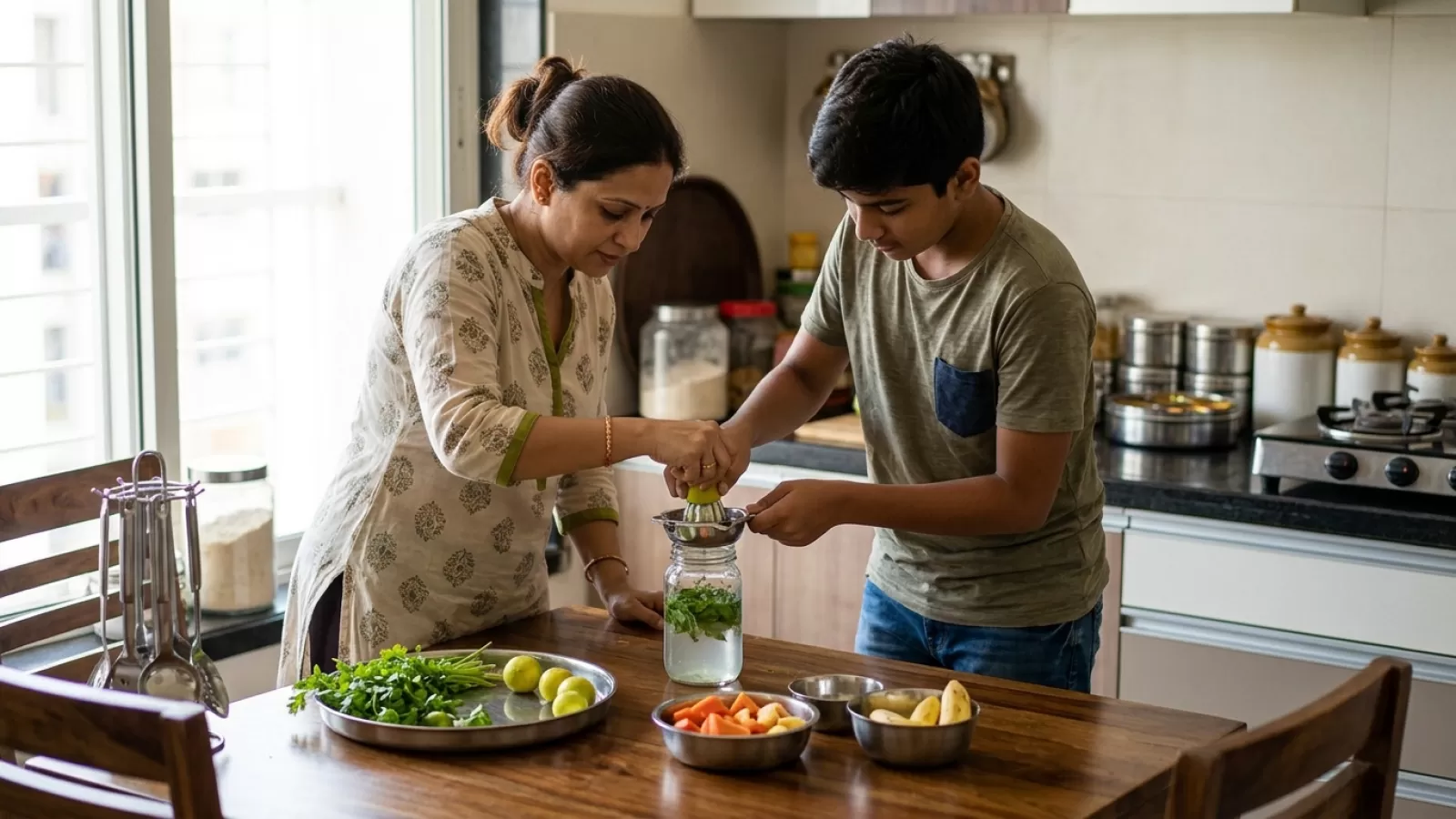
For example, your son might choose to use the stairs instead of the lift. Your mother-in-law might prefer to drink a glass of water first thing in the morning. Even small children can join in—like washing hands properly before meals or helping set the table.
This way, everyone feels involved, not controlled. The best part? Sometimes, one person’s change quietly inspires another. It’s not always dramatic, but it does make a difference over time.
- Let the family vote on a “wellness day” meal once a week—simple, light, but tasty.
- Encourage sharing progress in a casual way, maybe during dinner or before bed.
- Celebrate small wins, like a full week of drinking enough water or eating one fruit daily.
When people have a say, they’re more likely to stick with it.
Accept That Wellness Is a Slow, Ongoing Process
Modern Indian life doesn’t leave much room for grand health experiments. Work-from-home routines, late dinners, and school schedules all compete for attention. It’s natural to feel impatient or discouraged when progress is slow.
But here’s what’s often true: families who stick to a few easy, steady habits see more lasting wellness than those who jump into big, unsustainable changes. You don’t need to chase every new trend or compare yourself to what you see online.
Wellness grows quietly, in the background, through small daily choices. Over time, these little shifts—like an extra glass of water, a short walk, or a lighter dinner—make a bigger difference than you’d expect. And they fit within the familiar patterns of Indian family life, which is what really matters in the end.
So, next time you feel your family wellness is falling behind, remember: you don’t have to change everything. Just start with one small habit, and build from there.