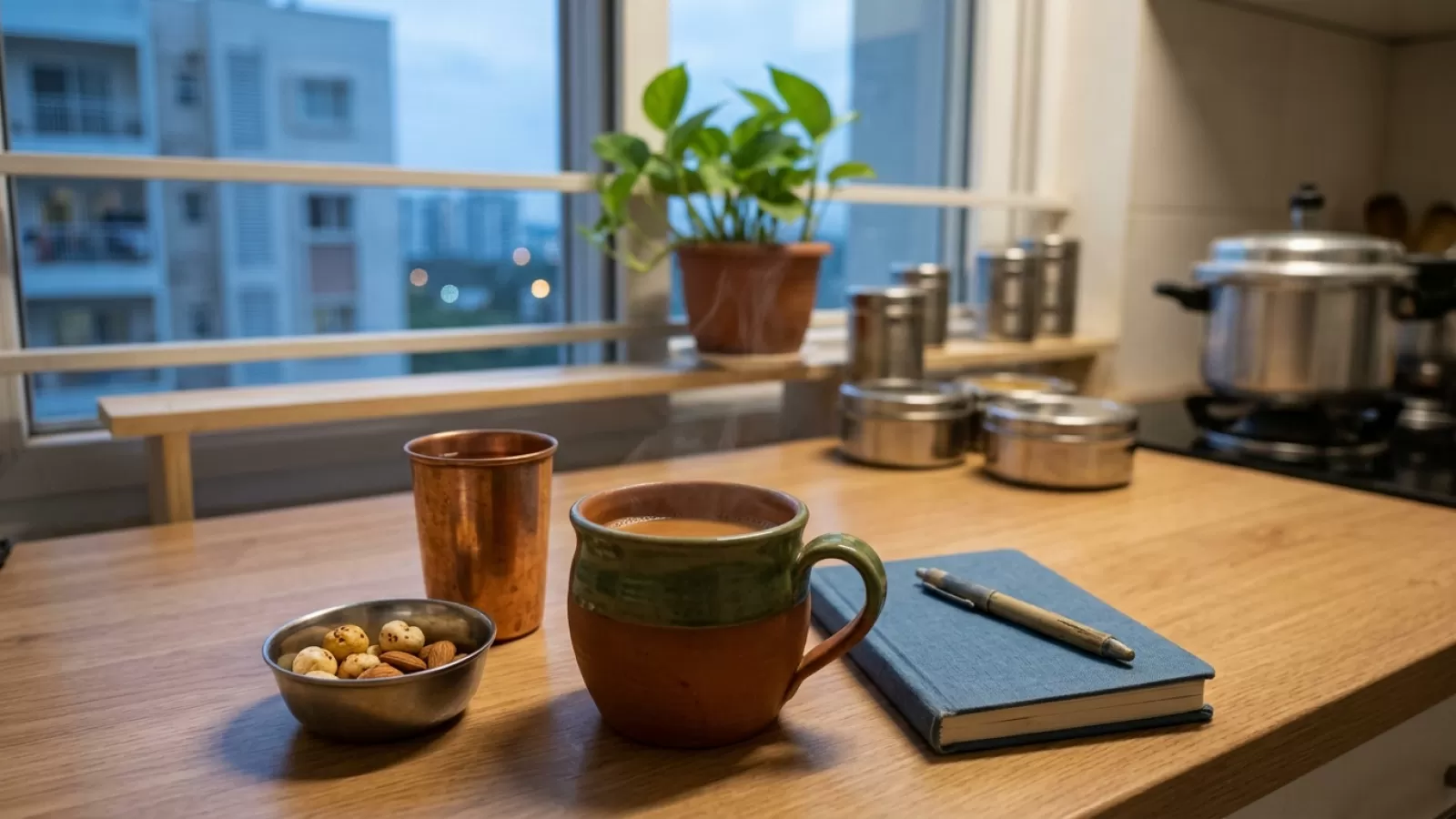
Evenings in many Indian homes can feel like a strange mix of relief and exhaustion. The day’s work—whether it’s office calls, cooking, helping with homework, or managing endless small tasks—finally slows down, but so does your energy. Motivation tends to dip after sunset. Sometimes even simple things, like changing out of your work clothes or tidying the living room, feel like too much. If you’ve ever found yourself slumping on the sofa, scrolling your phone, and wondering why you can’t get up, you’re far from alone. These gentle evening routines aren’t about forcing yourself to be productive. They’re more about small nudges—quiet habits that keep you feeling steady, cared for, and connected to your own sense of wellness, even on the lowest-energy days.
Recognising Low-Motivation Evenings
It’s easy to feel guilty when you can’t muster the energy for an evening walk or a proper chat with family. But these slow, lazy evenings are more common than people admit. Maybe it’s a long commute, back-to-back meetings, or simply the humidity during monsoon—most families experience evenings where motivation seems to vanish. You might notice small signs: not wanting to cook, putting off washing dishes, or not replying to messages.
It helps to recognise that this isn’t a personal failing, but a signal from your body and mind. Many Indian households quietly adjust their routines on such days, swapping fresh cooking for leftover dal, or skipping the ironing altogether. That said, letting every evening slip into tired inertia can slowly chip away at your overall sense of wellbeing. A little awareness, even on these days, can make a difference.
Here’s the catch: the goal isn’t to force yourself into action, but to gently notice what your mind and body need, and see if there’s a small step you feel up to.
Small Awareness Cues: Listening to Yourself
One gentle way to handle low-motivation evenings is to build small awareness cues into your routine. These are little reminders that help you pause and notice what’s happening inside—without judgement.
- Before reaching for the remote or your phone, notice how your body feels. Are your shoulders tight? Do you feel thirsty or hungry?
- Ask yourself: “What’s one thing I can do now that won’t feel heavy?” Sometimes, it’s just splashing water on your face.
- Place a glass of water or a bowl of fruit on the dining table as a visual nudge—many people find they forget basic self-care when tired.
Gently tuning in—even for a minute—often creates a small sense of control. You’re not forcing a big change, just making space to be a little kinder to yourself.
Gentle Transitions: Creating a Buffer Zone
In many Indian homes, evenings don’t have a clear start; work and chores just blend into the night. A buffer activity (not a big task—just a simple ritual) can help your mind shift gears.
Some families light a diya at dusk, others play soft music or step onto the balcony for a few minutes of fresh air. These small transitions act as a pause between the busyness of the day and the restfulness of night.
- Wash your hands and face as soon as you’re done with work or chores.
- Change into comfortable home clothes—even if you’re not going out.
- Open a window to let in some air or light an incense stick if you like gentle scents.
These are not chores, just simple cues that tell your brain, “It’s evening now, you can slow down.”
Simple Movement: Moving Without Pressure
Most wellness advice pushes for evening walks or yoga. But, honestly, on low-motivation days, even that can feel like a lot. The idea here isn’t to exercise, but just to loosen up.
Try standing and stretching your arms overhead while waiting for your tea to boil, or gently rolling your shoulders while seated. If you’re watching TV, flex your ankles or do slow neck circles during ad breaks.
- Walk around the house for a couple of minutes between tasks—maybe to check if the balcony door is locked, or to water a small plant.
- Put on a favourite old song and sway a little, even if you don’t want to dance.
- If you have kids or pets at home, join them briefly in their play. It’s less about burning calories, more about waking up your body after sitting for hours.
Some evenings, this might be all you manage. That’s absolutely fine.
Light, Familiar Evening Meals
When you’re tired, heavy or elaborate meals can be more draining than nourishing. Many families in India naturally switch to lighter, familiar fare on such evenings. A bowl of moong dal with rice, some yogurt with roti, or simple sabzi can feel comforting and easy to prepare.
It’s perfectly normal to eat leftovers or assemble a quick khichdi when motivation is low—there’s no need for guilt. The idea is to have something warm, gentle on the stomach, and not too fussy.
- Keep a few easy options handy: boiled eggs, curd rice, or upma.
- Try a plain fruit plate with nuts if you truly can’t face cooking.
- Drink a glass of water or buttermilk before dinner to help your digestion and give yourself a moment to pause.
You’ve probably noticed: on evenings when you eat light and early, sleep tends to come more easily.
Screen Time and Winding Down
Many people find themselves glued to TV or mobile screens in the evening, especially when too tired for anything else. There’s nothing wrong with enjoying your favourite serial or catching up on messages—but too much screen time can sometimes leave you feeling more drained.
It helps to set a soft limit—maybe switching off the TV after one episode, or putting your phone aside 15 minutes before bed. Instead, you could:
- Sit quietly on the balcony or terrace, even if it’s just for a few minutes.
- Flip through a magazine or read a few pages of a book.
- Chat with family about something light, like plans for the weekend or a funny incident from the day.
No need to be strict—just a gentle nudge to try something restful before sleep.
Connecting With Family, Gently
Evenings are often seen as family time, but low motivation can make even casual conversation feel like a task. It’s okay to have quiet evenings. You don’t have to force cheerful discussions or play board games every night.
Instead, look for small ways to connect:
- Sit together while sipping tea, even in silence.
- Share a small snack or dessert after dinner.
- Listen to a favourite song together, or watch a short funny video.
Some days, just being in the same room is enough. Not every evening needs to be lively—gentle togetherness is also precious.
Preparing for a Restful Night
As evening winds down, a few simple steps can help you ease into a better night’s sleep, even when you’re feeling sluggish. Many families have their own little bed-time rituals—folding away laundry, setting out clothes for the next day, or saying a prayer.
Try to dim the lights a bit, lower the noise, and avoid heavy discussions just before bed. A warm shower or just washing your feet can help signal to your body that it’s time to rest.
- Keep your phone away from your pillow—sometimes, just leaving it on a table across the room is enough.
- Switch to a softer light, like a bedside lamp, after dinner.
- If your mind is busy, jot down a quick list of tomorrow’s priorities—then set it aside.
These small routines, even if done imperfectly, can bring a sense of closure to the day, making it easier to relax and recharge for tomorrow.