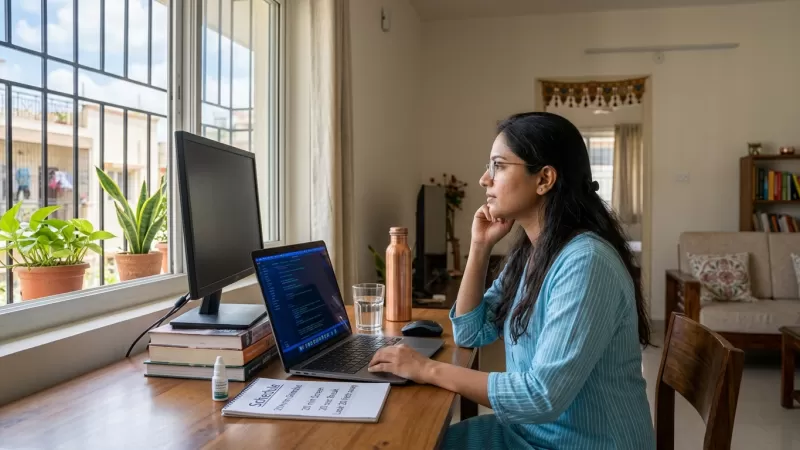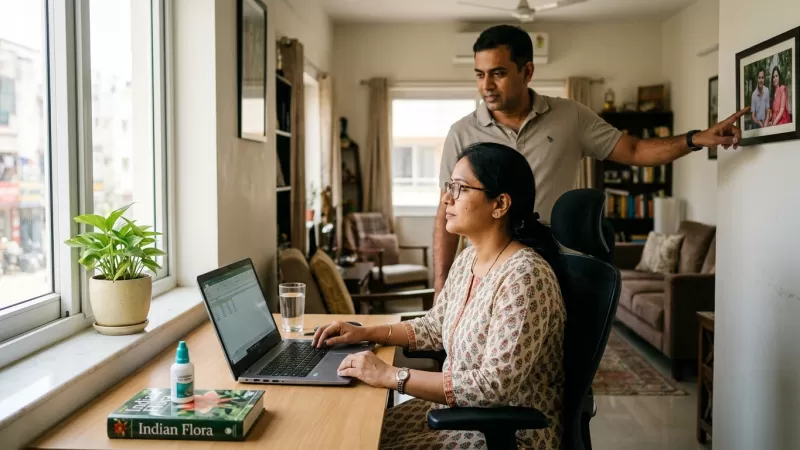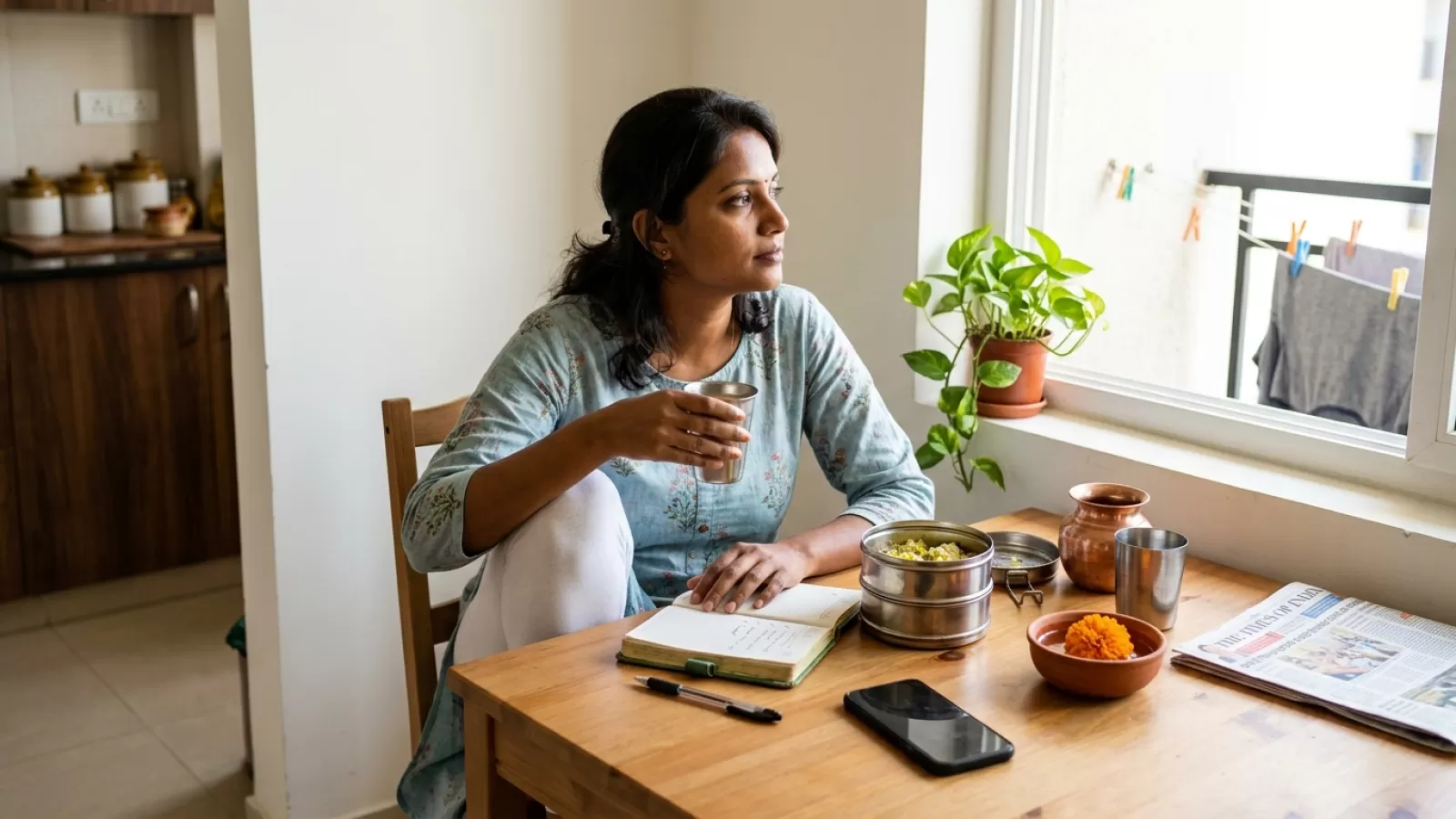
In many Indian homes, the clock can hit 9pm and you might look back, wondering how the day disappeared. The hours get filled with phone calls, WhatsApp groups, office tasks, kitchen duties, and family needs—leaving hardly any space for a pause, let alone a real check-in with yourself. That sense of feeling lost or off balance creeps in quietly, especially when daily self check habits India are missing from the routine.
These days, most adults juggle so many roles that it's easy to spend entire weeks on autopilot. You might find yourself crossing items off lists, serving hot dal and roti, or helping a child with homework, but still wonder—at the end of it all—if you actually made any meaningful decisions for yourself. This is a familiar pattern, and the smallest, quickest habits can often help you start to feel grounded again.
Why Indian Adults Often Lose Track of Themselves in Daily Life
In Indian families, daily life tends to run on momentum. Mornings are a blur of chai, tiffin prep, and last-minute uniform hunts, while evenings might bring double-duty: office calls and sabzi chopping at the same time. The pressure to keep everything running smoothly means your own needs can quietly slip to the bottom of the list. This is especially true for women who are expected to manage home and work without fuss, or seniors caring for grandchildren.
It's not just about being busy. There's an underlying rhythm in most Indian homes—shared spaces, joint family dynamics, and a sense of duty that can crowd out individual time. Even in nuclear families, the constant demands of work-from-home setups or commuting in heavy city traffic make it easy to lose sight of yourself. You may find that you are always reacting to what others need, instead of checking in with how you actually feel.
That said, feeling lost daily life India is not a personal failing. It's a byproduct of how our days are structured and the many hats we wear. Recognising this is the first gentle step toward finding small moments of self awareness.
How External Demands Crowd Out Self Awareness
Many Indian adults will admit that the day rarely unfolds the way they intended. There are always unexpected calls from relatives, neighbours dropping by, or power cuts that throw off the routine. Before you know it, you’re swept up in everyone else's plans, with no time to pause or breathe.
Culture plays a big role too. In most families, saying 'no' or setting boundaries is seen as selfish or rude. So, you keep helping, keep agreeing, and soon your own feelings become harder to access. Over time, this leads to operating on autopilot—your hands are busy but your mind is elsewhere. Self awareness habits Indian adults try to build often get sidelined by tradition, expectation, and the sheer pace of everyday life.
Psychologists who counsel middle-class Indian families often find that the most common trigger for feeling lost is a lack of small personal rituals—those two-minute check-ins that anchor you amid the chaos. When these are missing, even the simplest choices, like what you want to eat for dinner or how you want to spend your Sunday, feel out of reach. That’s when the question of how to feel grounded Indian adults face every day becomes all the more urgent.
Signs You’re Living on Autopilot
- You finish dinner and can't recall what you actually ate. Many adults in Indian homes rush through meals, eating while answering work calls or helping kids, barely tasting the dal or sabzi on their plate.
- Two weeks go by and you realise you haven't done anything just for yourself. Maybe the last movie you watched was for someone else, or you haven't stepped out for an evening walk in ages.
- You struggle to name your own feelings. When asked how you're doing, you default to talking about work, kids, or parents, not about your own mood or energy.
- Small decisions feel overwhelming. Choosing what to wear, what to cook, or when to take a break can feel strangely difficult, as if your preferences have faded into the background.
- You feel strangely tired even after a full night's sleep. This isn't just physical exhaustion—it’s the mental fatigue of never checking in with yourself.
Quick Habits That Bring You Back to Yourself
- 60-second body scan: Pause wherever you are—kitchen, balcony, bed—close your eyes and notice your feet, legs, back, and shoulders. No need to change anything, just tune in. This simple move signals to your brain that your own state matters, not just what you're doing for others. Many working professionals find this grounding during busy work-from-home days.
- Ask yourself "What do I need right now?" In the middle of the day, even in the middle of making chai, stop and check: Do you need water, a stretch, or two minutes of silence? Most days, the answer is surprisingly basic. Small moments of self awareness habits Indian adults can build come from this gentle pause, not from grand routines.
- Hand-on-heart check: Place your hand over your heart before you leave for work or after returning home. Notice your heartbeat for just 10 breaths. This habit, common among those learning how to feel grounded Indian adults style, is invisible but powerful, especially in shared family spaces.
- Notice one thing you are grateful for: Not a full gratitude journal, just a quiet nod—"I'm glad for this hot poha," or "I'm grateful the rain cooled things down today." This quick habit is manageable even on the most chaotic days.
- Micro-breaks after transitions: After a meeting, before starting dinner, or once the kids are in bed, sit or stand still for 30 seconds. Let your mind catch up to your body before the next task. It’s a reset button many families in Indian cities have quietly discovered during the pandemic years.
How Feeling Lost or Off Balance Shows Up in Indian Homes
On a humid summer evening in a Chennai flat, you might find an adult scrolling endlessly on their phone after dinner—not really reading, just avoiding the sense of emptiness that creeps in. In joint families, it's common to see someone cleaning up after everyone else has eaten, not because they have the energy, but because being busy feels safer than sitting with their own thoughts.
During festival time, a homemaker might wake before sunrise, cook for hours, and greet relatives all day—only to end the night feeling as if they were invisible in the crowd. For many working professionals, the commute in Bengaluru traffic becomes the only alone time, yet even that is spent mentally preparing for the next demand. These moments are not rare. They're a quiet, almost invisible thread in daily self check habits India often miss, woven through routines from the kitchen to the office cubicle.
Noticing When Outside Help May Be Needed
If you find that you are feeling lost daily life India style for weeks or months, or if these feelings come with deep sadness, anger, or anxiety that won’t shift, it might be time to talk to a trusted friend, family elder, or a doctor. Sometimes, life’s pressures become too heavy for quick habits alone. There’s no harm in asking for support—many adults find relief just in speaking their truth aloud, even if it’s only to one safe person.
Common Questions
Many Indian adults find themselves searching for that little pause in the middle of a packed day, especially when life starts to feel overwhelming or directionless. Here are some of the most common questions about daily self check habits India, answered with real-life rhythms in mind. These responses keep in mind the unique pulse of Indian homes—shared spaces, family routines, and those everyday moments that shape how you feel.
What are the simplest daily self-check habits for Indian adults who feel perpetually lost or off-balance?
Some of the simplest habits are the ones that fit right into what you already do. For example, pausing before your first sip of morning chai to notice how your body feels, or checking in with yourself while waiting for the pressure cooker to whistle. Taking a slow, conscious breath while folding laundry or a quick stretch after a long call can also help you reconnect. These tiny moments of self awareness habits Indian adults can build, often make a surprising difference when practiced regularly.
How do you reconnect with yourself at the end of a day that was entirely controlled by other people's needs?
After a day full of demands, try to claim just two minutes for yourself before bed. Sit quietly—maybe on the balcony, or next to a sleeping child—close your eyes, and simply ask, “What am I feeling right now?” No need to fix anything, just listen. Many adults write a single sentence in a notebook, or even whisper a thank you for something small, like cool air from the ceiling fan. These gentle pauses can help you slowly rebuild a sense of direction.
Is feeling lost or off-balance in Indian adult life a normal state or a sign of something that needs attention?
It’s very common, especially in busy Indian homes, to feel lost or off-balance now and then. Most adults go through phases where life feels like a blur of other people’s needs. But if this feeling lingers for weeks, or is joined by sadness or irritability that doesn’t fade, it’s a good idea to talk it out with someone you trust. Sometimes, the support of a friend, family elder, or doctor can make a meaningful difference.
What daily practices help Indian adults maintain a sense of purpose and direction during their busiest periods?
During hectic times, the most useful practices are the ones that are quick and repeatable. Many find that taking a silent minute before starting work, or naming one thing they are grateful for after dinner, helps set a gentle anchor for the day. Even sharing a quiet conversation with a partner or child about how the day felt can restore some sense of control. The key is keeping these habits light and flexible, so they don’t feel like extra chores.
How do you build a daily grounding practice into Indian adult life without it feeling like another obligation?
The trick is to tie grounding habits to what already exists in your daily routine. For instance, use the time when you are waiting for milk to boil, or during that first sip of evening chai, to check in with yourself. Avoid making it a strict ritual—let it be gentle and forgiving. Over time, these small daily self check habits India can become as natural as switching off lights before bed, offering a little comfort without becoming another demand on your already full plate.