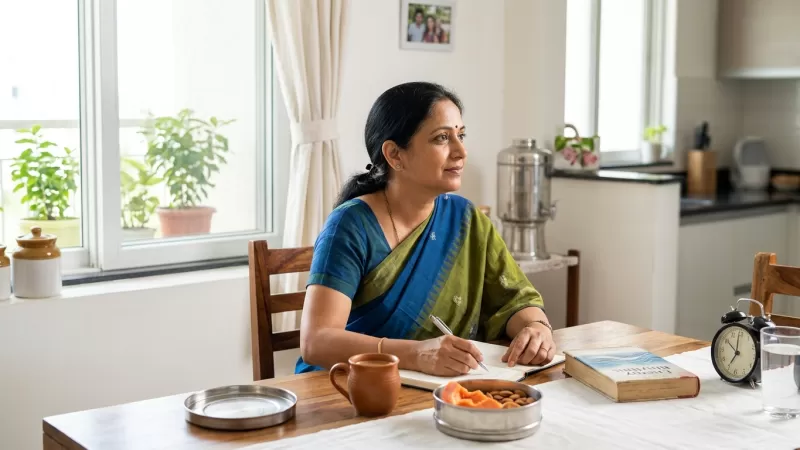
Some days in Indian homes, it feels like you’re everywhere except where you physically are. The pressure to manage work, family, meals, and endless notifications leaves your mind hopping between unfinished lists, while your body quietly stirs the dal or folds yesterday’s laundry. These days, daily presence habits in India aren’t just a luxury—they’re a lifeline for adults who feel stretched across a dozen tasks, rarely able to settle into a single moment.
Whether you’re struggling to listen to your child’s story at the dinner table, or realising you can’t finish a single page of a book without your mind darting to tomorrow’s groceries, you’re not alone. For most Indian adults, the real challenge of presence is not just digital—it’s the relentless, real demands that tug at you from every corner of your home.
Why Indian Homes Breed Constant Distraction—And What It Feels Like
In many Indian households, the pace rarely slows. Mornings begin with the clatter of pressure cookers and alarms, and evenings end with drowsy WhatsApp replies or last-minute work log-ins. The habit of always thinking ahead—about tiffin packing, EMI payments, school fees, or who will make chai for guests—becomes second nature.
Adults in India often find their attention split not just by devices, but by the structure of daily life itself. Joint families might mean a TV blaring in one room and a video call in another. Nuclear families often juggle household work with office work, all in the same small flat. Even during downtime, there’s a sense of being “on call” for someone—an elder needing help, a child with homework, or a sudden power cut demanding instant solutions.
It’s common to anticipate the next demand before the current one is finished. This learned anticipation, while useful for survival, makes daily presence habits in India unusually difficult to build and maintain.
The Real Reasons Presence Is So Hard for Indian Adults
For many, the story goes beyond phones or open tabs. The tricky part is that Indian adult life is rarely single-threaded. It’s more like a patchwork of overlapping needs: work deadlines, family expectations, social obligations, and the unpredictable interruptions unique to Indian homes—doorbells, delivery calls, sudden visits from relatives.
One overlooked reason is the deeply ingrained cultural expectation to keep everything running smoothly, often without visible effort or complaint. Whether you’re managing a joint family or living on your own, there’s an invisible checklist that always feels urgent.
Here is the catch: even when you do try to be present—say, drinking chai on the balcony or playing carrom with your child—your mind might still be running tomorrow’s mental list in the background. It’s a habit that forms slowly, almost invisibly, over years of multitasking.
Psychologists who work with Indian families often find that adults here report more background worry and anticipation during rest than people in less interdependent cultures. That low-level hum of “what next?” rarely switches off, even during supposed downtime.
Clues That Distraction Has Become Your New Normal
- Reading a page but not remembering it: Many adults notice they can’t finish a magazine article or a few pages of a novel without zoning out halfway, thinking about unfinished chores or missed calls. Ten years ago, this wasn’t the case.
- Being physically present but mentally elsewhere: Sitting with family at dinner, yet mentally revisiting work emails, comparing the price of vegetables, or silently planning tomorrow’s breakfast.
- Constant need for background noise: The TV or radio is always on in some homes—not just for entertainment, but to help fill an uneasy silence when the mind feels too scattered.
- Resting but not relaxing: Lying down after lunch, scrolling aimlessly, but feeling more restless after than before. True rest seems to slip further away.
- Feeling guilty for doing nothing: When rare moments of calm appear, there’s a nagging sense that you should be using the time to complete something else.
Daily Presence Habits India: Practical Steps for Busy Adults
- Choose a single everyday ritual to anchor your attention. For many, it’s chai time or the evening walk to buy milk. Try to use this moment to notice sensations—the smell of ginger in the chai, the feel of the breeze, the warmth of your cup. It doesn’t need to be long. The point is to let your mind rest in the present, just for those few minutes. This is one of the simplest daily presence habits India has quietly nurtured for generations.
- Bring presence into routine chores. Washing dishes, folding laundry, or making rotis—these repetitive actions are a hidden opportunity. Focus on the feel of the water, the texture of the dough, the sound of the rolling pin. Many adults find these are the only times their mind slows down.
- Set tiny, visible pauses between tasks. After finishing a phone call or sending a work email, pause for two breaths before starting the next thing. This helps your mind “reset” instead of blending one demand into another.
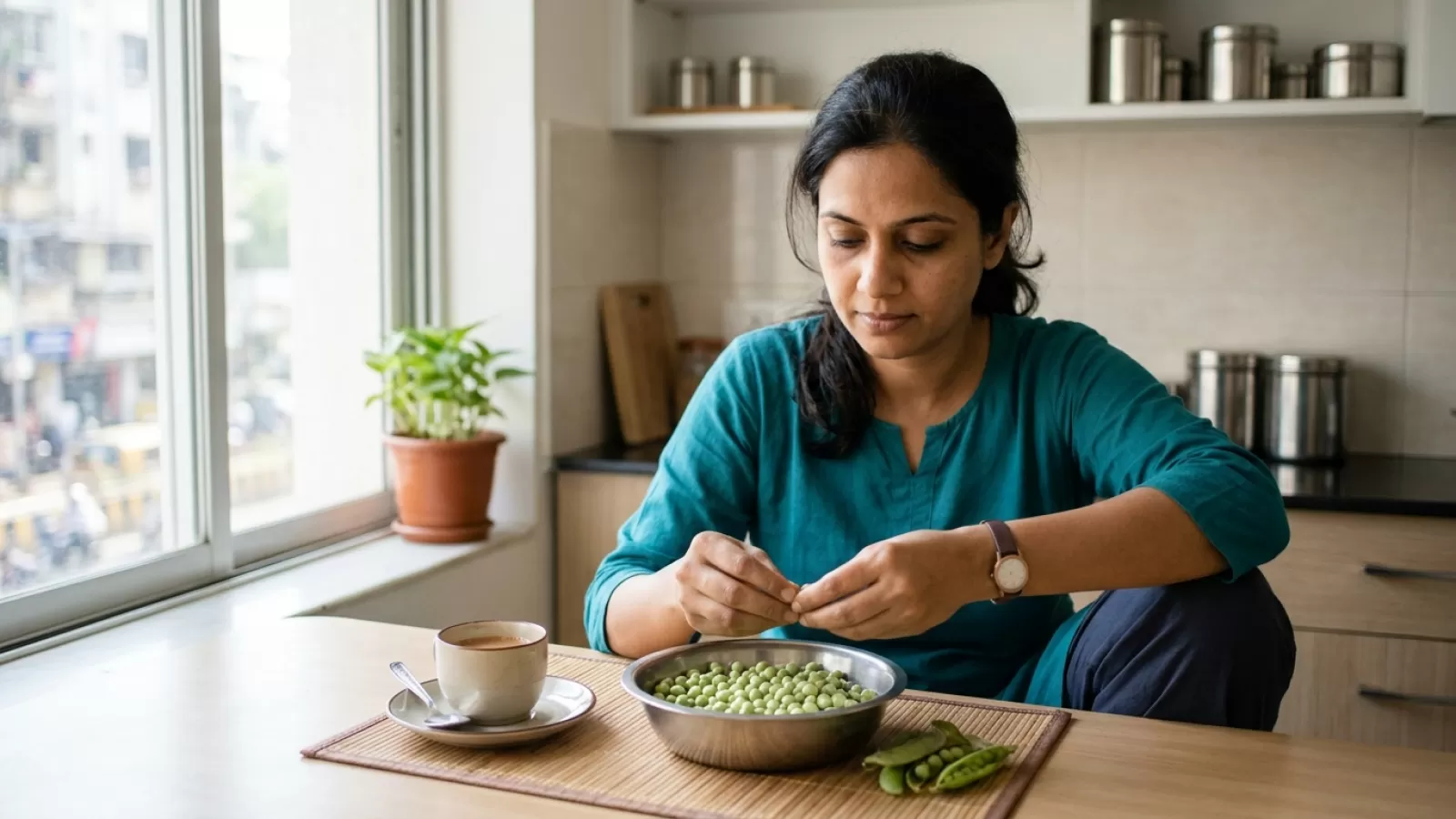
- Practice presence with children or elders by sharing a small activity. Reading a story aloud, shelling peas, or watching birds from the window—when you focus on the shared activity rather than just being physically together, presence naturally grows.
- Limit multitasking during family meals. Keep phones off the table, yes, but also try to gently notice when your own mind drifts to work or bills. When this happens, bring yourself back to the taste, smell, and sound of the meal. You don’t have to force a deep conversation—sometimes just being there matters.
How Presence—and Distraction—Appear in Everyday Indian Routines
On mornings when everything runs late, you might find yourself stirring the sambar while checking school group messages and mentally drafting a work email. The day hasn’t even begun, but your attention is already split in three directions. During summer afternoons, someone in the house is likely watching TV while another is on a video call; both are half-in, half-out of their activities.
Many families in Indian cities have quietly discovered that shared evening rituals—like playing antakshari, making pakoras, or walking to the corner store—are small pockets where presence can return, even for a few minutes. These little routines are not always perfect, but they often bring a sense of settling, a brief pause in the endless churn of daily life.
When It’s Time To Seek Extra Support
If you find that distraction is making daily life unmanageable—if you can’t finish basic tasks, lose track of conversations, or feel anxious and restless most of the time—it may be worth speaking to a mental health professional. Sometimes, persistent trouble with attention and presence can be related to underlying stress, anxiety, or other concerns that need more than everyday adjustments.
Common Questions
Many Indian adults have quietly wondered if everyone else is handling things better, or if feeling distracted all the time is just part of modern life. It’s reassuring to know that these struggles are shared across households, cities, and even generations. Let’s look at some of the most frequent questions that come up around daily presence habits in India and practical ways to address them.
Why has the capacity for sustained attention and presence become so difficult for Indian adults in recent years?
Over the past decade, Indian adult life has simply become more demanding. There’s the constant flow of digital messages, but also a steady rise in work expectations, shrinking personal space, and the pressure to manage everything smoothly. In many homes, adults now juggle work, family, and social obligations all at once, leaving very little uninterrupted time. This constant multitasking trains the mind to always anticipate the next thing, making it tough to settle deeply into any single moment—even if you want to.
What are the simplest daily practices that rebuild attention and presence for distracted Indian adults?
Small, regular actions make the biggest difference. Many find that anchoring presence to a daily ritual—like enjoying morning chai without screens, or paying attention while kneading atta—helps rebuild focus over time. Another gentle practice is to pause for two breaths between tasks, which gives your mind a chance to reset. Presence also grows in shared activities, such as reading aloud to a child or quietly sitting with an elder in the evening. These practices are woven into daily presence habits India values, and they fit naturally into busy homes.
Is distraction in Indian adults primarily caused by technology or by the genuine volume of demands in Indian daily life?
In Indian homes, distraction usually comes from a mix of both. Technology does play a role—phones, messages, and TV can scatter your attention. But for most adults, the real driver is the sheer number of daily demands: work, family, chores, and social expectations that rarely pause. Even when you set aside screens, your mind is trained to anticipate what’s next. So, while limiting digital distractions helps, the bigger challenge is building present moment habits India has always valued, even in a busy, changing world.
How do you be genuinely present at a family dinner when the concerns of work, finance, and tomorrow are all actively present in the mind?
This is a classic Indian dinner table dilemma. One gentle way is to let yourself notice the sensory details of the meal—the warmth of dal, the crunch of papad, the chatter in the background. When worries pop up, acknowledge them, but keep returning to the meal itself. You might not silence all concerns, but shifting focus to what’s happening now—taste, smell, conversation—helps you be more present, even if only for a few minutes. Over time, this becomes easier and more natural.
What is the single most effective daily practice for improving the quality of presence in Indian adult life?
For most, it’s choosing one small daily ritual and giving it full attention—without multitasking or distraction. This could be your first cup of chai, a quiet walk after dinner, or even watering the tulsi plant in the morning. What matters is not the activity itself, but the intention to be fully there, just for those few minutes. Many adults find that these small islands of presence gradually spill over into the rest of the day, making it easier to stay focused when it matters.