It’s 3:12am and the house is finally quiet. Ceiling fans whirr, a dog barks somewhere far away, and the mind is wide awake, rehearsing a future job loss that hasn’t happened. In many Indian homes, this pattern of late-night worry feels familiar. Thoughts spiral from an offhand comment by a manager to a vision of unpaid EMIs, relatives asking uncomfortable questions, and the worry of what comes next. You lie there, knowing nothing has changed in reality, but your body feels like it’s already living the worst outcome.
Stop catastrophising India — it’s a phrase you might hear on social media, but in the context of Indian middle-class life, it isn’t as simple as it sounds. Future worry in Indian adults often grows quietly in the cracks of daily uncertainty: the unpredictable job market, unreliable healthcare, and the underlying feeling that safety nets are thin. Worst case thinking in India isn’t just a habit; sometimes it feels like the mind’s way of bracing for a world where things can shift overnight.
How Catastrophic Thinking Becomes Routine in Indian Homes
Catastrophic thinking — the habit of mentally living through the worst possible scenarios before they happen — tends to sneak up on many Indian adults. You might start by worrying about your child’s marks, but before you know it, you’re internally preparing for a future where he struggles to find a stable job, or imagining how you’d manage if illness struck during a family function. These mental rehearsals rarely stay contained; they spill over into the next day’s chai, the bus ride to work, or even the conversation around dinner.
There is a reason this pattern feels so familiar here. Middle-class Indian families often walk a tightrope: a small setback — a salary delay, a sudden hospital visit — can throw the whole month’s plans. In many homes, the news brings stories of layoffs, business closures, or rising costs. With these real uncertainties, worst case thinking in India can become a kind of mental preparation. Yet, most of the time, these imagined disasters never actually arrive.
Here’s the tricky part: the mind’s attempts to protect you can sometimes make you live through pain that hasn’t happened. Future worry in Indian adults takes up space meant for rest, play, and connection. It pulls you out of the moment — whether you’re stirring dal in the kitchen or sitting with family after dinner. Catastrophic thinking often becomes part of the background noise of Indian adult life, but it doesn’t have to run the show.
Why Imagining the Worst Feels Like a Necessity
Why does your mind go straight to the worst case? In India, it’s not just an overactive imagination. For many, the memory of real hardship — layoffs, sudden illness, lost savings — isn’t far away. Growing up, you might have seen parents or neighbours suddenly thrown into difficult situations, with little warning. These stories are quietly absorbed and replayed, especially during periods of uncertainty.
Financial planners often find that Indian adults who have experienced sudden income loss become especially vigilant. The desire to stop catastrophising India is understandable, but it’s tangled with a lived history where things sometimes do go wrong. Add to that the social pressure — the expectation to “manage everything” without complaint, to be the strong one in the family — and the mind starts rehearsing for every possible storm.
Another reason: information overload. With news notifications, WhatsApp forwards, and warnings from relatives, it’s easy for anxiety about future scenarios in Indian adults to grow. If you hear about a friend’s failed investment or a neighbour’s unexpected hospitalisation, your mind quickly fills in the blanks with your own family in that frame. Sometimes, the more you try to plan, the more you end up living through things that haven’t and may never happen.
Everyday Signs You’re Stuck in Worst-Case Thinking
- Sleep is disrupted by future worry: You wake up at 2am with your mind racing, picturing layoffs, hospital bills, or family disputes that haven’t happened.
- Ordinary decisions feel overwhelming: Choosing a school for your child or planning a family trip leads to imagining a chain of disasters instead of possibilities.
- Physical tension that lingers: A tight chest or sore shoulders after a day spent mentally preparing for things that are unlikely.
- Repeated conversations about “what if”: You find yourself going over the same fears with your spouse, siblings, or friends, searching for reassurance but feeling more stuck.
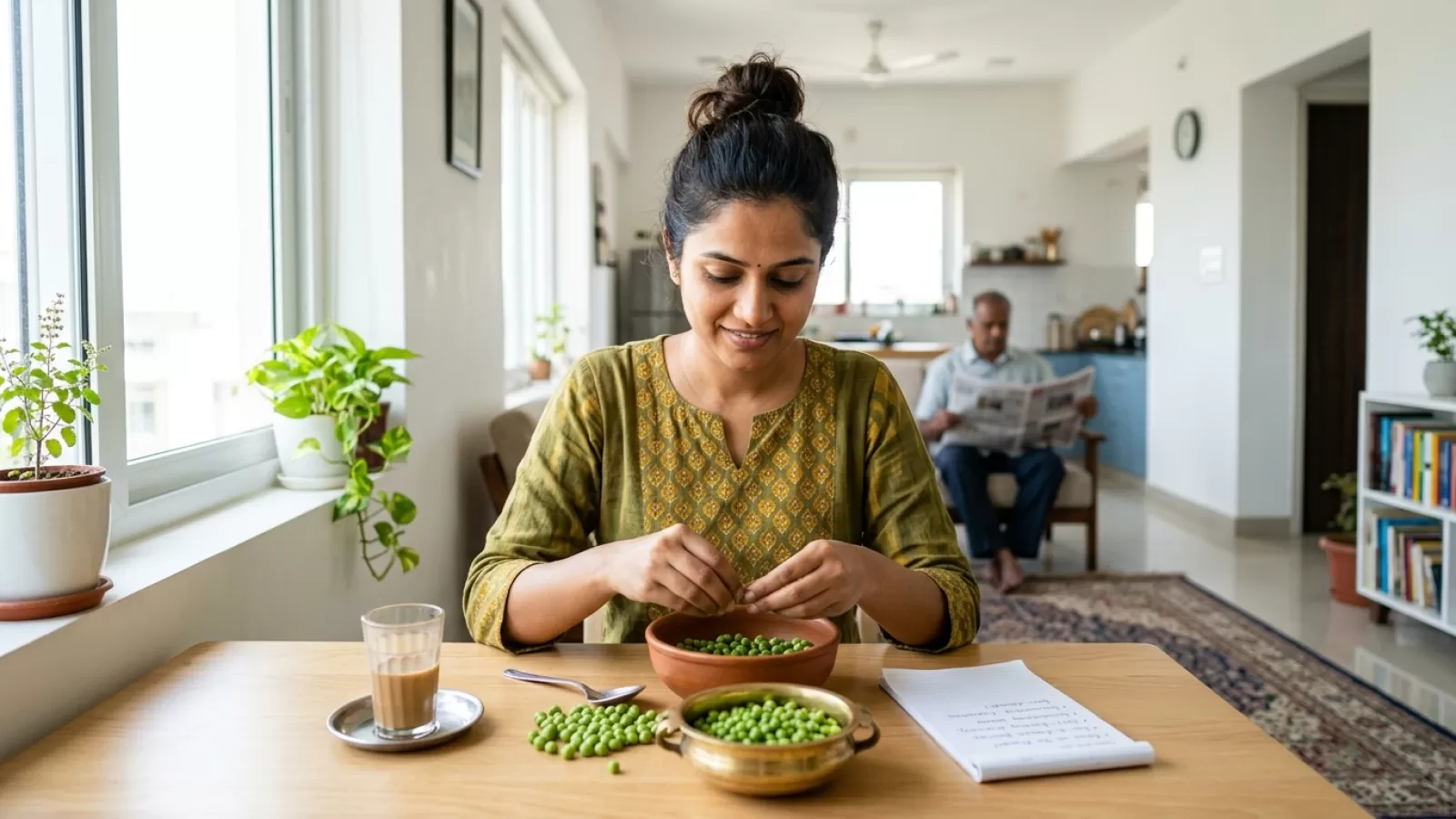
- Difficulty enjoying the present: Even during small joys — a cup of chai, laughter with the family, a Sunday nap — your mind drifts back to what could go wrong.
Everyday Habits to Loosen Catastrophic Thinking
- Notice and name your worry when it starts: On mornings when you wake up tense, pause over your chai and notice, “I’m in worst case mode right now.” Sometimes, just naming it takes away its power.
- Anchor in small, certain routines: Many families in Indian cities have quietly discovered that regular meal rhythms — dal-chawal at lunch, evening makhana with chai — give a sense of control. When the mind runs wild, returning to these small certainties helps.
- Share your fears in safe spaces: Often, a spouse or friend who quietly listens over a late-night walk or after the kids are asleep makes future worry in Indian adults feel less heavy. You aren’t alone in these thoughts.
- Limit information intake: Especially during stressful times, set boundaries on news and WhatsApp forwards. Many households now keep news to one short slot a day, then focus on their own lives.
- Practice returning to the present: This doesn’t mean ignoring real risks. Instead, when you notice your mind racing ahead, focus on what’s in front of you: the smell of fresh rotis, the sound of children playing, the coolness of dahi. These small anchors bring you back.
The tricky part is, these steps sound simple but are hard to stick to when the mind is spiralling. That said, practicing even one or two — especially sharing your worries, or anchoring in daily rituals — often makes a noticeable difference over weeks.
How Catastrophising Weaves Into Daily Indian Life
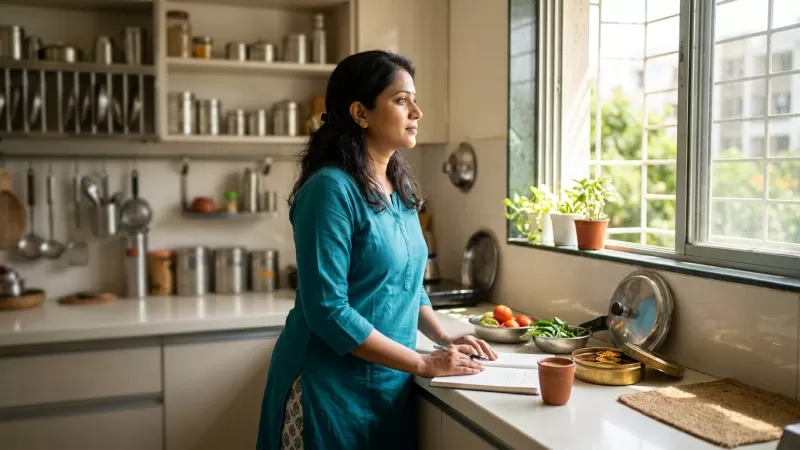
A kitchen in Nagpur at 6am. The gas stove clicks on, the pressure cooker whistles, and outside, the sky is still a soft blue. In this quiet, the mind starts replaying last night’s worries about an upcoming appraisal. The family is still asleep. You roll out rotis, but the mind is busy running through every possible outcome — not just a missed promotion, but the domino effect it could set off: school fees, Diwali plans, the look on your parents’ faces.
In many Indian homes, this is how worst case thinking shows up — quietly, in the background of ordinary routines. You might be folding laundry, but internally you’re rehearsing how you’d manage if a parent fell ill, or if a sibling’s marriage hit trouble. The outside looks calm, but inside, future worry in Indian adults can play on repeat, especially during transitions: exam seasons, budget meetings, or after reading unsettling news.
Sometimes, this mental rehearsal leads to useful action — keeping emergency cash, updating medical files, or checking insurance. But much of the time, it just drains your energy for the day ahead.
Knowing When It’s Time to Seek Extra Help
Most Indian adults experience waves of anxiety about future scenarios. But if worst case thinking in India becomes so constant that you can’t sleep, eat, or enjoy daily life, or if your family starts to worry about your health, it may be time to reach out. A family doctor, counsellor, or therapist can help you sort out what is ordinary stress and what needs more support. In many Indian settings, talking about mental health still feels new, but quietly, more families are finding relief by sharing the load with a professional.
Common Questions
It’s only natural to have more questions when it comes to future worry and anxiety about possible disasters. Many Indian adults wonder if their habits are normal, or if there’s a point where they should do something more. Let’s look at a few common questions that come up in homes across the country.
Why does the Indian adult mind so readily generate and inhabit worst-case future scenarios?
In many Indian families, the stories of relatives losing jobs, sudden hospitalisations, or financial setbacks are never far from the dinner table. The mind learns early to be alert for potential danger, especially when safety nets feel weak. Shared living spaces, constant comparison with neighbours or cousins, and social pressure to “manage everything” quietly train adults to scan for risk. Over time, this becomes a habit — the brain fills in the blanks with worst-case scenarios, believing it’s a form of protection.
What is the difference between useful realistic planning for the future and harmful catastrophic thinking that creates unnecessary suffering?
Useful planning looks like setting aside savings, double-checking insurance, or having backup plans for school admissions or job searches. It is practical, specific, and usually limited in time — you make a plan, then move on. Harmful catastrophic thinking, on the other hand, is repetitive and vague: you replay disasters in your head, feel tense for hours, and struggle to relax even after planning. In many Indian homes, if worry about the future is costing your sleep or joy, it’s probably crossed into unnecessary suffering.
How do you reduce catastrophic thinking without becoming unrealistically optimistic about genuine Indian risks?
The goal is not to ignore real risks, but to keep them in proportion. Many adults find it helps to set aside a fixed time — maybe during evening chai — to do their worrying and planning, then focus on what’s actually happening in the present. Sharing worries with a trusted friend or family member also brings perspective. It’s a balance: planning for actual risks, but not living them over and over before they happen.
What daily practices most reduce the frequency and intensity of worst-case scenario thinking in Indian adults?
Three things tend to help: sticking to small routines (like regular meals or a nightly walk), finding someone to talk to honestly, and limiting time spent on news or social media about disasters. Many families make it a rule to discuss worries during one set time, then let them be for the rest of the day. Having rituals — even something small, like making poha on Sundays — offers a sense of certainty that helps the mind rest.
When does future catastrophising in an Indian adult indicate anxiety that benefits from professional support?
If you find yourself unable to concentrate at work, losing sleep most nights, or noticing that even daily joys feel far away, it might be time to seek help. In some homes, family members notice someone withdrawing or becoming irritable, unable to relax even for a movie night. When future worry in Indian adults gets in the way of daily functioning, a doctor or counsellor can help sort through what’s normal and what needs more support. There’s no harm in asking for help — quiet relief often follows.