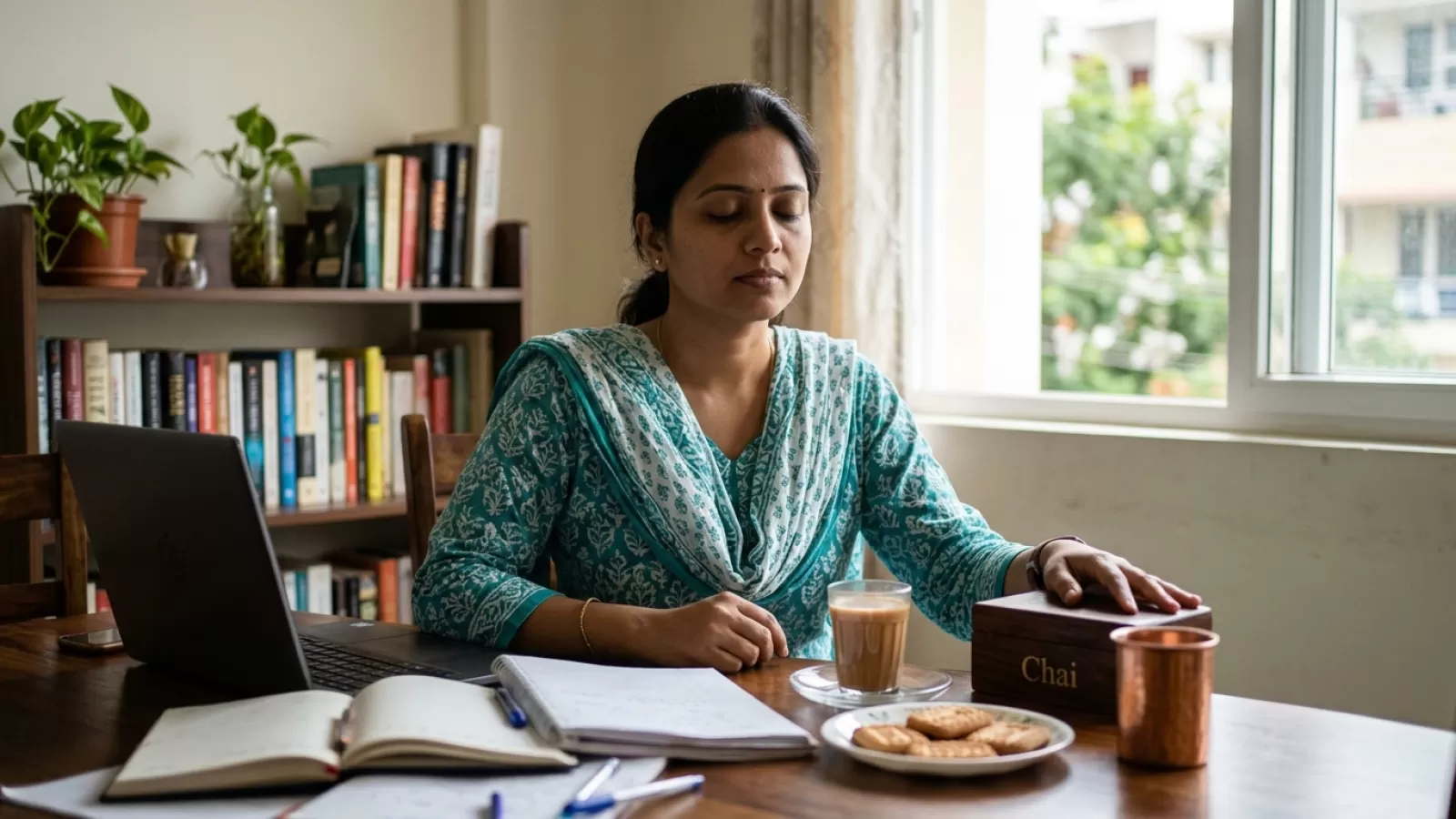
There is a particular heaviness that settles over many Indian homes and offices after lunch. The cluttered afternoon mind in India is not quite sleepy, not exactly alert — just restless and overfull, like the house during Diwali cleaning when every cupboard is open and nothing can be found. For working adults, this feeling often peaks between 2 and 4pm, right when tasks pile up and decisions matter most. You might find yourself staring at the same email for five minutes, reading the same sentence twice, and still not quite remembering what it said.
Most people try to shake it off with chai or by scrolling through their phone, but neither seems to settle the real issue. The mind keeps running in circles, jumping from one half-finished thought to another. This is the unique, restless afternoon Indian adults experience — a mental gridlock that resists both caffeine and quick fixes, leaving you wondering if anyone else feels quite the same way.
Why the Afternoon Mind Feels So Tangled in Indian Working Life
For many Indian professionals, afternoons are a strange space between the morning's planned energy and the evening's gradual wind-down. In shared family homes, the post-lunch period is rarely quiet. Pressure from work deadlines, WhatsApp pings, and household interruptions meet the body's natural dip in alertness. It creates a kind of mental traffic jam — too many open tabs in the mind, not enough clarity to finish any one thing.
In city flats, the hum of distant construction or the recurring honk of delivery bikes outside the window only adds to the sense of unsettledness. Even in quieter homes, the expectation to keep performing — to reply to the boss, help with a child's homework, answer the doorbell, maybe even prepare the evening chai — keeps the mind in a cycle of unfinished jobs. That said, this is not just about busyness. There is something about the Indian afternoon, especially for adults working from home or in crowded offices, that brings a special quality of mental clutter and restlessness.
The Real Reasons Behind Afternoon Mental Restlessness in Indian Adults
Several factors come together to create the restless afternoon Indian adults know so well. First, there’s the biological slump: the body’s natural circadian rhythm dips after lunch, slowing everything down. This is not unique to India, but it feels sharper here because lunch is often hearty — dal, rice, sabzi, sometimes roti and a little dahi — which can pull energy away from the brain toward digestion. In air-conditioned offices, stale air and artificial lighting can dull alertness. At home, the afternoon can bring power cuts, or the kind of sticky heat that makes the mind wander.
There’s also a social aspect. In many homes, afternoons are interrupted by deliveries, neighbors dropping by, or family checking in. For those who work in joint families, the boundary between work and home life blurs even more after lunch. The tricky part is, adults are expected to keep functioning at high capacity even as the mind feels foggy and scattered. Productivity coaches who observe Indian work routines often find that the most mistakes and miscommunications in cities like Mumbai or Bengaluru happen between 2pm and 4pm, when mental restlessness peaks.
Clues You’re Experiencing Afternoon Mind Clutter
- Concentration lasts 90 seconds or less: You begin a task, but your mind hops to another before you finish. This keeps repeating for an hour or more.
- Reading without retaining: You catch yourself re-reading the same WhatsApp message or spreadsheet line, with no memory of what it actually said.
- Impulse to snack, scroll, or fidget: Instead of settling, you find yourself reaching for makhana, a biscuit, or your phone every few minutes, hoping for a reset that never quite comes.
- Poor decision-making: Many people realise later that their worst emails, awkward calls, or missed details happened in this window — not because of carelessness, but because the mind simply could not focus.
- Physical restlessness: Tapping your foot, shifting in your chair, or getting up repeatedly for water, even if you’re not thirsty.
Many working adults feel embarrassed by this, but in most Indian homes, it’s surprisingly common — especially in the hot months or after a heavier lunch.
Small Shifts That Settle the Midday Mind
- Switch locations for a few minutes: If you’re working from the dining table, move to a balcony, sofa, or even just stand near a window. The change in scenery, even briefly, can reset your focus more than another chai.
- Short, gentle movement: Try a five-minute slow walk around the house, or simple stretches (shoulders, wrists, neck). Many Indian homes have found that a gentle stroll on the terrace settles the midday mind in India better than a forced power nap.
- Break the task into smaller steps: Tell yourself you only need to complete one email, or just the first column of a report. When the mind is cluttered, tiny, concrete tasks feel more do-able than big, abstract ones.
- Let your eyes rest: Look at a distant object outside for 60 seconds, or close your eyes for a minute. Eye strain can make mental fog worse, especially when working on a laptop in a sunlit room.
- Light, refreshing snack: If you’re hungry, pick something simple and not too heavy — a bowl of dahi, a few slices of cucumber, or some roasted chana. Heavy or fried snacks can make the afternoon mind even more sluggish.
Most importantly, don’t force yourself to power through as if nothing is wrong. Accepting that this is a normal, passing state can itself bring a bit of relief.
The Afternoon Mind in Indian Daily Routines
In offices across Chennai, you can spot the signs after lunch: someone cleaning their desk, another quietly scrolling through old photos, someone else standing by the window for no clear reason. At home, especially for those working remotely, the afternoon mind often leads to reorganising kitchen shelves, folding clothes that could wait, or starting a new WhatsApp group for no reason other than restlessness.
During summer, when humidity peaks and the fan only stirs warm air, people might drift to the balcony with a glass of nimbu pani, just for a change of air. Parents working from a shared bedroom might pause to help a child with homework — not because they’re free, but because it’s easier than forcing their mind back to a spreadsheet. Many families in Indian cities have quietly discovered that afternoon is not their sharpest time, and so they schedule important calls and decisions for before lunch or after 4pm whenever possible.
When It’s Time to Talk to Someone About Afternoon Mental Restlessness
If your afternoon mental clutter regularly turns into anxiety, constant forgetfulness, or affects your sleep and relationships, it may be worth speaking to a trusted friend or a doctor. Occasional restlessness is common, but if it starts interfering with your life in bigger ways, there’s no harm in reaching out. Sometimes, there might be underlying issues like stress or even a health condition that needs attention.
Common Questions
Everyone experiences a cluttered afternoon mind in India a little differently, but certain patterns show up in many homes and offices. If you’re wondering why this state feels so specific or what you can actually do about it, you’re not alone. Here are answers to some of the most common questions Indian working adults have about this restless window in the middle of the day.
Why does the afternoon mind feel so specifically cluttered and restless for Indian working adults in a way that is different from morning or evening mental states?
The afternoon mind tends to feel uniquely cluttered for Indian working adults because it sits at the crossroad of many pressures. In the morning, there’s a sense of fresh energy and purpose, while evenings allow for winding down. After lunch, the body is digesting, the environment may be warm or noisy, and the expectation to keep performing is high. In many Indian homes, this is also when interruptions are most frequent — deliveries, family calls, household chores. The combination of biological slowdown and social busyness makes the afternoon mental state especially restless and scattered.
What are the most effective interventions for settling an afternoon mind that is restless and unfocused in Indian professional life?
Usually, small and gentle changes help most. Moving to a different spot, stretching, or taking a brisk walk around the building can help reset your focus. In some homes, just sitting quietly with the eyes closed for two minutes makes a big difference. Light snacks like dahi or fruit, rather than fried items, help avoid further sluggishness. Many Indian professionals also find that scheduling less demanding tasks for this window — like sorting files or replying to simple emails — works better than pushing through complex work.
How do you maintain useful productivity during the afternoon mental restlessness window without fighting the state or giving in to complete unproductivity?
On afternoons when your mind feels scattered, try breaking tasks into small, concrete steps. Make a quick list and tick off even the smallest wins, like sending an acknowledgment email or updating a tracker. If possible, shift important decisions to earlier or later in the day when you feel sharper. Many working adults in Indian cities have found that accepting the mind's limits in this window, instead of pushing against them, helps them stay gently productive without burning out or feeling defeated.
Is the afternoon mental clutter connected to what was eaten at lunch or is it primarily a circadian phenomenon?
Both play a role. The body's natural circadian rhythm dips after lunch, leading to a drop in alertness. In India, lunch often includes rice, dal, sabzi, and sometimes curd — all filling and sometimes heavy. Heavier lunches can make the mental slowdown more noticeable, especially in hot weather. That said, even those who eat light can feel the fog because the body is wired for a mid-afternoon lull. Adjusting lunch to be lighter and including hydrating foods can sometimes soften the effect, but it rarely removes it entirely.
What daily habit most reliably prevents the afternoon mental restlessness that many Indian working adults experience?
Building in a short movement or stretch break just after lunch is one habit that helps many Indian adults. Instead of jumping straight back to a screen, walking around the house, doing a few shoulder rolls, or even chatting with a family member for five minutes can refresh the mind. Keeping lunch light and including some raw vegetables or curd also tends to make the slump less severe. Over time, these small habits can make the midday mind easier to handle, even on the busiest days.