In Indian homes, night-time can be oddly busy. Even after the last vessel is washed and the lights are off, your mind sometimes refuses to settle. Many adults find themselves lying in bed, heart pounding out of nowhere, a sudden wave of stress tightening their chest. It’s in these moments, when the whole house sleeps and you’re wide awake, that breathing calm practices for Indian adults during night stress quietly become a lifeline—no rituals, no special setup, just your own breath working in the background of a still, shared room.
This kind of calm can come from the most ordinary thing: the way you breathe. Unlike long wind-down routines or guided meditations that might wake your partner or require headphones, a few simple breathing techniques for night anxiety in India can start easing your body’s alarm in minutes, right there under your blanket. And the secret? You don’t need to resolve the worry or even understand it. You just need a breath pattern that soothes the physical response—often, that’s enough to help you return to sleep, even if the mind still has its own plans.
Why Sudden Night Stress Happens in Many Indian Homes
It’s common for sudden stress at night in India to strike when you least expect it. For many, the day’s demands only seem to catch up when the house is finally quiet. After busy evenings—late office calls, supervising homework, settling joint family differences, or wrapping up chores—your body may still be wound up even if you feel exhausted. Lying down, sometimes your mind replays a sharp comment from a relative, a work deadline, or a health concern, and before you know it, your heart is racing.
In many Indian households, bedrooms are shared spaces. This means any practice to calm breathing for Indian adults at night has to be silent and gentle. You can’t get up and switch on a light without disturbing others. It’s a quiet, internal process, often done in the dark. And because weather—like sticky summer nights or power cuts—can make sleep lighter, these moments of sudden stress at night feel especially sharp and isolating.
Fitness coaches who train working adults often find that most movement in Indian homes comes from daily tasks, not planned exercise. So, when you finally lie down, your mind may be ready to process all the leftover tension, triggering the body’s stress response at odd hours. This makes quick, equipment-free breathing calm practices for Indian adults during night stress not just helpful, but necessary for many households.
Why Night-Time Stress Feels So Immediate
The tricky part is, night-time stress rarely builds up slowly. It tends to hit suddenly—perhaps after a disturbing WhatsApp message, a memory from the day, or even with no clear reason. Your body’s stress response is automatic. The heart might race, the muscles tense, and breathing may become shallow. In many Indian homes, adults don’t always have the option to talk it out immediately or distract themselves with TV or a walk. Family members may be asleep in the same room, or neighbors close enough to hear.
This is partly because Indian days are packed with obligations and social demands, so emotional processing gets pushed to late hours. The quiet of night is often when your mind finally gets space to notice what’s been piling up. And when you can’t act on that stress—because everyone’s asleep or it’s not the right time—your body still feels the full force of it. A racing mind, combined with the feeling of being trapped in a still house, can make the stress feel even bigger.
Many adults in Indian cities also live with the pressure of being the emotional anchor for their families. Worries about finances, parents’ health, children’s safety, or even planning the next day’s meals can all pop up when your head finally hits the pillow. That said, what matters most in these moments isn’t the thought itself, but the physical reaction—and that’s where breathing calm practices for Indian adults during night stress make the biggest difference.
Common Signs That Sudden Night Stress Is Taking Over
- Racing heartbeat: You may notice your heart pounding, even though you’re lying down and should be relaxed. This is often the first sign that your body is reacting to sudden stress at night.
- Shallow, rapid breathing: Many adults find their breath feels stuck high in the chest, quick and unsatisfying. You might even catch yourself sighing or feeling short of breath.
- Restless body: Tossing, turning, or feeling an urge to get up and move—even when you know you need to rest—can be a clue. Some find their legs jittery or their hands clenching the bedsheet.
- Alert mind with looping thoughts: Thoughts circle back to the same worry, making it feel impossible to let go. The mind feels ‘on’ even when the body is tired.
- Sudden awareness of physical discomfort: You may become very aware of your heartbeat, a tight chest, or even small aches. This heightened awareness can make it harder to fall back asleep.
Breathing Patterns That Calm Stress Quickly in Indian Bedrooms
- Try the 4-6 breathing pattern: Inhale gently through your nose for a slow count of four, then exhale softly for a count of six. Repeat for four or five breaths. Extending the exhale—even slightly—tells your body to shift out of “alert” mode. You can do this lying down, under your bedsheet, without anyone noticing.
- Use silent nose breathing: Sometimes, just focusing on slow, quiet breaths through your nose helps the body settle. Breathe in and out without any sound, letting your breath become almost invisible. This is especially helpful in shared rooms during sudden stress at night in India.
- Pause after exhale: After a soft exhale, let your breath pause for a moment before the next inhale. The body tends to calm naturally when you don’t rush to inhale again. Do not strain—just let the pause feel natural.
- Repeat a calming phrase in your mind: Many find it soothing to pair each exhale with a gentle mental phrase—like “this moment will pass” or “I am safe now.” It’s not about solving the worry, just giving the mind something gentle to rest on.
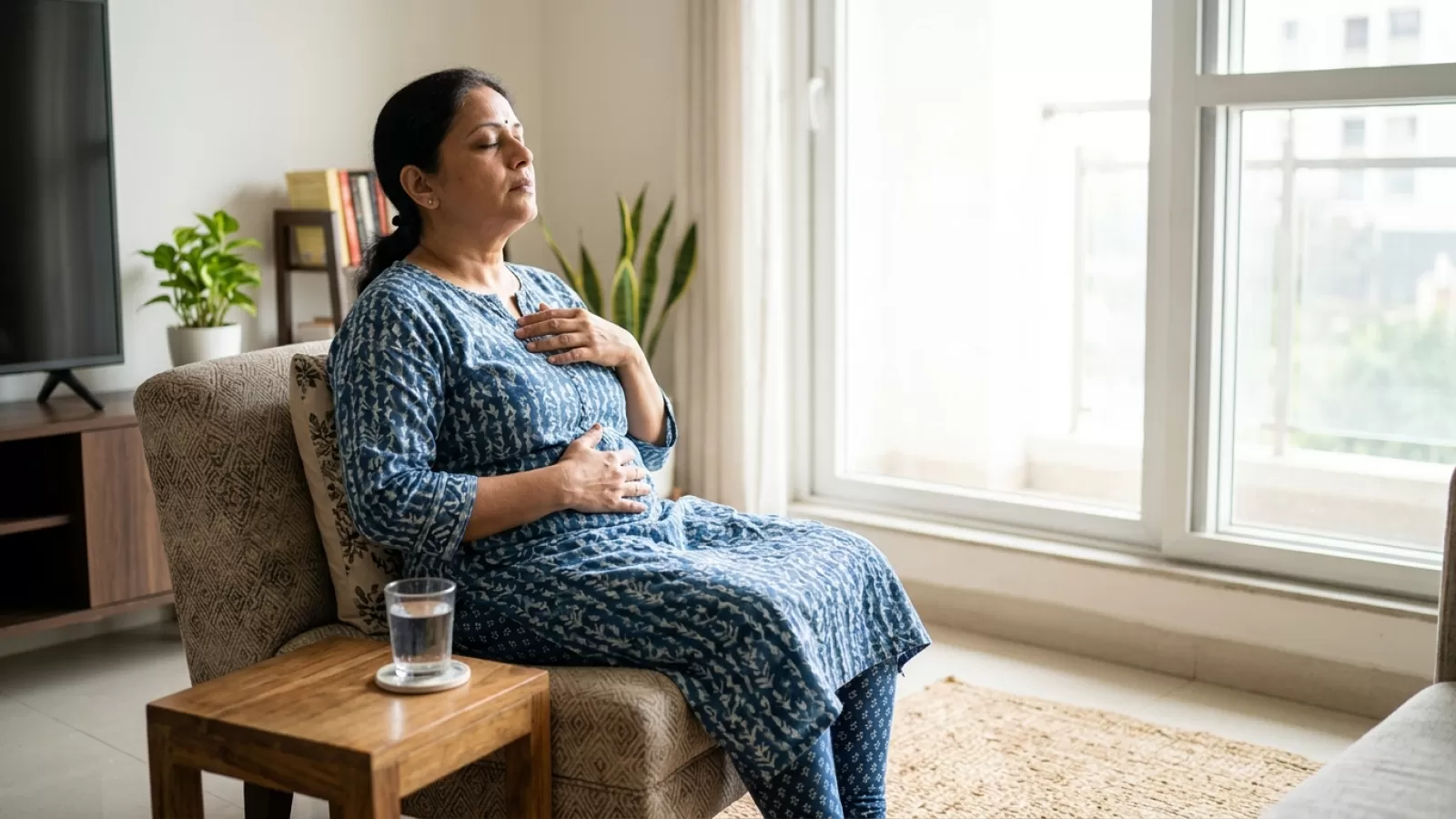
- Keep the body still and supported: Place a hand gently on your belly. Feel the movement with each breath—this simple touch can anchor you. It’s a quiet signal to your body to soften, even if stress is high.
Most people notice the physical shift—a slowing heart, less tightness—within two to three minutes. For many, calm breathing for Indian adults at night is less about time and more about intention. Even four or five mindful breaths can make a real difference.
Night Stress and Calm Breathing in Everyday Indian Life
In many Indian homes, the reality is that stress and calm live side by side. You may spend the whole day rushing—from prepping tiffin for your child to catching a crowded local train, to handling late-night calls with colleagues in the US. Then, at 1:30am, something triggers a wave of worry. Yet, in that same moment, you can quietly slip into a breathing pattern that helps you ride out the stress without waking your partner or children.
Many families in Indian cities have quietly discovered that breathing calm practices for Indian adults during night stress don’t need a name or a timer. It’s just a soft, silent practice—sometimes paired with the hum of a ceiling fan or the distant sound of dogs barking. The power is in its simplicity. You don’t have to fix the worry; you just have to let your body feel safe enough to rest.
Even seniors, who may wake up with aches or sudden reminders of old memories, find that a few gentle, elongated breaths can help ease their body back into sleep. And for working professionals, a quiet breathing rhythm after a late dinner or a stressful email can mean the difference between a restless night and a few precious hours of real rest.
Knowing When to Seek Extra Support
Most sudden stress at night in India can be eased with simple breathing techniques. But if you find that your nights are regularly interrupted by intense anxiety, or if you’re unable to return to sleep for many nights in a row, it may help to talk to a doctor or counselor. Sometimes, underlying health issues or chronic stress need extra attention. That said, for most adults, a gentle breathing practice is a safe, practical starting point.
Common Questions
Night-time stress is more common than you might think, especially in Indian homes where quiet hours can bring up unprocessed worries. You’re not alone if you suddenly find your body on high alert after midnight. Here’s some practical guidance for the questions that come up most often about breathing calm practices for Indian adults during night stress.
What are the simplest and most effective breathing practices for Indian adults who experience sudden night stress or anxiety?
The 4-6 breathing pattern—inhale for four counts, exhale for six—is simple, silent, and can be done lying down without disturbing anyone. Silent nose breathing is also effective: just slow your breath and focus on making each exhale a bit longer than the inhale. Placing a hand on your belly for gentle feedback can help you stay present. In Indian bedrooms, these quiet practices are often more practical than guided apps or long meditations, especially if you’re sharing space.
How quickly can a breathing practice meaningfully reduce the physical symptoms of sudden night-time stress?
Most adults notice a physical shift—slower heartbeat, less tension—within two to three minutes of calm breathing. Four to five slow breaths with a longer exhale can start to turn down the body’s stress response. You don’t have to do this for long stretches; even a brief practice can make falling back asleep much easier during sudden stress at night in India.
Do breathing techniques work for genuine anxiety or only for mild stress in Indian adults?
Breathing techniques can help with a wide range of night-time stress, from mild restlessness to more intense anxiety. While they may not resolve deeper issues or persistent anxiety, they do help the body shift out of ‘alert’ mode. Many Indian adults find these breathing calm practices offer real relief, even if the underlying worry is still there. If anxiety remains frequent and overwhelming, checking in with a doctor is a good idea.
Is there an optimal breathing pattern for night-time calm or do different breathing approaches work for different people?
There’s no single best pattern for everyone. Extending the exhale—like in the 4-6 pattern—is a good starting point, but some may prefer slightly different rhythms. What matters most is that the breathing feels gentle, quiet, and not forced. In Indian households, the best breathing techniques for night anxiety are those you can do silently and comfortably, without needing props or waking others.
How do you practice breathing techniques in an Indian household where you share a bedroom without disturbing your sleeping partner?
Choose silent, still breathing patterns. Lie on your back or side, breathe quietly through your nose, and avoid making any visible movements. You can even practice with your eyes closed, under your bedsheet. If you share a bed, keeping your body relaxed and movements minimal will keep your partner undisturbed. Many Indian adults use these calm breathing practices for night stress without anyone else in the room even noticing.