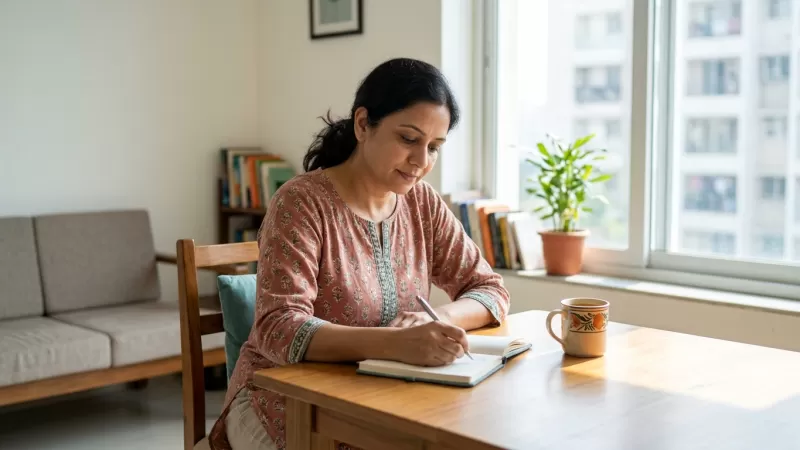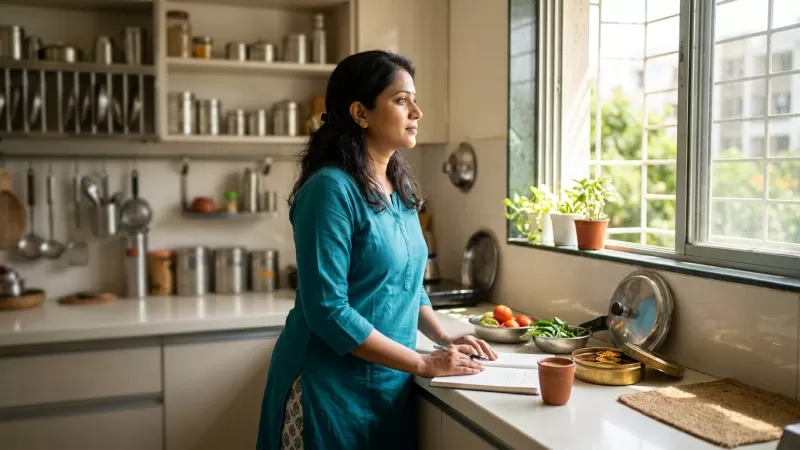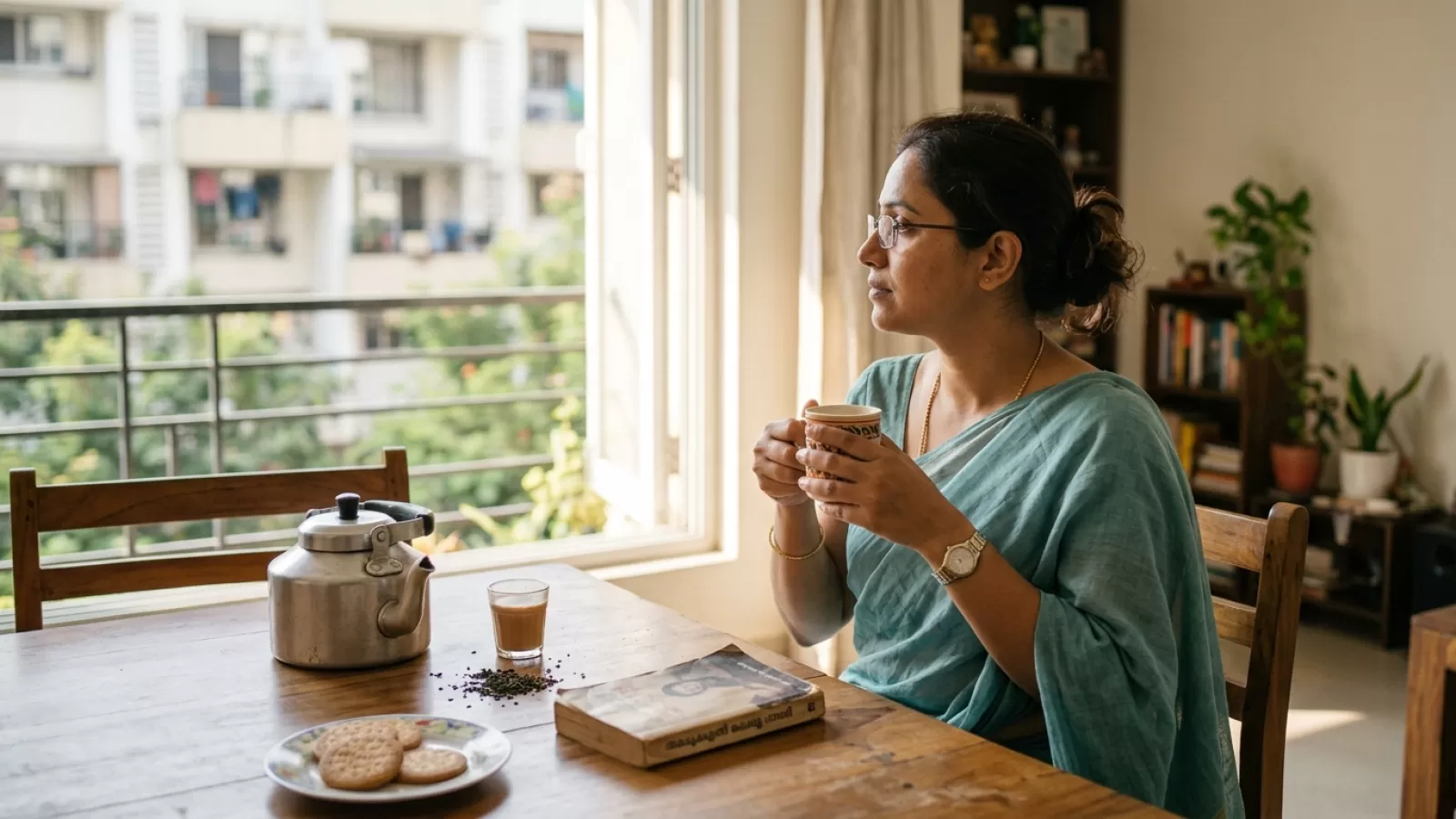
On a Tuesday evening in a flat in Gurugram, dinner is being prepared while homework questions echo down the hall. The pressure to manage work calls, check on a simmering dal, and keep everyone’s moods steady is familiar. Many Indian adults look for ways to reduce daily stress India without adding tasks, but the advice they find—start meditating, journal nightly, or fit in yoga—often feels like an extra burden on top of everything else.
Stress relief in Indian homes tends to happen in the small, unnoticed gaps: the brief pause while stirring chai, the quiet moment waiting for the pressure cooker’s second whistle, or the gentle breeze during an evening walk to the corner shop. The most effective Indian stress relief without extra effort happens in these in-between spaces, not by tacking on another to-do.
Why Most Stress Management Advice Feels Like One More Job
Many Indian adults are already operating at full capacity. Whether your mornings start with packing tiffins and ironing uniforms, or logging into a WFH setup while keeping an eye on the power backup, there’s little room for new routines. The idea of reducing daily stress India without adding tasks is appealing, but most advice doesn’t fit the realities of Indian family life.
For example, a professional commuting in Bengaluru might read about the benefits of deep breathing, only to realize they don’t have a spare 10 minutes to sit quietly before work. A homemaker in a joint family may want to try journaling but gets interrupted constantly. Even a simple evening walk is hard to manage between meal prep, homework, and guests dropping by unannounced. Indian stress relief without extra effort matters because for most, adding more is not an option.
Instead, many families have quietly discovered that the best stress management India minimum effort comes from weaving small pauses and micro-breaks into what they already do. These are not new habits—they are tiny shifts in how everyday things are done.
Why Indian Routines Make Adding New Practices Tricky
Indian homes are busy places. Kitchens are rarely quiet, and living rooms fill up with news debates, phone calls, and the daily hum of chores. In joint families, several generations may live under one roof, making private time almost impossible. Even in nuclear setups, most adults juggle packed schedules—work, school runs, shopping, family WhatsApp groups, and the endless cycle of sabzi, roti, and dahi.
Work-from-home setups have blurred boundaries further. Now, the dining table doubles as a workstation and the living room becomes a classroom. Power cuts, water supply timings, and even the weather add their own pressures. Summer brings exhausting humidity and shorter tempers, while winter means everything starts a little slower. Amid all this, the idea of carving out extra time for stress relief feels unrealistic.
Psychologists who work with Indian families often find that most adults try to reduce daily stress India without adding tasks, relying on built-in moments—like listening to old songs while chopping vegetables or letting thoughts wander during the evening chai. These small adjustments tend to work better than formal practices that require new time slots or equipment.
Recognisable Signs That Daily Stress Is Building Up
- Short tempers over small things: Yelling when the TV volume is too high or someone leaves the bathroom light on—these quick reactions are classic signs.
- Body aches and tiredness: Waking up with a stiff neck, tight shoulders, or feeling drained even after a night’s sleep is common when stress is high.
- Forgetfulness and small mistakes: Burning the tadka, misplacing keys, or forgetting to add salt—these moments often increase when daily stress piles up.
- Restless nights: Tossing and turning, thinking about tomorrow’s list, or waking up at odd hours is a hint your body is not unwinding as it should.
- Snapping at loved ones: Many notice they become irritable with family, especially children or elders, over things they would usually ignore.
These clues usually build slowly, often going unnoticed until someone points it out or you catch yourself sighing more often than usual.
Practical Ways to Reduce Daily Stress India Without Adding Tasks
- Slow down existing routines: Instead of rushing through chores, take five extra seconds to breathe while washing vegetables or folding clothes. Many find that slowing the walk from the bedroom to the kitchen in the morning—without checking the phone—naturally calms the mind.
- Use waiting moments: Every Indian home has waiting times—while the milk boils, during the pressure cooker’s whistles, or while waiting for a download on patchy WiFi. Let your mind wander, look out the window, or just stand quietly. This is Indian stress relief without extra effort at its best.
- Disconnect from devices during household tasks: Cooking dal, sweeping, or making rotis can be calming if you keep the phone away. The focus on your hands and the rhythm of work gives the mind a break.
- Notice small pleasures: Pay attention to the aroma of chai, the feel of cool water during a summer handwash, or the sound of rain on the terrace. These tiny joys ground you in the present and help in reducing stress naturally Indian adults experience.
- End-of-day signals: Many find that changing into nightclothes, switching off bright lights, or rinsing feet before bed signals the body to wind down—no new task required.
The trick is not to add, but to tweak. Instead of inventing new habits, find relief in what’s already happening around you.
Where Stress Relief Hides in the Indian Day
In many Indian households, stress relief is mixed right into the day’s routine. On mornings when everything runs late, some parents start singing an old filmi song while tying shoelaces. The act isn’t planned, but it softens the tension for everyone. After long workdays, adults often linger for an extra minute at the balcony, watching the street below or feeling the evening breeze—even if just for a short while.
During weekends, extended families sometimes gather for chai and small eats like makhana or poha. The conversation isn’t always deep, but the shared laughter, the gentle teasing, and the ritual of passing the biscuits provide a quiet buffer against stress. These are not "activities" added to the day, but familiar patterns that tend to soothe frazzled nerves.
Even household chores—like watering plants or folding laundry while listening to a favourite old radio show—double as moments of reducing stress naturally Indian adults have used for years without labelling it stress management. It is these unnoticed, ordinary moments that help most people manage stress without extra steps.
When Extra Support Is Needed
Most adults can handle moderate stress with these built-in pauses, but sometimes stress spills over. If you notice your health, mood, or relationships suffering for weeks, or if daily life feels unmanageable, it may be time to speak to someone. This could be a trusted family member, a close friend, or a doctor. There’s no need to handle everything alone or wait for a crisis.
Common Questions
Many Indian adults wonder if it’s truly possible to reduce daily stress India without adding tasks, especially when life already feels jam-packed. Here are some warm, practical answers based on how stress relief often shows up in Indian homes.
How do Indian adults reduce daily stress without requiring any additional time, money, or effort?
Most people find small pockets for stress management India minimum effort in what they already do. For instance, while waiting for the cooker’s whistle or travelling in a rickshaw, letting the mind wander can be surprisingly calming. Some adults use the walk to the lift, or the time spent peeling potatoes, to simply pause and slow their breathing. These moments don’t cost anything or require new routines—they build relief into the day naturally.
What existing moments in the typical Indian day can be converted into genuine stress-reducing practices without adding anything new?
The time spent making chai, sorting vegetables, or even folding laundry can become restful if you let yourself focus on the process rather than the rush. In many homes, the shared laughter during family tea, or the few quiet minutes after the night’s last WhatsApp message, become genuine stress relievers. Even sitting quietly after dinner before clearing the table provides a small but real break.
Is stress reduction that happens passively within existing activities as effective as formal stress management practices?
For many Indian adults, reducing stress naturally within daily routines is often more effective because it sticks. Trying to add special exercises or appointments can feel forced and get dropped quickly. But pausing to enjoy the aroma of sambhar, or a quiet moment before the evening news, is easy to repeat. Over time, these micro-pauses help your body and mind recover—just as well as, if not better than, formal practices for most people.
How do you explain to people around you that you need less stimulation and demand without making it sound like a complaint?
In Indian families, it helps to use simple, gentle language. You might say, “Let’s keep the TV volume low for a bit, I need some quiet,” or “I just need five minutes to myself before we start dinner.” Most family members understand when the request is calm and not framed as criticism. Over time, sharing your need for small quiet moments becomes another normal part of daily life, not a complaint.
What is the most useful stress reduction insight for an Indian adult who already feels overwhelmed by the amount they are being asked to do?
The most helpful insight is this: you don’t have to add anything new to reduce stress. Instead, use what’s already happening—household chores, short pauses, familiar routines—as built-in stress relief. Notice and protect these moments. Even a few breaths while waiting for the kettle to boil, or letting yourself enjoy the first sip of chai, can make a big difference without adding to your to-do list.