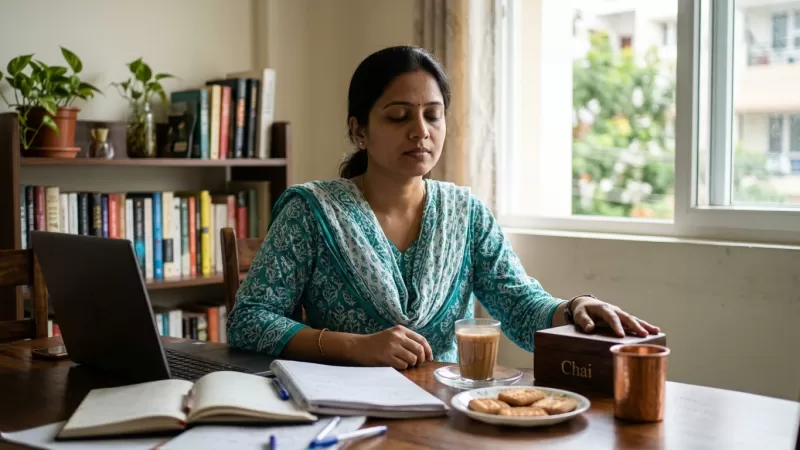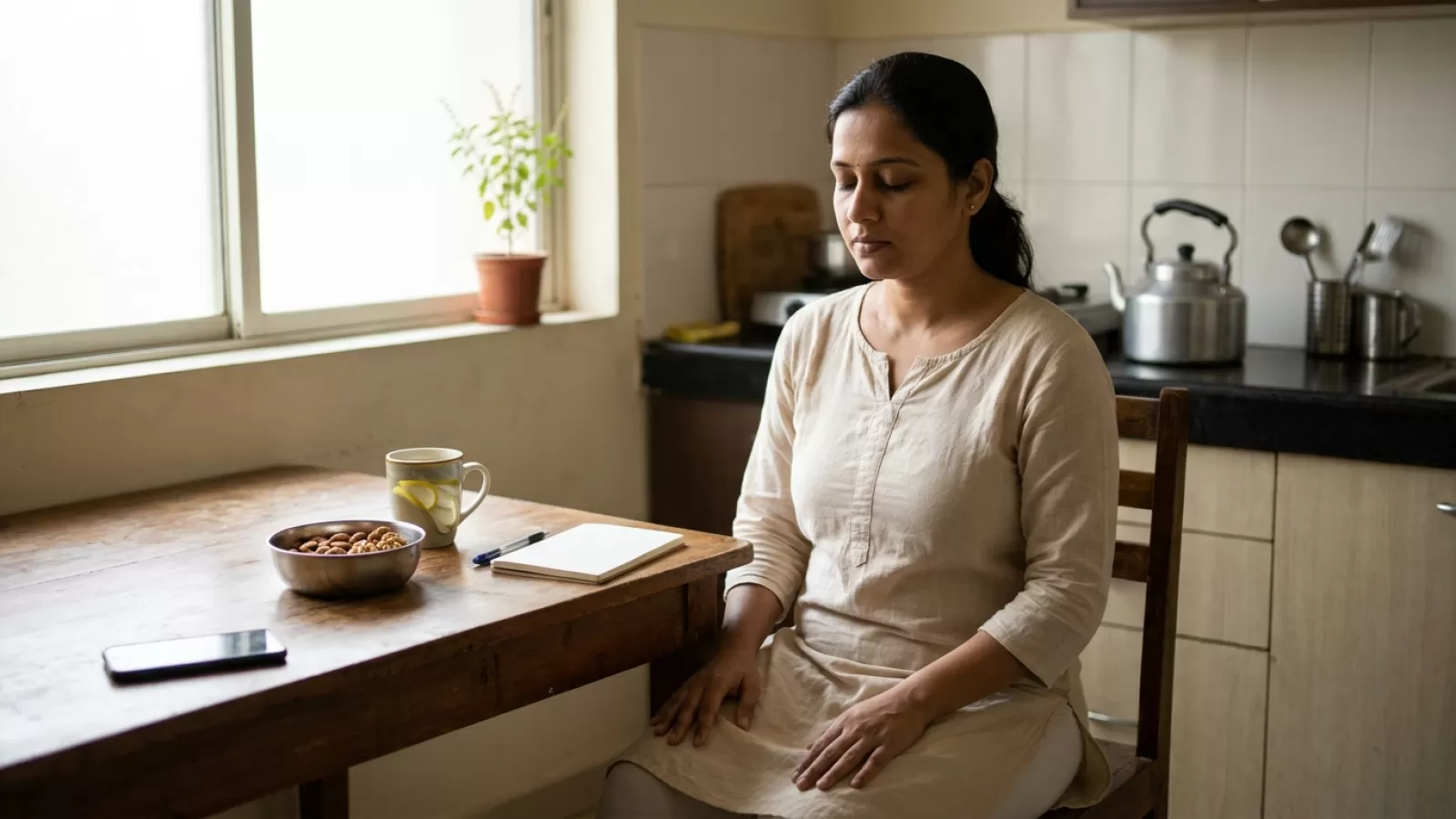
Some mornings in Indian homes, stress arrives even before the first cup of chai. Many adults wake with a sense of pressure already swirling in their chest — a tightness, a racing mind, or that unmistakable urge to lie still and not face the day. Waking up already stressed in India has become so common that, for many, this anxious alertness is almost a household rhythm, not a rare exception.
It can show up before the first light, before a single WhatsApp ping, before the rest of the family stirs. The mind seems to have finished sorting the day’s challenges while the body was still asleep. And on the days when a difficult conversation, a pending EMI, or an unresolved family issue looms, the awareness can be sharp and physical — not just a thought, but a feeling in the gut or heart. This is not about being weak or failing to “let go.” It’s your system doing its job, trying to keep you prepared for what’s next.
Why Many Indian Adults Wake Up With Stress Already Present
Morning anxiety among Indian adults is not rare. In many families, the first conscious thought is a mental summary of the day’s demands: school drop-offs, office calls, meal prep, managing elders, or bills that need attention. For many, stress present on waking in India isn’t a personal flaw — it’s a byproduct of how our lives are structured. The expectation to manage everything (often silently) stacks up, especially in joint families or busy nuclear setups.
There is also the way Indian homes rarely get a true pause. Even at night, city noise, power cuts, or the hum of fans might keep the background slightly unsettled. Many adults, especially women, find that the boundary between yesterday’s worries and today’s to-dos is thin. The mind, always half-ready, continues sorting problems during sleep, so waking up already stressed in India can feel like the day is starting in the middle of a race.
With urban life, work-from-home blurring boundaries, and the cultural habit of putting family needs before personal rest, it’s not surprising that so many people begin their mornings already on alert. In many homes, even weekends don’t offer a full reset — the tasks and responsibilities just shift shape.
How Nighttime Thinking and Anticipation Fuel the Morning Stress Response
One reason this happens is that the nervous system doesn’t completely switch off at night. For many Indian adults, the mind keeps processing problems even after the lights are out. In homes where conversations about finances, health, or family tensions linger into the evening, the brain can carry this load forward, quietly sorting through options and worries during sleep.
Another common pattern: anticipation. The moment you open your eyes, your mind might leap ahead to a tough meeting, a child’s exam, or an unresolved argument. Before you’ve even fully woken, your body is already preparing for battle. This is the threat-assessment function of the nervous system at work — not a weakness, but a survival tool that sometimes works overtime. For Indian adults, anxiety before the day starts often feels like the mind is running a checklist with lightning speed.
Stress present on waking in India is also tied to household rhythms. If your evenings are spent juggling chores, managing children’s homework, or helping elders settle, your mind may never get a proper wind-down. You might fall asleep with unfinished business, which tries to finish itself before dawn. Sleep researchers who study urban Indian households often find that late dinners, screen time, and irregular sleep schedules add to this pattern.
Everyday Signs That You’re Starting the Day Already on Edge
- Physical tension on waking: Many people notice tight shoulders, clenched jaws, or a fluttering stomach before their eyes are even fully open. This isn’t just a reaction to an alarm — it’s the body’s way of preparing for what it expects to be a demanding day.
- Immediate mental load: If your first thought is a rapid-fire to-do list or the memory of yesterday’s unresolved conflict, that’s a sign your mind has been working through the night.
- Reluctance to get out of bed: On mornings when facing the day feels heavy or overwhelming, it’s often because the stress response is already in play. People sometimes describe it as “waking up tired” or “not ready to face anything.”
- Racing heartbeat or shallow breath: Noticing that your heart is beating faster, or that you’re breathing quickly before you’ve even moved, is a common sign. This is the nervous system’s way of getting ready for action — but it can feel unpleasant when the stress isn’t about an immediate danger.
- Snapping at small things: If you find yourself irritated by minor noises, requests, or household disruptions right after waking, this can be a signal that your stress level is already high before the day’s demands even begin.
Practical Morning Actions When Stress Is Present Before the Day Starts
- Don’t rush to check your phone: The urge is strong, especially when work and family messages pile up overnight. But giving yourself even five minutes before looking at screens can help you notice what your body and mind are actually feeling.
- Notice and name the feeling: Sometimes, saying to yourself, “I’m waking up already stressed today,” can take the edge off. It’s not about fixing it immediately. It’s about acknowledging that the feeling is real and present.
- Small grounding routines: Many Indian adults find that a few slow, deep breaths, splashing cool water on the face, or even standing at the window for a minute helps reset the system. The key is to do something that reminds your body you are safe — at least in this moment.
- Keep the first task simple: Instead of jumping straight into the hardest job, try starting with a manageable chore — making chai, tidying the bed, or opening the curtains. This gives your nervous system a gentle entry into the day, rather than a jolt.
- Let light in: Natural light, even on cloudy days, tells your body it’s time to shift gears. Opening a window or stepping onto the balcony, even for a minute, gives a signal that helps break the loop of stress present on waking in India.
How Morning Stress Weaves Into Indian Family Routines
It’s common for Indian adults to move through the morning with this quiet undercurrent of anxiety. In homes where everyone is getting ready at the same time, the stress can pass from one person to another. A parent waking up already stressed may speak sharply to a child, triggering a chain reaction of tension through breakfast, school runs, and even into WhatsApp chats with relatives.
On busy days, some families move almost silently — not because they are angry, but because everyone is managing their own internal storm. You might see a working professional in Bengaluru checking emails before brushing their teeth, or a homemaker in Delhi mentally tracking the day’s expenses while packing tiffins. For many, these patterns are invisible but deeply felt.
During summer, when nights are hot and sleep is restless, the feeling of waking up already stressed in India can be even stronger. The expectation to keep everything running smoothly, without showing strain, adds another layer. Many families have quietly discovered that talking about this — even briefly — helps. It breaks the illusion that everyone else is starting the day with perfect calm.
How to Know When It’s Time to Reach Out for Support
Most people experience morning anxiety at some point. But if you notice that waking up already stressed in India is happening almost every day, or if it’s making it hard to function at home or work, it may be worth talking to a professional. This is especially true if the stress is joined by sadness, changes in eating or sleeping, or a sense of hopelessness.
There is no shame in asking for support. Sometimes, a trusted friend or family member can help you get perspective. Other times, a doctor or counselor can help you find ways to manage. Even a few conversations can make a real difference. The tricky part is recognising when stress has stopped being just a part of life and has started making life harder to live.
Common Questions
Many Indian families have their own ways of managing morning stress, but some patterns are widely shared. If you’re curious about why this happens or how to shift it, you’re not alone. Here are some questions that often come up in Indian homes, answered with everyday experiences in mind.
Why do some Indian adults wake up with stress already present even before they have encountered anything stressful on the new day?
In many Indian homes, the mind stays busy even during sleep. The worry about finances, family responsibilities, or unfinished work doesn’t switch off when the day ends. Often, the nervous system keeps “working” overnight, running through lists and possible problems. This means that stress present on waking in India isn’t a surprise — it’s your mind and body trying to help you stay ready for what feels urgent. It’s not a personal flaw; it’s a common outcome of the responsibilities many Indian adults quietly manage.
What are the most effective practices for managing the morning stress response in the first few minutes of waking?
Start by noticing your breath and body before doing anything else. Taking a few slow, deep breaths or splashing your face with water can help. Many people find that stepping outside or opening a window for fresh air calms the system. Small routines, like making chai or just sitting quietly for a minute, help anchor the mind. Fitness coaches who train working adults often find that most movement in Indian homes comes from daily tasks, not planned exercise, so even gentle stretching as you get out of bed can help ease morning anxiety for Indian adults.
How do you prevent a stressful morning awakening from setting the emotional tone for the entire Indian working day?
It helps to interrupt the stress loop early. If you wake up already stressed in India, try to avoid diving straight into work or conflict. Do something small and grounding — like sipping chai, listening to soft music, or simply opening the curtains. If possible, share a quick word with someone in your home. Sometimes, just naming the feeling to a family member can shift the mood. Over time, these small habits can prevent morning anxiety in Indian adults from carrying through the whole day.
Is morning anxiety upon waking connected to what happened the previous evening or is it more about what is anticipated in the coming day?
Both play a role. What happens in the evening — arguments, unfinished chores, or late-night worries — often echoes into the next morning. But for many Indian adults, anxiety before the day starts is also about what’s expected: meetings, family duties, or money concerns. The mind tends to blend yesterday’s stress with tomorrow’s worries, so it can feel like an unbroken chain. Small evening rituals, like calming music or talking things out, sometimes help lessen the load by morning.
When does waking up with consistent stress in an Indian adult indicate anxiety or another condition that benefits from professional support?
If you notice that waking up already stressed in India is happening most days, or if it’s affecting your mood, sleep, or ability to function, it may be time to speak to a doctor or counselor. This is especially important if you feel sad, hopeless, or unable to enjoy family time or work. Occasional stress is normal, but if it feels heavy and constant, professional help can offer relief and new ways to cope. Even one or two supportive conversations can make a big difference.