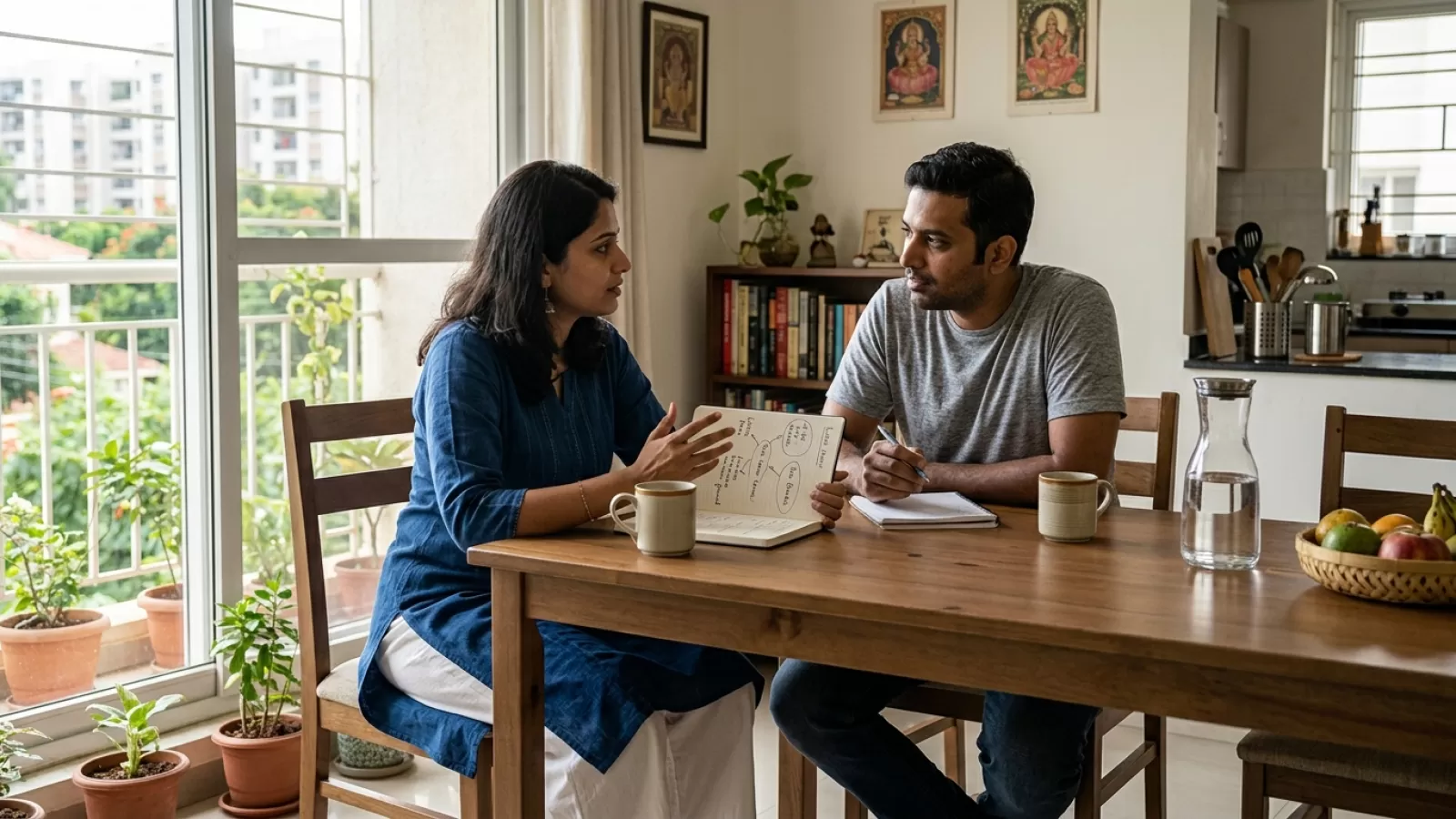
On a humid Sunday evening, the sound of pressure cooker whistles blends with the low hum of a television drama. Somewhere between folding school uniforms and packing tomorrow’s lunch boxes, a couple sits across the dining table, eating quietly. The air is thick — not just with the smell of tadka, but with something unsaid. This is how spouse tension in Indian homes often lives: in the silence after a small disagreement about whose turn it was to call the plumber, which somehow carries the weight of a hundred unspoken things.
Most Indian families know this feeling. Spouse tension in Indian homes is rarely about just the forgotten errand or the misplaced house keys. It’s the quiet frustration that builds up when both partners are running on empty, feeling unseen, and the day’s small irritations pile up with no release. Even as life goes on — the sabzi gets made, the children finish homework, parents and in-laws expect their evening chai — the distance between spouses can grow, unnoticed but persistent.
Why the Smallest Triggers Can Cause Big Silences in Indian Marriages
In many Indian homes, a disagreement about a minor issue — say, who left the milk out — can suddenly spark a much bigger reaction than expected. The tricky part is, this flash of tension is often not about that single moment at all. It’s about days, months, or even years of feeling like one person is doing more, or that rest isn’t valued in the same way.
Managing marital conflict in India often happens in crowded spaces: joint family setups, small flats, or homes where relatives visit without warning. Privacy, both physical and emotional, tends to be limited. So, tension between spouses may simmer quietly rather than get addressed directly. Evenings are spent together — but sometimes, that means sharing a sofa and scrolling silently on separate phones, each person holding their own grudges and unmet needs.
Partner disagreement in Indian households can be subtle. One spouse might make a sharp comment about how the dal is too watery, and the other hears criticism not just of dinner, but of their care and effort. The next morning, routines march on — but the silence lingers. In these moments, reducing conflict between spouses in India isn’t about one big talk. It’s about recognising that a lot is being left unsaid, and that both people are carrying more than they show.
The Hidden Reasons Tension Builds Up Between Indian Spouses
Most spouse tension in Indian homes grows quietly, fed by daily realities. Expectations about roles are often deeply set. Even in families where both partners work, the bulk of household management — meal planning, remembering birthdays, handling school WhatsApp groups — usually falls on one person. The other may not even realise how much invisible work is being done until it is pointed out, and sometimes not even then.
There’s also the question of rest. In many Indian families, rest looks different for each partner. One might relax by watching cricket; the other might crave just twenty minutes alone with chai and a book. If those needs clash or go unrecognised, resentment can build. These days, with so many couples working from home in small spaces, the difference in how each person unwinds becomes even sharper.
Family expectations add another layer. A spouse might feel pressure to please in-laws, manage household help, or keep up with neighbours — all while holding down a job. When these pressures aren’t acknowledged, they can spill over into partner disagreements in Indian households. The real source of conflict is rarely the thing that gets argued about.
Relationship counselors who work with Indian couples often find that most spouse tension in Indian homes builds up from patterns that are never named directly. The small things — who folds the laundry, who gets the good spot near the fan on a hot night — add up until one minor spark sets off a larger conflict.
Everyday Signs Your Home Is Stuck in a Cycle of Tension
- Short, snappy exchanges about small things. A comment about the salt in the sabzi or who forgot to pay the broadband bill turns into a tense moment. It feels bigger than it should.
- Long silences after disagreements. Even after the argument ends, both people go quiet. Meals and routines continue, but there’s a coldness in the air.
- Routines become strictly functional. Partners talk only about logistics: “Did you pick up the milk?” “Who will drop the kids?” There’s little warmth or laughter.
- One or both partners withdraw. One person stays in the other room longer or stays up late watching reels, avoiding shared spaces.
- Physical tension in daily tasks. The way tea is handed over, the slam of a door, or how a utensil is placed on the counter feels loaded with meaning.
These patterns might last for hours, days, or sometimes even longer if nothing shifts.
What You Can Do When Tension Won’t Go Away Easily
- Shift the scene, even briefly. When the air feels heavy, change the environment. Step out onto the balcony, water the tulsi plant, or take a walk around the block. Sometimes, even five minutes apart can help the mind reset, especially after a partner disagreement in an Indian household.
- Let small gestures do the talking. If words feel too hard, quietly make a cup of chai for your spouse or leave their favourite snack on the table. Often, in reducing conflict between spouses in India, these small acts speak louder than an apology.
- Make room for rest, together or separately. Acknowledge when everyone is tired. During busy weeks, allow yourself and your partner to eat a simple meal like poha or khichdi and leave the dishes for later. Sometimes, lowering expectations is an act of care.
- Notice what triggers repeat arguments. Pay attention to recurring issues — is it always about the same household task, or does tension rise during certain routines like morning rush hour? Understanding these patterns can help you both avoid falling into the same trap next time.
- Show appreciation for small efforts. A genuine “thanks for packing tiffin” or “I saw you stayed up late finishing the laundry” can soften tension, even if the main issue isn’t discussed right away.
The goal isn’t to solve everything at once. It’s to keep the atmosphere livable so the conflict doesn’t take over your whole home.
How Tension Between Spouses Weaves Into Daily Indian Life
In a kitchen in Nagpur at 6am, the fan struggles against the sticky summer air. A woman preps vegetables for sambar while her husband reads the news on his phone. The night before, an argument about the AC bill ended with both going to bed early, backs turned. This morning, they move around each other quietly — she slides the dahi into his tiffin without a word, he leaves her a cup of tea by the stove. The house’s rhythm continues, but the silence is thick.
In many Indian homes, this is how managing marital conflict in India looks: routines carry on, children get ready for school, elders wait for their morning chai. The tension isn’t spoken about, but it lingers in how people move, eat, and even breathe. Sometimes, it fades slowly with time and small gestures. Other times, it sits there for days, a quiet guest at every meal.
When Tension Becomes Too Heavy to Carry Alone
Most cycles of spouse tension in Indian homes resolve with time, rest, and a bit of mutual care. But if the same arguments keep coming back, the atmosphere feels heavy for weeks, or either partner starts to withdraw fully from daily life, that’s when it might help to look for outside support. This could mean talking to a family member you both trust, or — if it feels safe and possible — reaching out to a counselor familiar with partner disagreement in Indian households. If conflict ever turns hurtful or overwhelming, taking care of your safety and wellbeing comes first. There’s no shame in needing help.
Common Questions
Many Indian families find themselves quietly living through cycles of tension, unsure why a small disagreement can stretch out for days. If you’ve wondered about these patterns, you’re not alone. Here are some of the most common questions about spouse tension in Indian homes, answered through everyday examples.
Why does unresolved tension between Indian spouses tend to persist for so much longer than the original disagreement warrants?
In Indian homes, the original argument is often just the tip of the iceberg. Underneath are layers of old resentments, household pressures, and unspoken expectations. Both partners may feel they have to “move on” for the sake of children, elders, or daily routines, so issues aren’t brought up again. The silence stretches because neither person finds the right moment or words to address the real feelings, so the tension just sits there, unresolved.
How do Indian couples prevent a genuine disagreement from becoming a multi-day conflict when they live and work in very close proximity?
This is tricky, especially with small homes or WFH setups. Many couples find that taking a brief pause — stepping outside for a few minutes, or focusing on a separate task — breaks the immediate cycle of argument. Sometimes, a small gesture like making tea for the other person or quietly helping with an evening chore helps reset the mood. The goal isn’t always to “solve” the problem in one go, but to keep daily life running gently until both people can soften.
What are the most common unspoken sources of tension between Indian spouses that rarely get directly addressed?
Unequal division of housework, different ways of spending or saving money, how each person handles rest or leisure, and managing relationships with in-laws or extended family are very common sources. Many couples never directly talk about these issues — instead, resentment builds up until it leaks out during unrelated arguments, like over food, chores, or even TV channels.
How do you repair the atmosphere between spouses in an Indian home without a formal conversation about the conflict?
In many homes, small daily gestures do a lot: making chai, packing an extra roti in the tiffin, or putting on a favourite song during evening chores. These quiet acts can slowly ease the tension, even if the main issue isn’t discussed. Sometimes, just sitting together for a few minutes without talking, sharing a plate of makhana or watching the rain, helps bring back a sense of togetherness.
When does recurring marital tension in an Indian household indicate something that genuinely benefits from outside support?
If the same tension keeps coming back, or if either partner feels anxious, hopeless, or withdrawn for weeks at a stretch, it might be time to seek help. This could mean talking to a trusted friend, a family elder, or a counselor. If the conflict ever feels unsafe or starts affecting the children, reaching out for support is a caring step — not a failure. Every family deserves peace and safety.