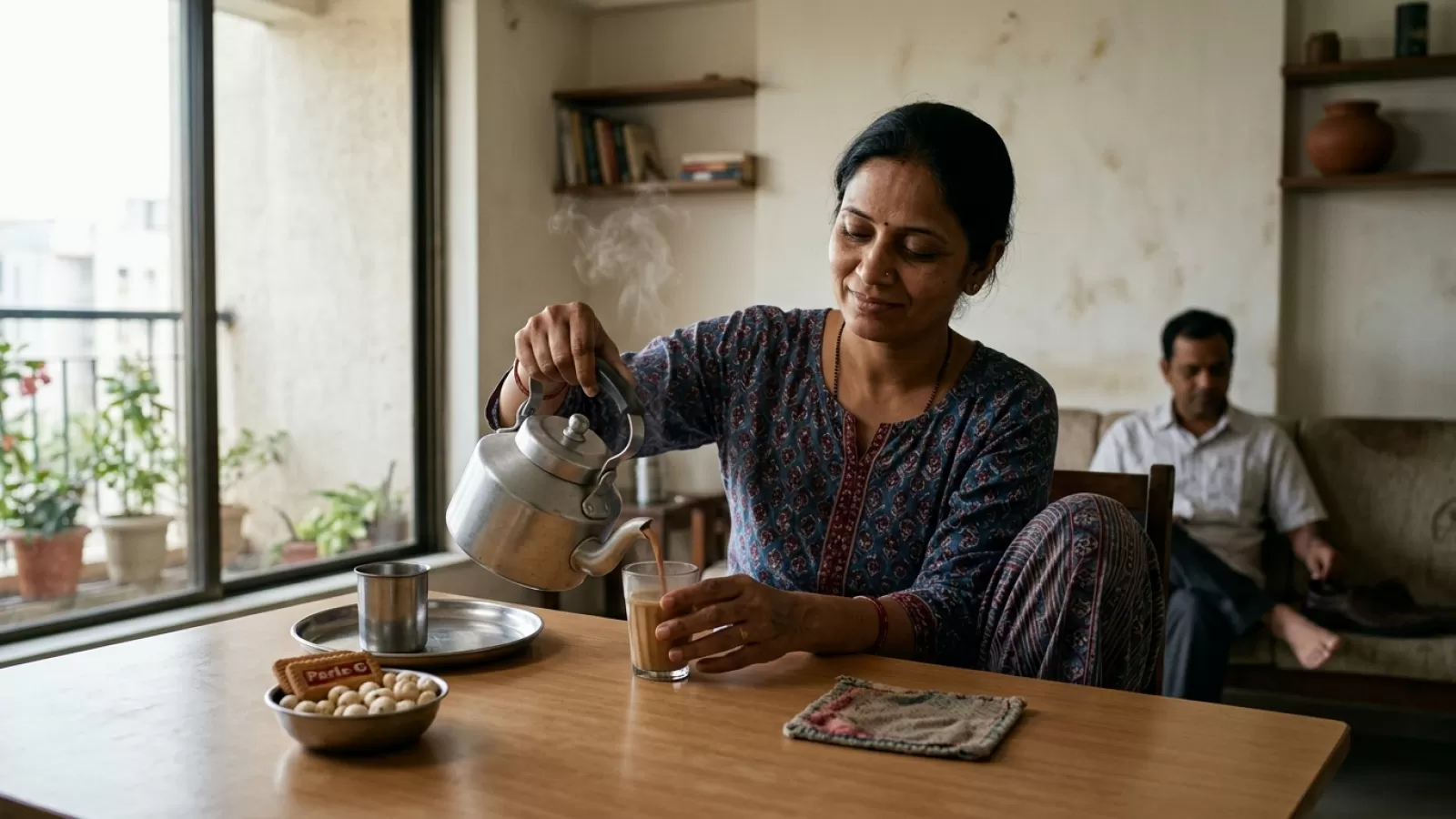
It’s 9pm in many Indian homes and the day is far from over. Children are sprawled with unfinished homework, someone is frying tadka for dal, WhatsApp pings keep lighting up, and the TV is running in the background with the day’s news. In all this, calming evening habits in an Indian home can feel like a distant idea—almost like something that only happens in someone else’s house.
The tricky part is, most families don’t get a peaceful evening by chance. The ones who quietly transition from chaos to calm usually have a small anchor—a habit, a household signal, or even a certain sound (like the kitchen exhaust turning off) that tells everyone: okay, we’re winding down now. These anchors are rarely perfect, but over time, they carry a sort of magic for settling the household as the evening closes in.
Why Evenings in Indian Homes Often Spiral into Chaos
Evenings in Indian homes tend to be the busiest stretch of the day. The moment school bags hit the floor and laptops snap shut, it’s a race: homework, dinner prep, answering work emails, helping elders settle in, and prepping for tomorrow. Add to this the typical Indian evening routine calm is sometimes not even on the radar—there’s just too much happening at once.
Shared spaces mean that everyone is moving around in the same few rooms. In many homes, the kitchen is the main control centre, with someone at the stove and another person packing lunch boxes for the next day. Older adults might be watching their serials while children chase each other down the hallway. When everyone’s activity peaks at the same time, settling the household India evening feels like herding cats.
Many families have house help coming and going, neighbours dropping by, and the constant background noise of traffic or power cuts. The expectation—often unspoken—is that the homemaker or the eldest in the house will somehow keep things running without a hitch. No wonder, then, that evening calm routines India rarely emerge unless someone actively makes space for them, however small.
The Real Reasons Behind Overloaded Evenings
There’s a reason why calming evening habits in an Indian home don’t just happen on their own. For many working adults, the workday rarely ends at 6pm. Office calls spill over, school projects get remembered at 8:30pm, and dinner is often a late affair—especially in bigger cities where commutes stretch into the night.
Fitness coaches who train working adults often find that most movement in Indian homes comes from daily tasks, not planned exercise. So, by the evening, everyone is physically tired but mentally still running—trying to wrap up WhatsApp groups, deal with family WhatsApp groups, and put away the last batch of rotis. The household rhythm is broken up by unexpected tasks: a leaking tap, a child’s lost geometry box, or an urgent grocery run because there’s no dahi for the next morning.
Joint families add another layer. There’s a sense of collective responsibility—everyone’s needs and preferences are weighed before the TV is turned off or the dinner table is cleared. In joint setups, the quietest moment might come only after the last steel plate is scrubbed and the kitchen light finally flicks off.
Even in nuclear families, the mix of online classes, WFH, and social expectations (like calls to relatives or checking in on parents in another city) can stretch the evening thin. That said, the families who manage to carve out a pocket of evening calm routines India usually rely on small, familiar cues—a shared cup of chai, a few quiet minutes with dahi and leftover sabzi, or even a phone call winding down the day.
How to Tell When Evening Chaos Has Taken Over
- Everyone is doing something different at maximum speed. This looks like the teenager finishing worksheets while eating poha, one adult on a work call, another in the kitchen, and grandparents trying to watch TV—no one in sync, and everyone slightly tense.
- No one notices the time until it’s past 10pm. Often, there’s a sudden realisation that bedtime routines haven’t started, and the household is still running on full energy.
- Meals are eaten separately or in a rush. In many homes, dinner becomes an afterthought—each person grabs food when they can, and the table is never full all at once.
- Children get cranky or hyper just when adults want quiet. It’s common for younger kids to become extremely energetic post-dinner, making bedtime harder for everyone.
- The house feels physically cluttered. Bags, shoes, lunchboxes, and devices are scattered. The mental load is mirrored by the mess, making any attempt at an Indian evening routine calm seem pointless.
Small Anchors That Help Bring Calm to Indian Evenings
- Switching off the kitchen light after the last dish. For many, this simple act is the unspoken signal that the day’s work is done. The sound of the last steel plate being stacked away often tells the house it’s time to slow down.
- A family chai or dahi break—however brief. Some families in Indian cities have quietly discovered that sitting together for five minutes with chai or a bowl of dahi after dinner is enough to shift the household towards rest. There’s no need for a big conversation; just the act of sitting together helps.
- Reducing screen noise for 10 minutes. This doesn’t mean banning TV or phones. It’s often enough to turn the TV volume down, put the phone on silent, or play some soft music from a family playlist. This small change can reset the energy in the room.
- Picking up and putting away common clutter. In many homes, a two-minute “everyone pick up your things” moment helps both children and adults switch gears. The act of clearing space becomes a cue for the mind to settle down too.
- One shared activity, but not every day. Some families play a quick game of carrom, others sit together for the last 10 minutes of a cricket match, or just fold laundry while chatting. The activity doesn’t matter as much as the shared pause.
The catch is, these calming evening habits in an Indian home don’t need to be enforced or scheduled. They work best when they fit naturally into your existing rhythm, even if it’s just one small thing done most days.
Where Evening Calm Actually Shows Up in Indian Homes
In a kitchen in Nagpur at 6am, the signs of last night’s chaos are still there—plates soaking, tiffin boxes on the sink, and a faint smell of last evening’s tadka. But there’s also a quietness. The kitchen light, turned off just before midnight, marked the real end of the family’s busy day. In this home (like many across India), the calm doesn’t come from a perfect routine. It comes from small, repeated signals: the fridge being restocked for tomorrow, the last WhatsApp message read, the TV finally turned off. These moments matter more than any grand ritual. They’re the real anchors that help Indian families transition from the wild energy of the evening to a slower, more restful night.
When to Consider Reaching Out for Help
If evening chaos is leaving everyone in the house irritable, exhausted, or arguing most nights—and small habit changes haven’t helped—it’s okay to talk about it as a family. Sometimes, speaking to a trusted elder, a counselor, or a family doctor can help you figure out what’s making evenings so hard to manage. If sleep is always difficult or someone’s mood is suffering, don’t hesitate to reach out for more support.
Common Questions
Evenings in Indian homes are rarely quiet by default, but small habits and signals can make a difference. If you’re wondering how to actually bring more calm into your evenings, you’re not alone. Here are some of the questions that come up most often when families try to find a calmer evening routine that works in real Indian settings.
What are the simplest evening habits that help an Indian household calm down after a chaotic day?
The simplest calming evening habits in an Indian home are usually the ones that don’t require big changes. For example, switching off the kitchen light after dinner, a short chai or dahi break with family, or even everyone tidying up their own things before bed. Many families find that just lowering the noise—like turning down TV volume or putting phones away for a few minutes—creates a noticeable sense of calm. The key is to pick one small anchor that feels natural in your home, and let it become a quiet signal for winding down.
How do you transition from a rushed working day to a genuinely restful evening in an Indian home?
Transitioning from a rushed workday into a restful evening is tough, especially with late dinners and ongoing calls. In many homes, a shared meal—even if everyone isn’t eating at the same time—helps mark the shift. Some working adults in Bengaluru, for instance, use a quick walk around the block or a few minutes of playing with children as their reset. Keeping one low-key ritual—like listening to soft music or sipping chai together—helps everyone’s mind understand that the day is closing.
What Indian evening anchor habits most reliably signal that the active part of the day is ending?
Some of the most reliable anchor habits in Indian homes are surprisingly ordinary. Turning off the kitchen light after all the dishes are washed, packing tiffins for the next day, or sharing a quiet dessert like a bowl of dahi or makhana. For some, it’s the moment the main TV is switched off or the family WhatsApp group stops buzzing. These anchors don’t need to be dramatic—they just need to be consistent enough that everyone knows: now, it’s time to slow down.
How do Indian parents help young children wind down in the evening when the children's energy peaks exactly when the adults are most exhausted?
Many Indian parents find that young children get their second wind right when adults are winding down. One pattern that helps is creating a small, repeatable ritual—like a five-minute story, gentle music, or a quick tidy-up game. Some parents use bath time or oil massage as a cue for sleepiness. In homes where children share bedrooms, everyone settling down at the same time (even for a few minutes) helps. It’s rarely perfect, but these small signals, repeated most evenings, help children’s bodies and minds recognise when it’s time to rest.
Is there such a thing as a realistic calm evening in an Indian home with multiple working adults and school-going children?
A truly calm evening, where everyone is peaceful at the same time, is rare in busy Indian homes. What’s more common—and realistic—is finding a few minutes of calm for everyone, even if it’s not all together. Maybe the adults sit with chai while children finish homework, or the whole family shares a quick laugh during dinner. Settling the household India evening doesn’t mean perfection; it means creating pockets of rest, however brief, so everyone feels a little more ready for the next day.