In Indian homes, the morning is less about sunrise and more about everything that must happen before everyone walks out the door. The rhythm starts before the first cup of tea is poured, often while the sky is still dark and the air is heavy with the scent of soaked rice or simmering dal. Morning routine tips working mothers India often look for tend to skip over how real mornings feel — where your own routine is something squeezed in between the needs of others.
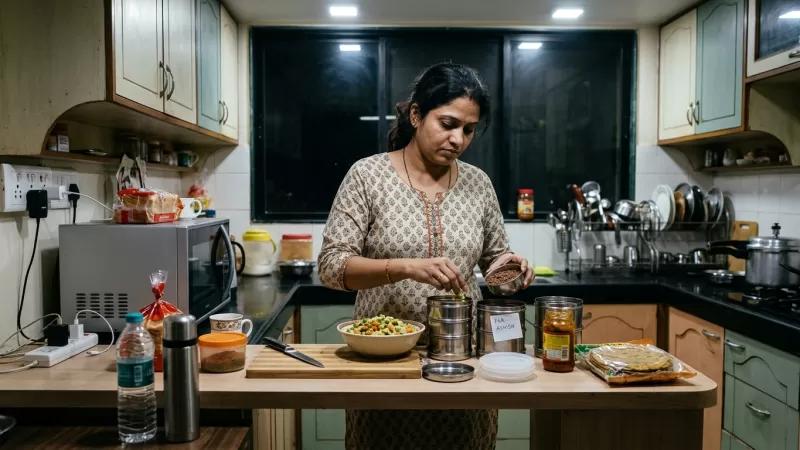
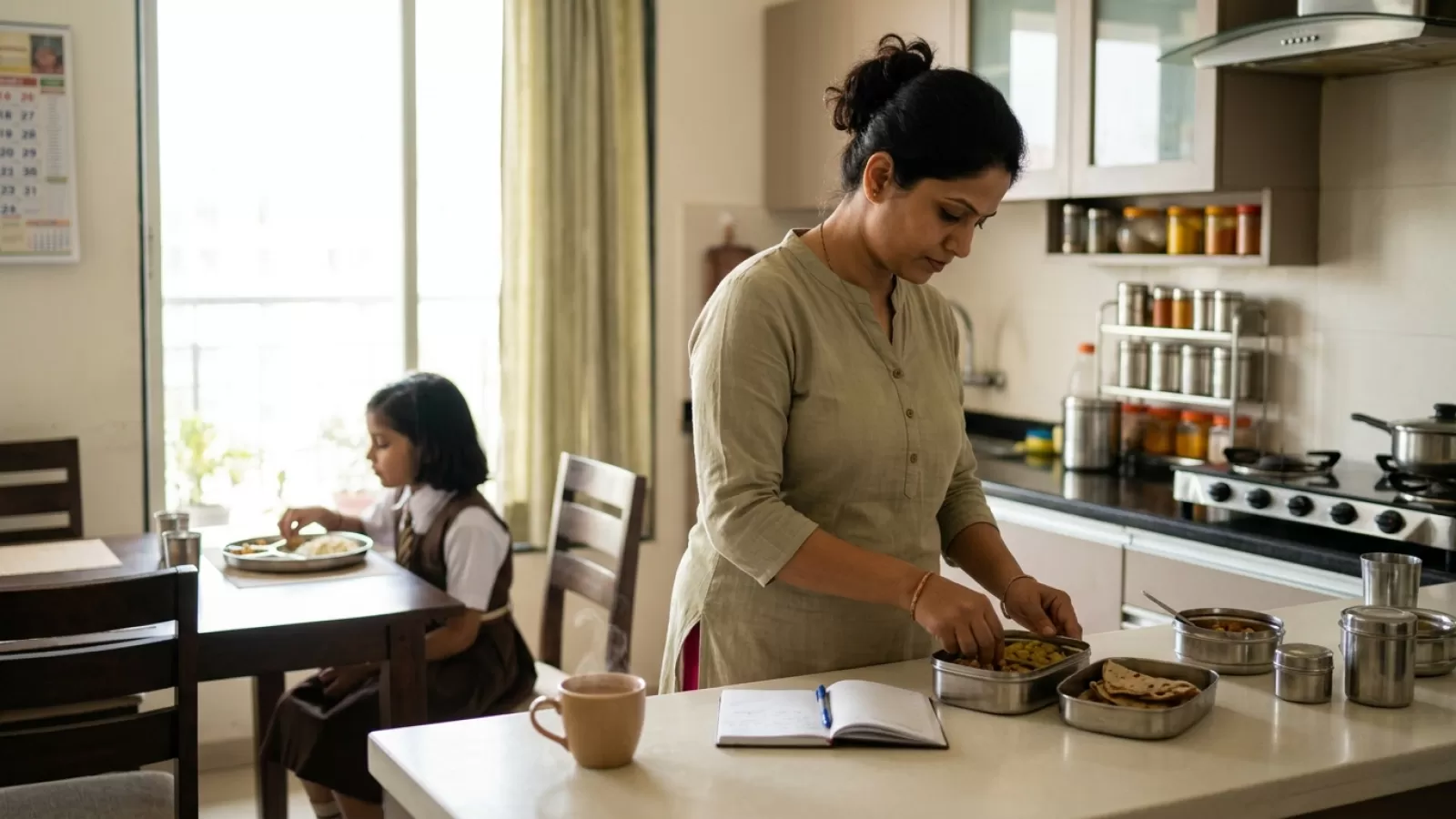
For Indian working mothers, the morning is a carefully choreographed rush: tiffins packed in a line, uniforms ironed under dim lights, medicines measured, breakfast served, and children hustled into shoes, all before grabbing your own bag and heading to work — sometimes without a bite of breakfast. The tricky part is, most advice about morning routine for Indian women working outside the home doesn’t account for this reality. It’s less about extra hours and more about small, practical shifts that fit right into the chaos.
Why the Indian Working Mother's Morning Is So Demanding
The overlapping needs of a typical Indian household mean that the working mother’s morning isn’t just her own. In many homes, a single woman’s actions coordinate the start for everyone: spouse, children, sometimes in-laws, and even the house help. Managing mornings working Indian mothers face often means being the first to notice who is running late, who forgot their homework, or which milk packet has soured overnight.
There’s also the timing of everything. School buses don’t wait, office log-ins are unforgiving, and breakfast needs to be something everyone will eat. Many Indian working mother morning habits grew out of this pressure to meet everyone’s needs before their own. The result? The mother’s routine is shaped around gaps — those five minutes between boiling water for chai and reminding a child to wear socks.
Even in homes with support, the invisible coordination falls to the working woman. There’s an unspoken expectation to manage it smoothly, often without complaint. Some mornings, it feels like everyone else’s day starts because you made it happen.
Why Small Night-Time Habits Matter More Than Early Alarms
The advice to simply wake up earlier rarely works when sleep is already in short supply. Here is the catch: small things you do the previous night — laying out uniforms, chopping vegetables for poha, even filling water bottles — tend to save much more time and stress in the morning than setting an earlier alarm. Many working mothers in Indian homes have quietly discovered that 10–20 minutes of evening preparation often means a less rushed and more predictable start the next day.
Nutritionists who work with busy mothers often find that Indian working mother morning habits are built around the realities of shared kitchens, unplanned power cuts, and last-minute school announcements. The unpredictability is part of the routine. That’s why habits that transfer some work to the evening — writing a tiffin menu for the week, soaking dal, or prepping a basic breakfast mixture — are the ones that tend to stick. These shifts don’t require anyone else’s buy-in, and they work even when the rest of the household is on a different schedule.
Everyday Signs Your Morning Routine Isn’t Working For You
- You rush out the door with no clear memory of eating breakfast, and only realise it at your desk or after the school run.
- There’s a daily scramble to find uniforms, socks, or lunch box lids, even though you swore you organised everything last weekend.
- Your mood is already frayed before 9am, and you start the day feeling like you’re behind, no matter how early you woke up.
- Family members rely on you to remember every detail — from medications to bus timings — and when something is missed, it feels like your fault.
- Weekday mornings feel so intense that you look forward to weekends not for rest, but just for slower starts.
These are not signs of failure. They are clues that your current morning routine for Indian women working outside the home might need a gentle readjustment — not a total overhaul.
Practical Steps That Fit Real Indian Mornings
- Prep one or two things the previous night. Even 10 minutes spent making a basic tiffin plan, portioning dry snacks (like makhana or roasted chana), or laying out clothes can make the morning less panicky. The trick is to pick the one task that usually causes the most chaos and set it up before bed.
- Keep breakfast simple and standardised. Rotating between poha, upma, parathas, and dahi with fruit saves mental energy. Many families find that having a go-to breakfast (even if it’s bread and butter some days) prevents last-minute decision fatigue.
- Set up a morning ‘launch zone’. This could be a small basket or a corner of the dining table where bags, keys, water bottles, and medicines go the night before. It’s not fancy, but it reduces the last-minute hunt that drains time and patience.
- Accept ‘good enough’ on weekday mornings. The house might not look perfect, and some days uniforms will be wrinkled. Allowing this helps lower stress. Many working mothers find that letting go of little things (like fancy tiffin decorations) makes mornings more manageable.
- Use reminders and alarms for time-sensitive tasks. With so many moving parts, it’s easy to forget a medicine dose or a library book. A phone alarm or sticky note can quietly take one thing off your mental list.
These steps are not about doing more — but about doing less, more predictably.
Patterns Indian Working Mothers Recognise Every Morning
In countless Indian homes, school-day mornings follow a familiar beat. The mother’s feet hit the cool floor before dawn, the kitchen light flicks on, and there’s a quick calculation: what will everyone eat, what can be reheated, what’s missing? There’s often a moment around 7:15am, just as the school bus honks from two streets away, when everything seems to happen at once — and the mother is the only one who remembers whose mask is clean or where the missing ID card landed.
Many working mothers in cities like Mumbai, Pune, or Gurugram say their morning routine for Indian women working outside the home is less about personal rituals and more about making sure no one leaves the house without what they need. It’s not uncommon for the mother to finally grab a piece of toast or a handful of dry fruits as she locks the door behind the last child, already thinking about her first meeting of the day. In joint families, these patterns get even more complex, with everyone’s needs layered on top of one another.
What holds steady, despite all this, are the quiet systems: the habit of keeping uniforms in one spot, the routine of soaking rice the night before, or the decision to let some mornings be “good enough.” These are the anchors that help Indian working mother morning habits survive the daily rush.
How to Know When Extra Support Is Needed
If morning stress starts affecting your health, mood, or relationships, or if you find yourself dreading each day, it might be time to talk with your family about sharing responsibilities. Sometimes a conversation with a doctor is useful too, especially if fatigue or forgetfulness feels out of proportion. Quietly asking for help — even if it’s just for a few mornings a week — is not a weakness. In many homes, small adjustments made together can make a big difference.
Common Questions
Every home’s routine is a little different, and what works in one kitchen might feel impossible in another flat. Here are some of the most common questions Indian working mothers have about making mornings less stressful, with answers rooted in real household rhythms and gentle adjustments.
What are the most effective morning routine adjustments for Indian working mothers to make their mornings more sustainable?
The most effective adjustment is usually shifting a few small tasks to the night before — things like prepping a dry poha mix, setting out uniforms, or writing a tiffin menu. In many homes, this creates a buffer in the morning, so you aren’t always reacting to last-minute surprises. Another helpful habit is standardising breakfast through the week, rotating a few easy options. These changes don’t require anyone else to cooperate, and they add up over time.
How do you create even a small amount of personal morning time as a working mother in an Indian household?
Some mothers carve out five quiet minutes while the chai simmers or after the family leaves, just to sit with a cup or read the news. It’s not always possible to have a long personal routine, but even these short pauses count. In homes where mornings are shared with elders or children, sometimes closing the kitchen door for a few minutes or listening to music while packing tiffins becomes a tiny pocket of personal time.
What morning tasks can Indian working mothers delegate to spouses or older children without feeling like they are failing?
Tasks like filling water bottles, packing snacks, or ironing uniforms can often be handed off to older children or partners. In many Indian families, starting with one small, specific job (such as laying out shoes or checking school bags) helps everyone get used to a shared routine. Delegation is not about failing; it’s about making the morning work for everyone — and sometimes it takes a few tries before it feels natural.
Is there a realistic way to make Indian school-day mornings less chaotic without waking significantly earlier?
Yes — preparing key things the night before is much more effective than waking up earlier. Many mothers in Indian cities say that simply having uniforms, tiffins, and bags ready before bed saves more stress than an extra 30 minutes in the morning. Also, keeping breakfast simple and not worrying about perfection (like skipping elaborate dishes on weekdays) helps mornings run smoother without extra effort.
What is the single most important morning routine adjustment for Indian working mothers with school-going children?
Soaking dal or prepping the next day’s breakfast the previous evening is often the single adjustment that changes the morning most. It means one less decision and one less task when everyone else needs your attention. In homes where mornings are a rush, this small habit frees up time and makes the start of the day feel less overwhelming. Even a small shift can give you back a few precious minutes.