On a muggy weekday morning, a working adult in Mumbai steps off a crowded local train. Their shirt clings to their back, the smell of samosas and engine oil still strong as they navigate the station footbridge. Before they’ve even reached the office, their mind feels worn out—like it’s been running on high alert for hours. This is not just tiredness. It’s the kind of mental exhaustion that builds from the daily hassle of an Indian commute, draining energy before the real work has even begun.
In many Indian homes, the effort to recover mental exhaustion from an Indian commute has become an unspoken part of daily life. It’s not about sore legs or sweaty faces. It’s about that foggy feeling after wrestling with the city’s unpredictability—when you finally sit down at your desk or arrive home, and there’s a real need to pause before you can focus or connect with your family. The recovery isn’t automatic, and it’s easy to underestimate just how much a long commute can sap your mental clarity.
Why Indian Commutes Drain the Mind More Than the Body
The experience of long commute mental fatigue in India is very real—and much more common than many admit. Unlike a simple walk or cycle, most Indian commutes mean crowded buses, unpredictable traffic, and the constant buzz of horns or voices. For many, there’s no choice but to squeeze into a metro coach or wait in a line for a shared auto. The journey isn’t just about reaching a destination; it’s about navigating a daily obstacle course, with every sense on alert.
In joint families or shared apartments, some adults start and end their day in a rush, barely having time to sip chai before catching a bus or cab. The constant need to adapt to delays, sudden changes, and jostling crowds means that by the time you arrive, your mind has already done several hours of heavy lifting. The tricky part is, this mental exhaustion is invisible. You may not even notice it until you find yourself snapping at a colleague or zoning out during a family conversation over dal and roti.
Many families in Indian cities have quietly discovered that the emotional tiredness after a commute lingers far longer than any physical fatigue. Especially during summer, when the sun feels relentless and air-conditioning is a luxury, the combined effect of heat, noise, and crowds can leave you feeling spent before the workday even starts or before you’ve greeted your children at home.
What Makes Indian Commutes So Mentally Draining?
Several things contribute to the commute drains energy in India, and it’s not always obvious at first. Sensory overload is a big factor. The mix of honking autos, vendors shouting for attention, the smell of roadside snacks, and the press of bodies in a bus or train all combine to push your mind into a state of constant alertness. There’s no real chance to relax or zone out, because you have to keep an eye on your bag, watch for your stop, and stay alert to the people around you.
Working adults often find themselves anticipating delays, rerouting plans, and even preparing for power cuts that could throw off their entire schedule. This constant mental juggling—what to do if the metro is delayed, how to get a rickshaw in the rain, whether there will be space to sit—uses up a surprising amount of mental energy. Fitness coaches who train working adults often find that most movement in Indian homes comes from daily tasks, not planned exercise. But the mental load of commuting is less visible; it’s not just the body that’s tired, but the mind that’s been in a state of mild stress for hours.
For some, the journey home is even harder. After a long workday and another packed commute, adults might arrive home mentally depleted, only to find family members waiting to connect, or children needing help with homework. The expectation to switch instantly from commuter to parent, spouse, or caregiver can add to the pressure, making it even harder to recover mental exhaustion from an Indian commute.
Clues That Your Commute Is Sapping Your Mental Energy
- Difficulty focusing after arrival: Many people need 20–30 minutes at their desk before they can think clearly, especially after a tough commute. The mind feels foggy, and even simple tasks seem harder than they should.
- Irritability with family or colleagues: A short temper after coming home, or snapping at a coworker during the first meeting of the day, is a common sign of long commute mental fatigue in India.
- Feeling emotionally numb: Sometimes, you might not feel anything at all—just a heavy sense of detachment, as if you’re running on autopilot.
- Forgetting small things: Misplacing keys, forgetting a child’s lunchbox, or missing a stop on the metro are small signs that your attention is worn thin.
- Physical symptoms without real illness: Headaches, jaw tension, and even minor digestive upsets can show up after particularly overwhelming commutes, even when there’s no real physical cause.
Small Ways to Recover Mental Exhaustion From an Indian Commute
- Give yourself a pause, even if short: After a difficult Indian commute, many adults find that five minutes of quiet—even just sitting on the bed or balcony before jumping into the next task—can help reset the mind. You don’t need a formal meditation session; sometimes, just closing your eyes and breathing slowly is enough to notice a difference.
- Change your environment quickly: Shifting out of your commute clothes, splashing water on your face, or washing your hands can signal to your brain that the stressful journey is over. In many homes, this small ritual can mark the difference between carrying the commute’s stress all evening or letting it go.
- Sip something soothing: A cup of chai with dahi or a light snack like poha or makhana can be grounding. The familiar taste and the act of sitting down to eat—even briefly—gives your mind a moment to reconnect with comfort.
- Limit immediate demands: If possible, let your family know that you need a few minutes to settle after arriving. For some, putting away the phone and not checking emails or messages right after the commute helps in recovering from a difficult Indian commute.
- Use gentle sound or quiet: Many working professionals in Bengaluru or Gurugram keep a playlist of calm instrumental music or nature sounds for the first few minutes at work. If your home is noisy, even just shutting the door and allowing yourself silence for a bit can help you recover mental exhaustion from an Indian commute.
The Commute’s Mark on Everyday Indian Routines
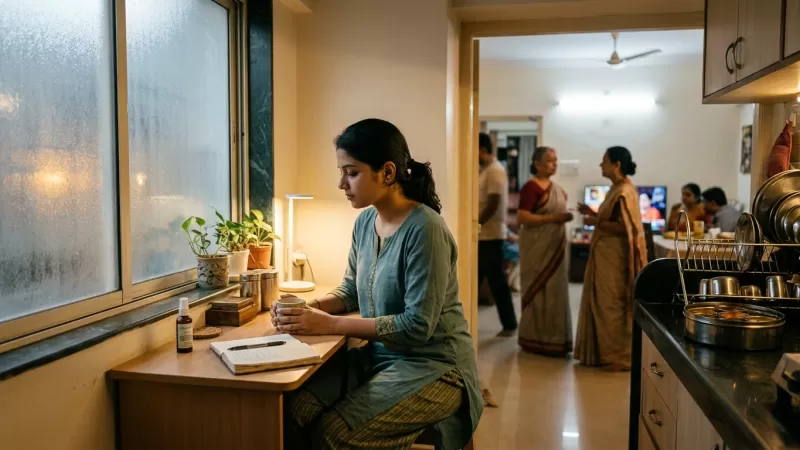
In a kitchen in Nagpur at 6am, pressure cookers whistle while someone hurriedly rolls out rotis, glancing at the clock. The morning rush is shaped by the fear of missing the 7:15 bus or the 7:40 local. Children eat breakfast in ten minutes flat, and there’s a quiet tension in the air. Later, when adults return home after sunset, there is relief but also a strange emptiness—an urge to just sit in silence, not talk, not explain, because the mind feels so drained.
On evenings when the commute has been especially rough—maybe a power cut stopped the metro, or a sudden downpour flooded the roads—families tend to eat dinner quickly, with fewer words. The TV volume might be lower, and adults are less likely to play or chat with their children. Sometimes, the exhaustion shows up as a lack of patience for small household problems: a blown fuse, a misplaced tiffin box, or a slow internet connection. This isn’t laziness. It’s the sign of a mind that’s had to work overtime just to get through the daily journey.
Many Indian adults quietly adjust their routines to protect their mental space—leaving home earlier to avoid the worst crowds, or choosing lighter sabzi for dinner so that the body doesn’t have to process a heavy meal when the mind is already tired. Others set boundaries with family or colleagues, asking for a few moments of quiet after arriving. These patterns may look small, but in many homes, they make a real difference to how well a person can recover mental exhaustion from an Indian commute.
When It’s Time to Seek Help
If the mental exhaustion from your commute starts making you dread stepping out, or if it begins to affect your relationships, appetite, or sleep for weeks on end, a gentle conversation with a doctor or counselor can help. There’s no rule for when to ask for support, but if the feeling of being worn out never really goes away—even on days when the commute is easier—it may be a sign that more support is needed. In Indian families, talking about this openly can help others understand that it’s not just about being tired. Sometimes, sharing the load (even if only for a few days) makes the difference.
Common Questions
Many adults in Indian families wonder why commuting feels so much more exhausting than it looks, or how to bounce back when the day is only just beginning. Here are some warm, practical answers to the questions people ask most often—grounded in familiar household moments and routines.
Why does the Indian daily commute cause mental fatigue that feels disproportionate to what was physically done during the journey?
Most Indian commutes are not just about distance—they’re packed with unpredictable events, noise, and crowds. Even if you’re sitting in a bus or train, your mind is constantly making decisions: watching your bag, planning alternate routes, filtering out chaos. In a shared flat in Pune, someone who barely walks 500 steps during their commute can still come home feeling like their brain has run a marathon. It’s the constant need to adjust, anticipate, and stay alert that wears you down more than any physical effort.
What recovery practices most quickly restore mental clarity after a difficult Indian commute?
Quick recovery is often about small, repeated actions. Many people find that washing their face, changing clothes, and sitting quietly with chai for five minutes helps their mind catch up. In households where evenings are noisy, some adults step onto the balcony or rooftop for a few minutes of peace. Even listening to gentle music or watching the sky can signal to the brain that the commute is over and a new part of the day is starting.
How do Indian adults protect their mental capacity for the working day when the commute to work is itself depleting?
Some adults try to buffer their workday by arriving 15–20 minutes early, giving themselves a chance to transition mentally before meetings or calls. In many offices, colleagues share a quiet moment over tea before diving into tasks. At home, families often keep breakfast simple—poha, dahi, or fruit—so that energy isn’t wasted on complicated routines. Protecting mental clarity is about making space for small pauses and reducing unnecessary demands, especially right after commuting.
Is there a way to make the commute itself less mentally exhausting rather than just recovering after it?
While you can’t control the crowds or traffic, some adults in Indian cities use small rituals during the commute to manage stress. This might mean listening to calming music with headphones, doing gentle breathing when stuck at a signal, or focusing on pleasant sensations (like a breeze from the window). On quieter routes, looking out at trees or the sky can help. The key is to find even a minute or two of mental rest, so you arrive less depleted.
What is the cumulative long-term effect of a 2-to-3-hour daily commute on Indian adult mental health and cognitive function?
Over months and years, a long commute can quietly chip away at patience, memory, and even mood. Many adults in Delhi or Bengaluru notice that after years of tough commutes, they feel more forgetful or less enthusiastic about daily routines. If there’s not enough recovery time, stress can build up and lead to ongoing fatigue or irritability. That said, small adjustments—like taking regular pauses, asking for support, or occasionally working from home—can make a big difference to long-term well-being.