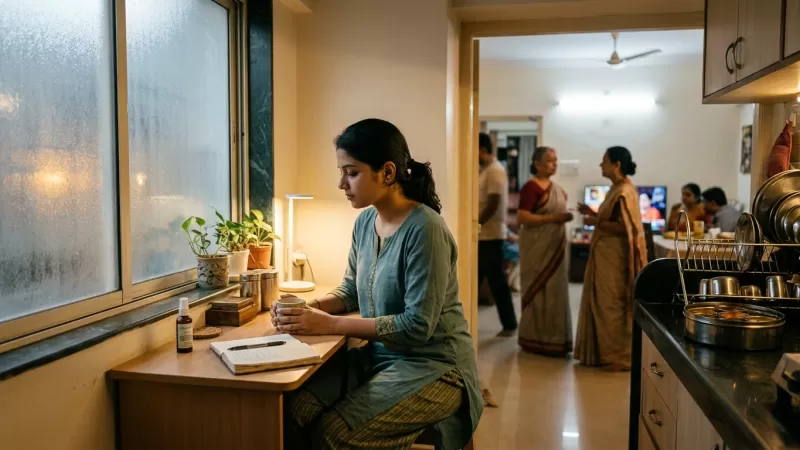
In many Indian homes, working from home has become a new normal. The dining table is now both a conference room and a lunch spot, and the line between work and personal life feels fainter than ever. These days, the struggle to mentally switch off from work WFH India is not about laziness or poor discipline—it's about the challenge of sharing your space with your job, all day and all evening.
Evenings often bring moments where the laptop sits open during chai, emails ping during poha prep, and thoughts of tomorrow's meeting mingle with the sound of the pressure cooker. The tricky part is, there's no commute to mark the end of the workday, so work from home mental separation India feels nearly impossible. If you’ve found yourself checking one last Slack message as your family waits for dinner, you are not alone.
Why Work Never Really Ends in Indian WFH Setups
The experience of trying to switch off from work WFH India is shaped by the way our homes are organised. In most Indian households, spaces are shared—a desk in the bedroom, the corner of a sofa, or even the kitchen counter becomes the workspace. There is rarely a physical door to close on the office day. Power cuts, noisy neighbours, and joint family conversations float through meetings, making the separation between work and home blurrier.
Evenings, which once brought a change of pace, now often mean finishing up pending tasks or replying to messages from colleagues who are also working odd hours. In many homes, children’s homework, dinner prep, and work deadlines overlap, and it’s common to find someone mentally composing an email while stirring dal. The expectation is that you’re always available to your family and your workplace, and that can be exhausting. The pressure to "manage it all" without complaint is real, and it’s no wonder that switching off after hours feels out of reach for many.
Why It’s So Hard to Let Go of Work Thoughts After Hours
Several things make it tough to stop thinking about work after hours India. For one, the physical cues we used to rely on—like leaving the office, catching a bus, or walking through the neighbourhood—are missing. The laptop, often sitting right where you eat or sleep, is a constant reminder of unread emails and unfinished tasks.
There’s also the cultural expectation, especially in Indian families, to keep everyone happy and productive. When you work from home, you’re often juggling work pressure and household duties at the same time. It’s common to feel guilty about stopping work, knowing others in your team are still online, or that your family expects your attention too. Add to that the unpredictability of power cuts, noisy construction, or a sudden knock at the door—interruptions that make it hard to finish on time and even harder to mentally step away.
Workplace boundaries are also less clear in India, where the concept of "flexibility" sometimes translates to being available around the clock. WhatsApp groups, late-night client calls, and requests from colleagues can spill into family time, making work from home mental separation India even more difficult. Psychologists who work with urban Indian professionals often find that the guilt of not being “always on” is a major reason people struggle to relax after work hours, even when their bodies have left the workspace.
Everyday Signs That Work Has Followed You Into the Evening
- Checking work messages during dinner: Many families find someone at the table glancing at their phone, replying to a message or scanning emails while the rest are serving dal and roti.
- Mentally planning tomorrow's to-do list at bedtime: Lying in bed, eyes closed, but the mind is racing with thoughts of unfinished tasks or upcoming presentations while the rest of the house is asleep.
- Snapping at family after a long day: Irritability or impatience often creeps in when work stress lingers into the evening, leading to small arguments or misunderstandings at home.
- Feeling restless even during downtime: Even while watching TV or chatting over chai, a sense of unease or the urge to check devices often remains.
- Difficulty enjoying evening routines: For many, the pleasure of cooking, reading, or playing with children is diluted because work thoughts keep intruding.
Small Habits That Help Create Mental Separation
- Change your clothes after work hours: It’s simple, but changing from work clothes (even if it’s just a kurta and pyjama) into something more relaxed can signal to your mind that the workday is over. In many Indian homes, this small act has become a silent ritual for shifting gears.
- Use household rhythms as natural boundaries: Let the start of evening chai, lighting the diya, or the sound of the pressure cooker signal the end of the workday. These cues already exist in most homes and can help your brain switch off from work WFH India with little extra effort.
- Involve the family in your transition: Invite children or elders to help with a small task after you log off—like chopping veggies or folding laundry. This shared activity can ground you in home life and offer a much-needed pause from screen time.
- Designate a “work-free” spot for evenings: Even if space is limited, try to spend your post-work time in a corner or a room where the laptop doesn’t come. For instance, after 7pm, move to the balcony or a different chair with a cup of dahi or makhana. This helps with work from home mental separation India, even in small flats.
- Let yourself stop, even if work is pending: This is the hardest for many. The reality is—there will always be more to do. If you notice yourself feeling guilty, remind yourself that everyone is in the same boat. Most work can wait until morning, and resting actually makes you more productive tomorrow.
How WFH Blurs into Family Life in Indian Homes
On evenings in joint families, it’s not unusual for one person to be finishing a client call while others are laying the table for dinner. In many apartments, the background noise of television, children’s laughter, and pressure cookers becomes the soundtrack to late meetings. After dinner, some families have found themselves gathering in the living room, only for someone to quietly open their laptop and respond to "just one more email." The expectation to be both a perfect employee and a perfect family member never really lets up.
Many families in Indian cities have quietly discovered that their WFH evening routine India now includes a mix of work and home tasks—sometimes with everyone in the same room, each person focusing on something different. The physical closeness doesn’t always mean mental closeness. That said, small, predictable rituals—like listening to music after dinner or sharing a quiet cup of chai on the balcony—have become a gentle way to reclaim a sense of togetherness and mark the end of the workday, even when the laptop is still close by.
When It’s Time to Reach Out for Support
If you’re finding it nearly impossible to switch off from work WFH India, or if work thoughts are making you feel anxious, irritable, or unable to sleep, it might be a sign to talk to someone you trust. Sometimes a chat with a friend, a family member, or even a counsellor can make a difference. If your stress feels unmanageable or you notice changes in your mood or health, consider speaking with a doctor or mental health professional. You do not have to manage everything alone.
Common Questions
Switching off from work when your home is your office can feel impossible some days. Many Indian families are still figuring out what works for them, and that's okay. Here are some common concerns and gentle, practical ideas drawn from real Indian home life.
How do I stop thinking about work when I am physically at home all day?
In most Indian homes, stopping work thoughts isn’t about forcing your mind to “shut down.” Many find it helpful to shift attention to a familiar household rhythm—like helping with dinner, watering plants, or chatting with children about their day. Even sharing a lazy cup of chai with family while keeping the phone away can help break the mental cycle. The key is to give your brain a gentle, familiar signal that work time is over, even if the physical space hasn’t changed much.
What helps with the guilt of stopping work when there is clearly more left to do?
The guilt of unfinished work is common, especially when your team or clients expect quick replies after hours. One approach many working professionals use is to remind themselves that rest is part of being productive. Sharing your planned log-off time with colleagues or family can also help set expectations. In Indian households, openly saying “I’ll finish this tomorrow” can be a small but powerful step toward self-kindness and setting boundaries.
How do I transition from work mode to family mode in the same house?
Many families in Indian cities have found that simple rituals—like changing clothes, washing your face, or lighting a diya at dusk—help mark the shift from work to home life. Involving family in small activities, like prepping dinner together or watching a favourite serial, also helps the mind recognise that work mode is over. The transition doesn’t have to be perfect; even small, repeated actions can make a difference over time.
Does having a dedicated workspace actually help with switching off at the end of the day?
Having a dedicated workspace does make a difference for many, but it’s not a guarantee—especially in Indian homes where space is limited. Even if your “office” is just one end of the dining table, try to leave that spot once work hours are done. Some families put away the laptop or cover it with a dupatta in the evening as a small barrier. The goal is to help your mind separate work from home, even if the physical line is thin.
How do I stop checking work messages after dinner without feeling irresponsible?
This is a tough one, especially with the expectation to be “always on.” One practical idea many find helpful is to set a clear boundary—such as silencing work notifications after dinner and telling colleagues your preferred hours. In homes where family dinner is a tradition, keeping the phone in another room during meals helps reinforce that boundary. Over time, both your mind and your team adjust, and you start to feel more in control of your own evening.