On a humid Thursday evening, the 6:15 local pulls into Thane. Inside, a group of tired professionals finally let go of their phones and lean back, gazing out at the passing city lights. Using Indian commute as transition time is not new, but these days, with work messages buzzing long after office hours and home responsibilities waiting, the train ride or bus seat has become the only real pause between two demanding worlds.
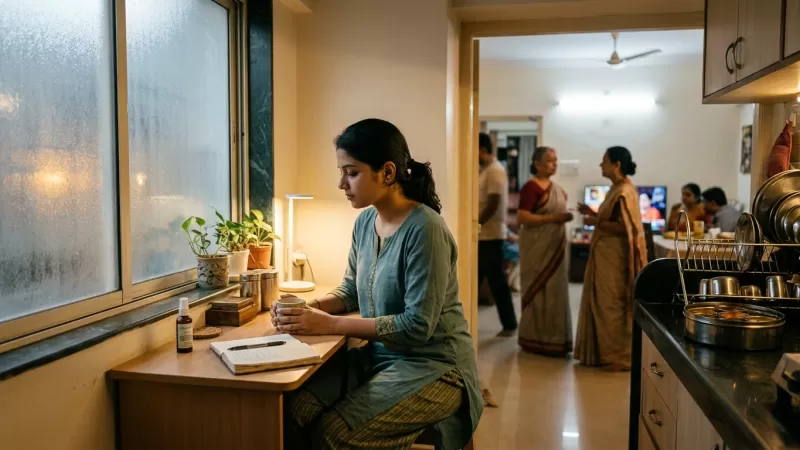
In many Indian homes, this buffer is all that stands between a draining workday and the realities of family life – whether that means a joint family’s dinner table or a quiet apartment where dinner is reheated after 10pm. Commuters who treat this journey as more than just dead time often arrive home less depleted, more present, and even a little lighter in spirit.
Why the Indian Commute Becomes the Only Real Buffer
For most working adults in Indian cities, the commute is not just about getting from point A to B. It’s the silent switch from office persona (boss, team player, manager) to home persona (parent, son, daughter, partner), especially when both roles are demanding in their own ways. Many people in Mumbai local trains, Bengaluru cabs, or Delhi Metro carriages know this feeling: the moment you step out of the office, it’s as if you’re peeling off one layer but haven’t yet put on the next.
Here is the catch — in a country where offices expect late-night emails and families expect your attention the minute you walk in, there’s very little time to actually transition. This is where using Indian commute as transition time can quietly change the quality of your evenings, your relationships, and even your mental health. In families where both spouses work, or where elders and children share space, the commute is sometimes the only stretch of "alone time" in the day.
Underlying Reasons Why Commute Time Began to Feel Like Dead Time
Long commutes have always been part of Indian city life. But the way we experience them has changed. The tricky part is, phones and work chat apps have blurred the lines. You leave your office building, but your mind is still in the last meeting, or you’re replying to a supervisor’s WhatsApp. Or, you’re already thinking about the dinner that still needs to be cooked, the power bill to pay, or the homework to check.
Fitness coaches who train working adults often find that most movement in Indian homes comes from daily tasks, not planned exercise. The same goes for mental downtime: it doesn’t come from perfectly planned meditation or apps, but from ordinary moments like waiting in traffic or sitting in a rickshaw. Yet, these moments have become cluttered with notifications and the urge to "be productive." Many commuters extend their workday into the journey, or start preparing for home responsibilities before even reaching their gate. Over time, the commute stops being a buffer and becomes just another to-do list location.
But when you choose to treat this travel time as a mental transition – not for catching up on work or chores, but for decompressing – it starts to serve a different role. It becomes the only genuine gap that modern work and family life still allow. That’s why using Indian commute as transition time is more important now than ever.
Clues That Your Commute Is Not Helping You Reset
- You arrive home still thinking about office problems. Dinner feels like an extension of the workday, and you snap at small things.
- Your phone never leaves your hand. You’re checking emails or work chats even as the train pulls into your station.
- You feel “switched on” all the way home. No sense of exhale or relief as you walk through the door.
- Family notices your mood is tense or distracted. In many families, children or elders quietly pick up on this, even if nothing is said out loud.
- Sleep is restless or delayed. Your mind keeps running through office or home tasks late into the night.
Small Shifts That Make Commute Mental Transition India-Friendly
- Stop replying to work messages after leaving the office. Even if you’re tempted, try putting your phone on silent or switching off notifications for the duration of the commute. Many professionals who try this notice they arrive home less irritable and more present at the dinner table.
- Give yourself “mental permission” to leave office thoughts behind before stepping out. In some offices, people use the last 10-15 minutes to pack up, clear their desk, or make a to-do list for the next day, which signals to the brain that work is done for now.
- Stare out the window or listen to familiar, calming music. The idea isn’t to be productive, but to let your mind wander or rest. Many who take crowded buses or trains find these small rituals help them decompress.
- Carry a small comfort item. For some, it’s a flask of chai, for others, roasted makhana or a fruit. This physical act of having something soothing can ground you, marking the journey as your own time.
- Use the commute as a gratitude or check-in moment. Not formal journaling, but just mentally listing 2-3 things you appreciate or are looking forward to at home. This quietly shifts your mindset.
The main thing is, using Indian commute as transition time is not about adding more tasks, but about gently reclaiming the journey for yourself.
How Commute Buffer Time Shows Up in Indian Family Routines
In joint families, there’s often a subtle expectation that the minute someone walks in from work, they should join in – greet elders, play with children, or help with dinner prep. When the commute is treated as buffer time, even 20 minutes of quiet in a crowded train can help reset your mood. Families often notice that on days when the commuter has a less frazzled arrival, the whole evening feels less tense.
A working professional commuting in Bengaluru might use the last 15 minutes of their bus ride to do nothing but breathe and watch the city pass by, so they don’t carry office stress into their small 2BHK, where shared spaces leave little room for privacy. Some parents, especially mothers, find that using Indian commute as transition time allows them to respond more patiently to their children’s needs right after coming home, rather than snapping or withdrawing.
During festival seasons or when office deadlines get intense, many families in Indian cities have quietly discovered that a mindful commute can be the difference between a calm or chaotic evening – even when there’s not enough time for a proper break at home.
When the Commute Isn’t Enough: Signs You May Need More Support
If you find that even after using your commute as a buffer, you’re still feeling persistently anxious, irritable, or unable to switch off from work or home worries, it might be time to talk to someone. Sometimes, stress builds up quietly. If sleep is regularly disturbed, appetite changes, or relationships feel more strained than usual, reaching out to a trusted friend or mental health professional can help. In many Indian families, speaking to a family doctor or counsellor can be a gentle first step.
Common Questions
Many Indian commuters wonder how to use their travel time more intentionally without adding pressure or guilt. Here are some common questions, answered with practical ideas for our daily household rhythms and routines.
How can Indian commuters deliberately use their travel time to decompress between work and home rather than extending either?
In many homes, the key is to treat the commute as a “third space”—neither fully work nor fully home. For example, after logging off at the office, you could put away your work devices and avoid checking emails until after dinner. Some people use this time for a calming playlist, or simply sitting with their thoughts. Even looking out the window or people-watching can act as a gentle reset. The main thing is to avoid using the commute for planning the next set of tasks—let it be a pause, not a bridge.
What specific habits or activities on a commute most effectively create mental transition between professional and personal identity?
Listening to familiar music, enjoying a small snack, or simply sitting quietly can help. Some commuters in India like to call a family member for a light chat (not to discuss problems!) or reflect on one good thing from the day. If you’re in a crowded train, even closing your eyes and focusing on your breath for a few stops can make a difference. These small habits signal to your mind that you’re moving from one role to another, creating a clear boundary between work and home.
Is there a difference in the quality of transition depending on whether the commute is by car, train, or bus for Indian adults?
Yes, the mode of commute does shape the transition. In a car, you might have more privacy for music or silence, but driving in traffic can be stressful. On a train or bus, you’re likely surrounded by others, but there’s a chance to people-watch or just zone out. Many find that public transport allows for more “switching off” because you’re not actively navigating. Adapt your transition habit to what feels possible—sometimes even a few calm moments in a crowded local can be enough.
How long does a commute need to be to serve as an effective mental buffer or can even a short commute serve this purpose?
The length matters less than how you use it. Even a 10-15 minute rickshaw ride can help if you put away your phone and give yourself permission to unwind. Some working adults in Indian cities have learned to mentally “sign off” from work as soon as they step out, regardless of commute length. The intention—to treat this time as a transition, not extra work—is what makes the difference, whether your journey is short or long.
What should Indian commuters avoid doing during their journey if they want to arrive home less depleted?
Try not to answer work messages, make stressful calls, or plan the next round of chores during the commute. Avoid scrolling news or social media that leaves you tense. Many people find that carrying work into the journey (even just mentally) keeps them wound up. Instead, use this time for a small comfort—chai, music, or just looking outside. This way, you’re more likely to walk in the door feeling refreshed, not drained.
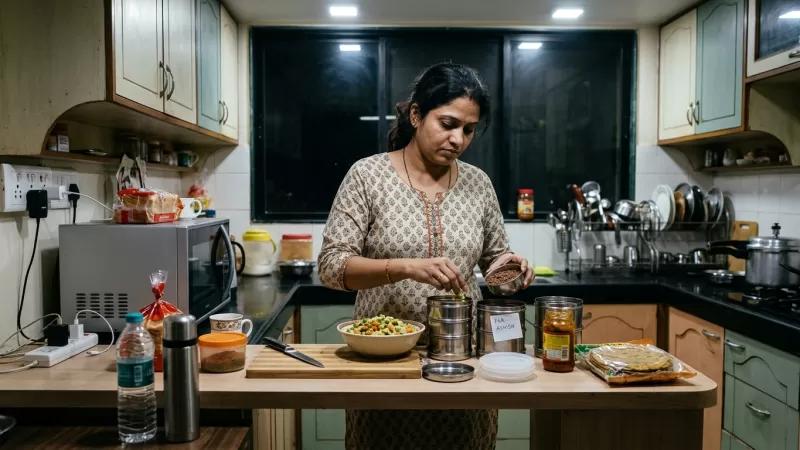
A kitchen in Nagpur at 6am: The pressure cooker hisses, and someone’s lunch box is being packed while the radio plays softly. An office bag sits by the door. The quiet anticipation of the morning commute hangs in the air—not as a dreaded wait, but as a chance to gather oneself before the day truly begins. For many Indian families, this is where the real transition starts, long before the first meeting or the night’s last cup of chai.