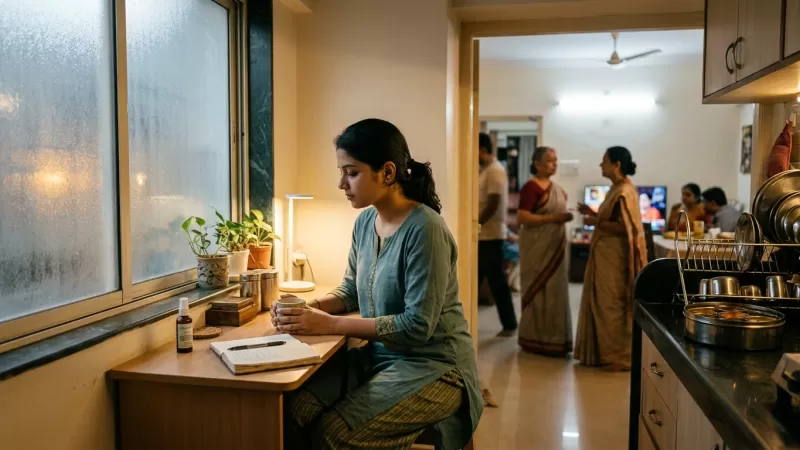
For many Indian families, the day begins in the dark—sometimes before the birds, always before the traffic. The clatter of pressure cookers and early morning chai blends with the low hum of autos and buses already on the move. Indian commuter mental wellbeing is quietly shaped not just by what happens at work, but by the long hours spent squeezed into trains, inching through city traffic, or waiting for a late bus as the sun rises higher.
In Indian cities, the daily commute is rarely less than an hour each way. It’s not just time lost; it’s energy, patience, and sometimes peace of mind. Many working adults arrive at their workplace already wrung out from a 90-minute traffic crawl. Others find their only quiet moment during those train rides, learning—over months—to treat the commute as something to live with, not just get through. Protecting mental health for Indian commuters is not about making those hours productive, but about making them less draining and more manageable, in their own small ways.
Why Commutes in Indian Cities Drain More Than Time
The long commute mental health India experience is shaped by a unique mix of noise, unpredictability, and sheer numbers. In Bengaluru, Mumbai, Delhi, or Hyderabad, public transport is lifeline and battleground. Seats are a luxury. Even standing room can be a blessing on crowded trains or buses. For those who drive or take cabs, traffic jams are routine, not exception—sometimes doubling commute times during monsoon or festival season.
Most Indian commuters don’t get to choose silence or solitude. Between constant honking, packed compartments, and the jostle of crowds, the commute often becomes a zone of low-grade, unacknowledged stress. Long waits at signals, sudden power cuts at railway stations, or a bus that never comes can tip the mental balance before the workday begins.
In many homes, this strain is invisible. The person who leaves at 7am and returns at 9pm is expected to be present for family, help with homework, or join evening prayers—never mind the exhaustion of two hours spent just getting home. The tricky part is, this daily grind adds up. Slowly, it eats into resilience and patience, affecting not just work but the mood and energy left for home.
Underlying Reasons Indian Commuters Feel Stretched Thin
Several factors combine to make protecting mental health Indian commuters especially challenging. First, there’s the unpredictability. A 60-minute commute might turn into 90 minutes with no warning. Rain, traffic diversions, or a shortage of buses can throw off plans and increase anxiety.
Second, the lack of personal space is real. On suburban trains, it’s not unusual to stand pressed shoulder-to-shoulder with strangers, hearing every ringtone and feeling every jolt. Even in private vehicles, being stuck in bumper-to-bumper traffic on Outer Ring Road or Western Express Highway can feel suffocating, especially after a long workday.
Third, social expectations add another layer. Many adults—especially in joint families—are quietly expected to contribute at home no matter how draining their journey is. There’s often little room to decompress before the next round of responsibilities begins.
Psychologists supporting working adults often find that this combination of environmental and social pressures means Indian commuter mental wellbeing faces unique, persistent challenges. Even small irritations—missed breakfast, packed bags, forgotten lunch boxes—can feel overwhelming when layered on top of daily commute stress management in India.
Clues That the Commute Is Affecting More Than Just Time
- Arriving at work already tired or irritable: Many people notice they’re short-tempered or unfocused for the first hour or two, especially after a tough journey.
- Frequent headaches or body aches: Standing for long stretches, balancing in a crowded bus, or sitting in one position in traffic often leads to neck, back, or shoulder pain.
- Loss of interest in evening activities: When you come home too drained to talk, play with children, or even watch TV, it’s often a sign the commute is taking a toll.
- Changes in eating habits: Skipping breakfast to catch an early bus, or eating heavy snacks out of stress or boredom during the ride, is common. This can throw off energy and mood for the rest of the day.
- Shorter patience with family: Snapping at children, partners, or elders after returning home is often not about them, but about the stress carried from the commute.
Habits That Make Long Commutes Less Draining
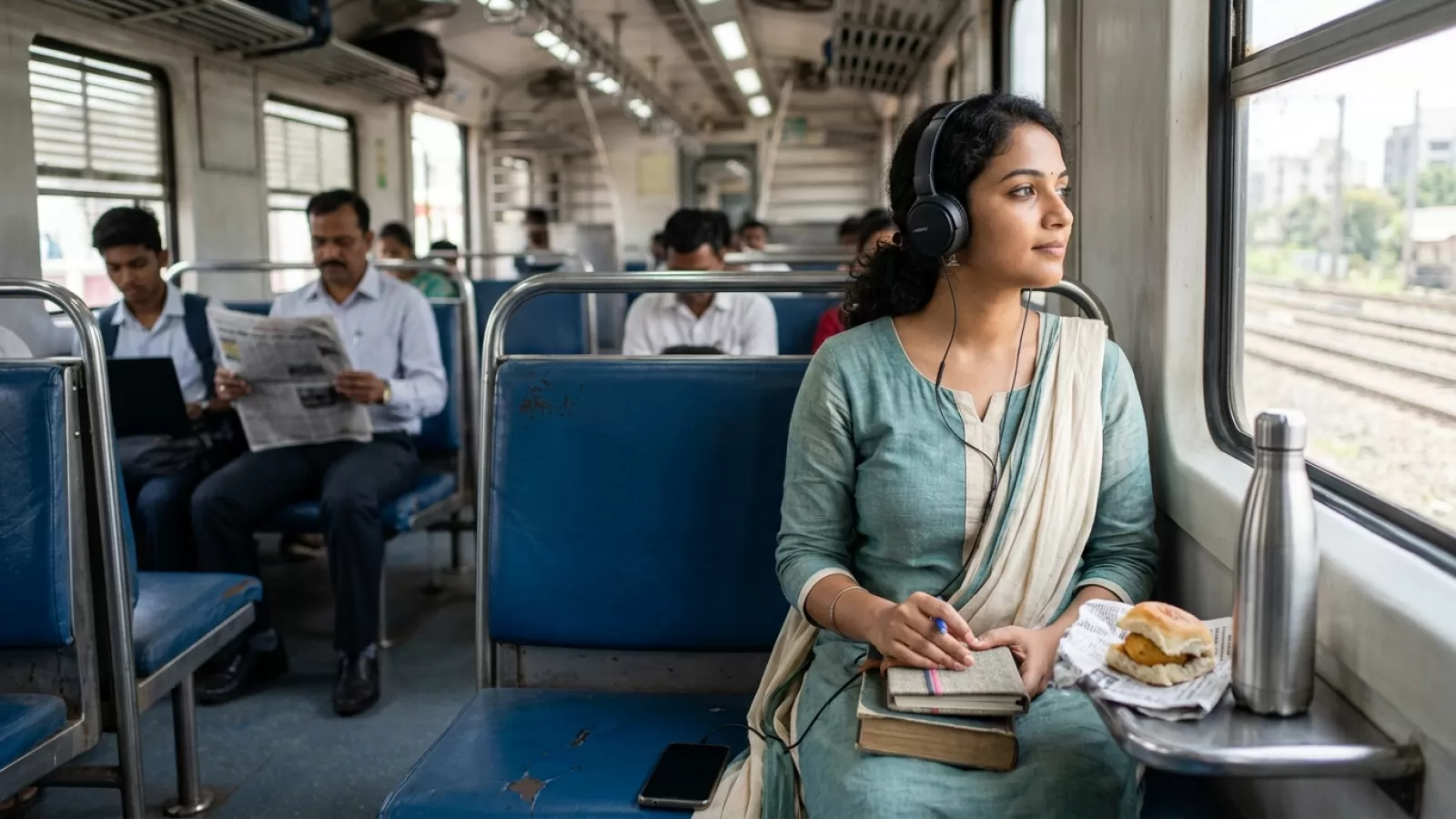
- Carving out small rituals: Many commuters quietly create calming habits for themselves—listening to a favourite song, carrying a book, or sipping chai from a flask. These little routines can become anchors that protect mental health for Indian commuters.
- Planning gentle transitions: Instead of rushing straight from bus or train into work or home duties, some people pause for two minutes—just to breathe, wash their face, or sit quietly. This short buffer can make a huge difference.
- Light movement and gentle stretching: While it’s not always possible to move freely on a crowded train or bus, flexing ankles, rolling shoulders, or doing neck stretches can help counter stiffness and fatigue from sitting or standing too long.
- Packing simple, nourishing snacks: Carrying a small box of makhana, peanuts, or fruit means you’re less likely to grab oily samosas or skip meals entirely. This supports energy and mood, especially on longer journeys.
- Setting boundaries around phone use: Some adults find that mindlessly scrolling social media increases agitation. Choosing a calming playlist, a devotional track, or even a short guided breathing exercise can be grounding, especially when traffic or crowds get overwhelming.
The catch is, not every tip fits every commute. What works for a train regular may not work for someone driving themselves through city traffic. The idea is to find one or two habits that make the ride less punishing and more bearable for you.
The Commute as a Quiet, Shaping Force in Indian Life
In many Indian families, the rhythm of the day is set by the commute. Lunch tiffins are packed before sunrise. Dinner is pushed late because someone is still on their way home, stuck in a jam near the flyover. Children tiptoe around a parent who’s just walked in, knowing the mood can swing depending on how the journey went.
Some adults discover that the train ride is their only uninterrupted time. They read, pray, or simply stare out the window. Others, especially those who drive, use the time to listen to old film songs or call a parent. The commute becomes a pocket of time with its own rules—sometimes stressful, sometimes a rare quiet space away from work, chores, and family noise.
During humid summers, even a functioning AC in the car or metro is a small mercy. During monsoon, delays and wet seats are expected. Over time, most families quietly adjust—dinner is reheated, children’s bedtimes shift, and the rhythm of chores bends to the unpredictable return of the commuter.
Knowing When to Reach Out For Help
If you notice that your mood, sleep, or energy are consistently low, or if you find yourself snapping at loved ones more than usual, it may be time to talk to someone. Sometimes, the stress of the commute can tip into anxiety or depression, especially if you feel on edge even after reaching home. If these feelings persist or start affecting your work and relationships, it’s wise to speak to a doctor or counsellor. Small changes help, but some situations really do need extra support.
Common Questions
Many Indian commuters have similar concerns, but the daily reality can look different from home to home. Let’s walk through some of the most common questions—grounded in the rhythms, spaces, and pressures of Indian life—to see what patterns and practical steps often work best.
How does a long daily commute affect Indian adult mental and physical health over months and years?
Over time, the effects of daily commute stress management India can add up in subtle ways. Adults who spend hours in traffic or crowded trains often notice more fatigue, body aches, and lower patience at home. In a Mumbai flat, a parent might return each evening so tired they skip family meals or withdraw from daily conversation. Over years, this can lead to ongoing stress, poor sleep, and sometimes high blood pressure or mood shifts. The longer the commute, the more important it becomes to build in small habits that support resilience and recovery.
What are the most effective habits for Indian commuters to make a daily commute less draining?
In many Indian homes, small adjustments make a big difference. Preparing a light, portable breakfast like poha or fruit for the ride, carrying water, or making a personal music playlist helps. On buses or trains, some commuters quietly practice deep breathing or gentle stretches. A Chennai office worker might use a neck pillow or mini footrest for comfort on long bus rides. The key is to find one or two habits—even short pauses before and after the journey—that help you feel less depleted.
Is there a meaningful difference in commute experience between driving, taking the train, and being driven that Indian adults should account for?
Yes, each mode comes with its own patterns. Those who drive, especially in cities like Bengaluru, often report higher tension from traffic and less chance to relax. Train commuters might face more crowd stress, but also find moments to read or rest. Being driven (in a cab or carpool) sometimes allows for a mental break, but can still be tiring if the route is long or noisy. In a Pune household, a working adult who switched from driving to a company bus found their stress levels dropped—even though the ride was longer—because they could close their eyes and rest.
How do you maintain daily mental wellbeing when 2 to 3 hours of every day are spent in traffic or transit?
It’s not easy, but small routines help. Many Indian commuters set up gentle rituals: choosing a set time to message family, packing a box of roasted chana, or listening to calming bhajans. In a Delhi flatshare, two flatmates started checking in with each other after long commutes—sharing a quick chai before diving into evening chores. The main thing is not to expect yourself to be cheerful or energetic right after stepping in the door; giving yourself a few minutes to transition can make a big difference.
What one habit change would most improve the daily commute experience for the typical Indian working adult?
The one habit that helps most? Creating a protected ritual at the start or end of the commute—something that signals to your mind and body that you’re moving between zones. In many homes, this could be as simple as sitting for five minutes with chai before switching from work mode to family mode, or listening to the same calming track before leaving the office. Over time, these small cues help buffer the transition, making the commute feel less like lost time and more like a manageable, even meaningful, part of daily life.