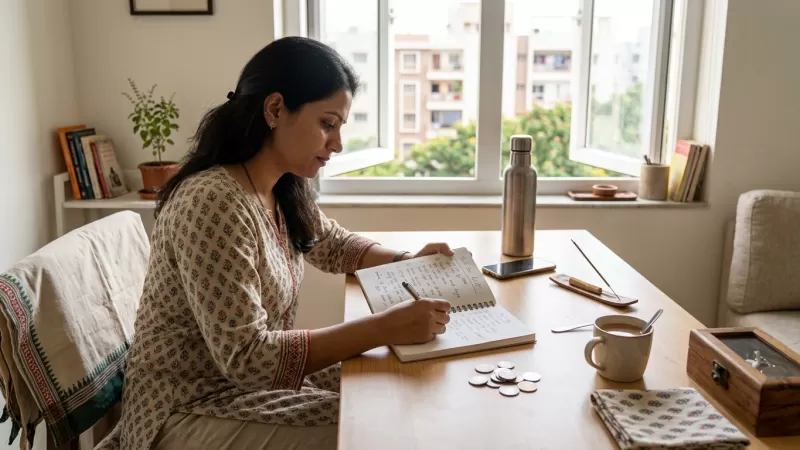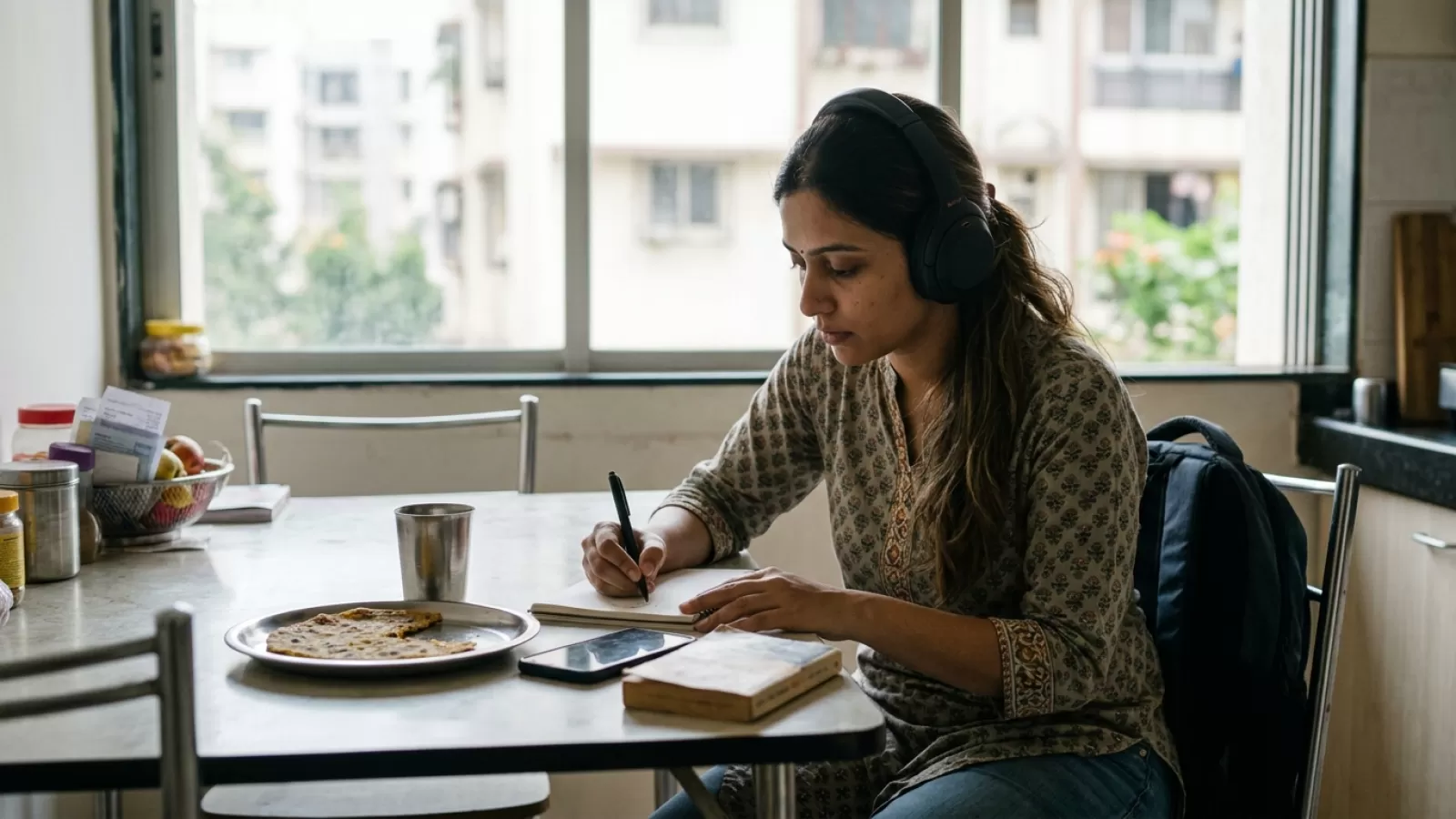
Around 7am, in many Indian apartments and chawls, someone is already bracing for a day that won’t really belong to them. For adults facing a long commute, personal time can feel like a memory. Yet, in these homes, the rhythm of preparing for work and family merges with the quiet acceptance that most hours will be spoken for by others — work, family, cooking, and commuting.
Long commute personal time India is not just about losing hours in traffic or on trains, but about learning to protect slivers of time from vanishing completely. In homes where three to four hours are spent just getting to and from work, the arithmetic gets tight: after daily obligations, there’s barely any room left for yourself.
How a Long Commute Swallows Up Personal Hours in Indian Homes
In cities like Mumbai, Bengaluru, or Delhi, a heavy commuting routine often becomes the background music of adult life. Indian adults with very long commutes usually leave home before sunrise and return after dinner, when the household is winding down. Protecting personal time during heavy commuting becomes a near-impossible puzzle — especially when family, chores, and sometimes even second jobs pull at what’s left of your attention.
This isn’t just a city problem. Semi-urban professionals catch early trains or long bus rides into city centres, with every minute counted. You come home, maybe help a child with homework, catch up on parents’ health worries, then crash into bed — only to repeat it all tomorrow. Many Indian adults have quietly discovered that the commute itself is the only real chance for uninterrupted time, if you learn how to claim it.
Why So Many Indian Adults Have No Time Due to Commute
Daily commutes in India tend to stretch longer for a few simple reasons. Affordable housing is often far from work hubs, and many families depend on one or two earners to support a larger household. Traffic jams, unreliable local trains, and packed buses add hours each week. Even flexible work-from-home days can bring their own pressures, with the expectation that saved commute time should be spent on chores or extra work.
The tricky part is, family life in India rarely pauses for one person’s tiredness. Evening routines — helping with homework, preparing dinner, or checking on elders — usually take priority over individual downtime. This means that unless you fiercely protect personal time during heavy commuting, it simply disappears.
Workplace cultures in India also play a role. Staying late is often seen as dedication, and leaving "on time" is sometimes frowned upon. In this pattern, the commute feels even heavier, squeezing the day from both ends. Lifestyle coaches who work with Indian professionals often find that the only reliable personal time for many adults is the hour or so carved out during their commute, not at home.
Common Signs Your Commute Is Eating Into Personal Time
- You never have time to yourself unless you’re commuting. In many homes, the only time you get to listen to music, read, or just stare out of the window is on the bus or train.
- Fatigue follows you everywhere. Weekday evenings blur into one another, and you rarely feel "rested" — even on weekends.
- Household tensions rise. You might find yourself snapping more at family, or feeling left out of decisions because you’re always out or just too tired.
- Your hobbies have faded away. The things you loved — evening walks, gardening, even watching your favourite serial — have quietly disappeared.
- Personal identity feels lost. You sometimes forget what you truly enjoy, because every day is just work, commute, and family duties.
Ways Indian Adults Protect Personal Time When the Commute Is Heavy
- Turn the commute into protected time. Many adults treat their bus, train, or cab ride as "do not disturb" time. Earphones go in, and it’s a personal bubble — whether you’re listening to old Hindi songs, a devotional podcast, or just silence. The key is to let others (family, colleagues) know you’ll be unavailable during this stretch.
- Micro-habits that fit in the commute. Some Indian adults use this time for language learning apps, sketching in a notebook, or even meditating with eyes closed. It’s not always about productivity — sometimes it’s about something that’s just yours.
- Set boundaries at home for brief alone time. After dinner, if possible, many families have learned to respect one adult’s need for a 10-minute walk on the terrace or quiet chai on the balcony. It’s not much, but it counts.
- Batch household tasks for weekends (when possible). In homes with heavy weekday commutes, some chores — like ironing, deep-cleaning, or meal-prepping — get lumped into Saturday mornings, freeing up a little weekday space.
- Use technology for connection on your terms. For some, long commutes are a time to catch up with friends over calls or voice notes — but only when you genuinely want to, not out of obligation.
A Kitchen Clock Strikes 6am: The Pattern of Commuter Life in India
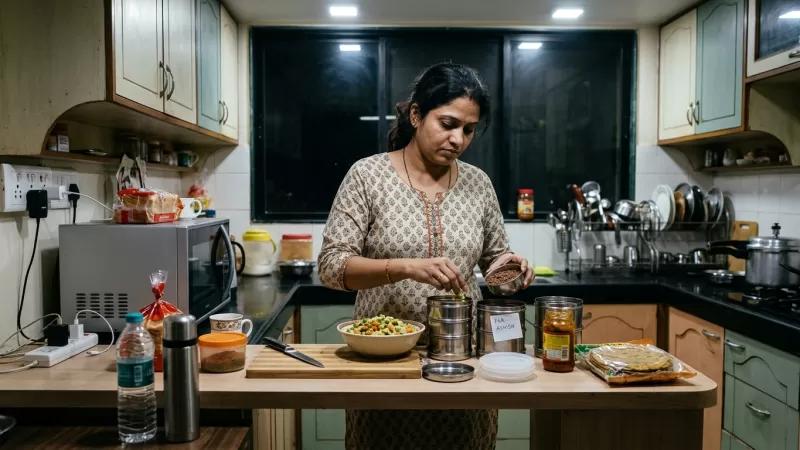
A kitchen in Nagpur at 6am smells of toasted bread, strong chai, and pressure-cooked dal. An adult quickly packs a dabba, eyes on the clock, while the rest of the house is still waking up. The morning news plays in the background. The backpack is zipped, keys grabbed, the front door clicks shut — and the next three hours belong to roads, trains, or buses.
On the ride, earphones go in. The world shrinks to a playlist of old favourites or a downloaded episode of a stand-up show. The phone is on silent. For these ninety minutes, there are no work emails, no school forms to fill, no “just a quick call” from relatives. This is where long commute personal time in India quietly survives, between the rattle of train tracks and the hum of traffic.
When to Consider Asking for Help
If you find that your health is suffering, your relationships are always tense, or you feel constantly burnt out, it may be time to ask for support. Sometimes that means talking to family about sharing responsibilities. Sometimes it means speaking to HR about flexible hours or remote work days. If you notice serious mental or physical strain, it’s a good idea to check in with a doctor or counselor — just to get another perspective.
Common Questions
These are questions that come up in many Indian homes where the commute drains most waking hours. If you’re wondering how others manage, or what’s possible when time is so tight, you’re not alone. Here are some answers grounded in the realities of Indian family life and city rhythms.
How do Indian adults with very long commutes maintain any sense of personal identity and time when the day leaves almost nothing?
In families where nearly every hour is scheduled, many adults protect their sense of identity by claiming small rituals during their commute. For some, it’s listening to old ghazals, reading devotional books, or writing in a journal on the train. Even short, familiar habits — like buying chai from the same station vendor or following a favourite meme page — can anchor you in yourself. These minor acts may seem insignificant, but they help you remember who you are outside of your roles at work and home.
What can the commute itself offer that constitutes genuine personal time for Indian adults with no other space?
The commute, especially on a train or bus, can become a rare pocket of uninterrupted time. Many Indian adults use this window for things they can’t do at home — listening to a playlist, practicing meditation, or simply staring out the window. Some find deep comfort in being physically present but mentally elsewhere, knowing that for this stretch, no one expects anything from them. It’s a fragile but real form of protecting personal time during heavy commuting.
Is it possible to sustain long-term wellbeing in India when a 3-to-4-hour daily commute is a permanent feature of the working week?
Wellbeing is possible, but it requires intention and support from both family and workplace. Many adults who manage very long commute wellbeing in India successfully do so by setting clear boundaries for their commute time, finding micro-habits that recharge them, and outsourcing or sharing household work when possible. If you find yourself always exhausted or unwell, it might be time to gently advocate for changes — even small ones — that can make the routine more sustainable.
How do Indian adults prioritise what they use their limited personal time for when there is very little of it?
Most people end up choosing what feels most restorative — even if it’s just closing your eyes and listening to music, or catching up with a friend on a call during the commute. On rare evenings with a little extra time, some choose light exercise, a quick walk, or a favourite TV show. The key is to use the slivers of time for what truly refreshes you, not what you “should” do. Many families quietly respect these choices, knowing how rare and precious such time is.
When does a very long Indian commute constitute a working condition that is genuinely damaging enough to justify changing even at significant personal cost?
If your commute leads to chronic health problems, ongoing family distress, or a sense that you’re missing out on your children’s lives, it may be time to reconsider. In some homes, a decision to change job or location — even with financial sacrifice — comes after many conversations about wellbeing and priorities. It’s never an easy choice, but in Indian cities, some families eventually decide that no salary or job title is worth constant exhaustion. If you’re unsure, talk it over with family and, if possible, a trusted doctor or counselor.