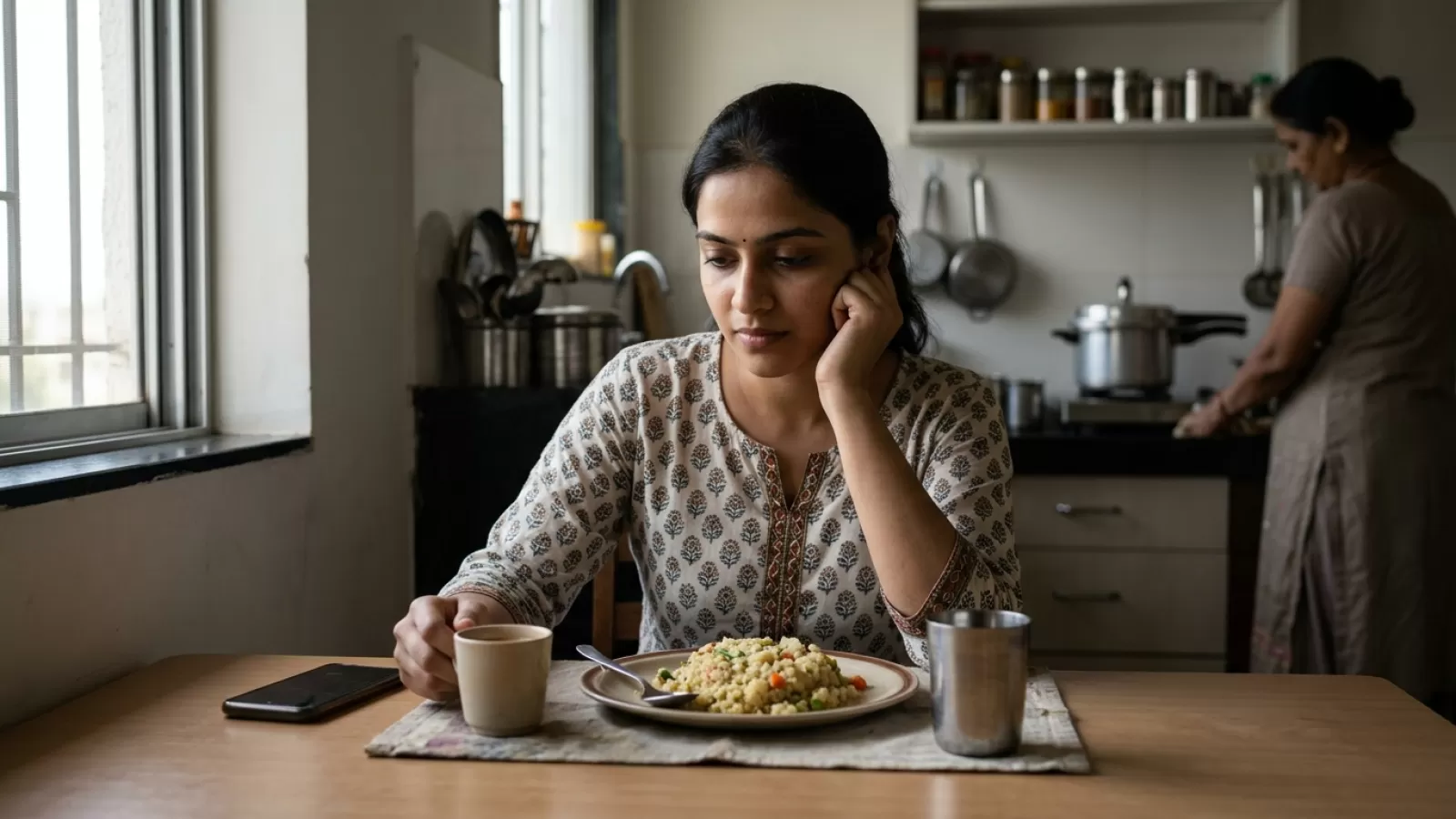
In many Indian homes, meals are more than just food—they’re a chance to pause, talk, and share a bit of the day with family or even just with yourself. But these days, with everyone glued to their phones, TVs, or laptops, it’s become so common to eat while scrolling, swiping, or catching up on the latest WhatsApp forwards. It can feel harmless, especially when you’re tired or eating alone, but mindless eating like this does change how we feel about food (and sometimes even how our body handles it). If you’ve been feeling disconnected from your meals, or you just want to gently cut back on the screen-at-the-table habit, you’re not alone. Let’s look at some small, realistic ways to restore mindful eating—without needing to go totally digital-free.
Why Does Screen-Time Creep Into Mealtimes?
It’s not hard to see why so many of us end up eating with a screen nearby. Busy workdays, late-night dinners, and the endless stream of messages can make it feel almost impossible to set aside devices. For many, meals become the one time to catch up on a favourite show or check in on group chats. It’s also a habit that tends to sneak in quietly—maybe you started with just the news during breakfast, or a quick reel while waiting for the dal to cool, and now, it’s just part of the routine.
The tricky part is, this habit often feels comforting—especially if you’re eating alone or feeling rushed. No judgments here; in fact, a lot of families quietly deal with this shift, especially after long days or when everyone’s on a different schedule. Still, over time, this constant distraction can make it harder to notice your hunger or even remember what you ate.
Here’s the catch: It’s not about blaming yourself or banning screens entirely. Life’s busy, and sometimes, a little entertainment at dinner is what keeps you going. But there are softer ways to bring a bit more awareness back to the table—without forcing harsh rules.
How Screens Change the Way We Eat
When you eat with your eyes glued to a screen, your mind’s attention gets split. You might find that you eat faster, don’t notice when you’re full, or even forget the taste of your food halfway through. Many people mention feeling strangely unsatisfied after a distracted meal, reaching for something extra even though they’ve technically finished eating.
This isn’t just talk—many small studies suggest that distracted eating can lead to overeating or a sense of discomfort. But even without research, you’ve probably noticed that meals in front of the TV or phone pass by in a blur, and later you can’t quite recall what you ate.
Sometimes, you might even miss the simple pleasures: the first steam rising from hot phulka, the tang of homemade chutney, or the comfort of your favourite sabzi. These little sensory moments are what make food feel nourishing, not just filling.
Gentle Ways to Notice Your Eating (Without Going Cold Turkey)
Many people find the idea of total digital silence at meals unrealistic, especially with kids, teenagers, or late work calls. Instead, try easing into mindful eating with small, achievable steps. It’s not about perfection—it’s about trying to notice, just a little more, what you’re eating and how you feel.
- Start with One Meal: Pick any one meal—maybe Sunday lunch, or a weekday breakfast—to try eating without a screen. Even once or twice a week is a good start.
- Pause Before You Begin: Before the first bite, take a moment to look at your plate. Notice the colours, the smell, the warmth. It sounds simple, but it gently brings your attention back to your meal.
- Check in Mid-Meal: Halfway through, put your spoon down and ask yourself: Am I still hungry? How does the food taste? This tiny habit can make a surprising difference.
- Keep the Phone Nearby (But Not in Hand): If you need your phone close for important calls, try keeping it face down or a short distance away, so you’re less tempted to scroll mindlessly.
There’s no need to scold yourself for slipping up. Most people find it takes several tries to build new routines.
Creating a Calm Mealtime Setting at Home
It’s much easier to eat mindfully when your surroundings invite you to slow down. In many Indian households, meals are meant to be a little pause in a busy day—but clutter, noise, or even just habit can make it hard to focus on food.
Consider small changes, especially if you eat alone or with family who also enjoy screens:
- Lay out your meal neatly—even a simple plate of roti and sabzi feels different if served with care.
- Switch off the TV (or at least mute it) during meals.
- If you like music, play soft instrumental or old Bollywood classics instead of loud news or dramas.
- Use this time to chat—about the day, about the food, or even just to joke around. It’s a tradition in many homes, but it sometimes gets lost as schedules get busier.
Even on rushed days, lighting a small diya or opening a window for fresh air can help mark mealtime as something special—not just another task.
Managing Family Habits Without Arguments
If you live in a joint family, or if you’re parenting children who love their screens, changing habits can feel like an uphill task. It’s perfectly normal to face some resistance. After all, everyone finds comfort in their routines—even if those routines aren’t perfect.
Rather than laying down strict rules, you might try gentle nudges. For example, suggest a “no phones for the first 10 minutes” rule, or start a fun conversation about everyone’s day before anyone reaches for a screen. Many families find that once people get talking, they forget about their devices—at least for a little while.
And if someone really wants to finish a show or catch a cricket score? It’s okay to be flexible. The goal isn’t to create tension at the table, but to slowly encourage more presence and togetherness.
Patience helps. So does a sense of humour.
Dealing with Busy or Lonely Meals
Let’s face it—sometimes, eating alone or after a long day at work feels a bit empty without some background noise or a show for company. Many people, especially seniors or those working from home, find that screens fill the silence. This isn’t something to feel guilty about.
If you’d like to try mindful eating even during solo meals, here are some gentle ideas:
- Listen to soothing music or the radio, rather than watching a screen.
- Read a magazine or book if you like—but try to pause and notice your bites now and then.
- Set your meal near a window, balcony, or garden—watching the world outside can be quietly calming.
- Try saying a small gratitude or prayer before eating—many Indian families have this tradition, and it can make even solitary meals feel meaningful.
Eating mindfully doesn’t mean you have to eat in silence or isolation. It’s more about being present, even in small ways.
How Festivals and Traditions Can Help
During festivals or special occasions—think Diwali dinners, Onam sadhya, or Ramzan iftar—people often eat together, talk, and focus on the food. It’s no coincidence that these meals feel more satisfying. The act of coming together, sharing, and celebrating naturally encourages more mindful eating.
Even if you’re not celebrating, you can borrow a few elements from festival meals to make daily eating feel special. Maybe it’s serving food on a banana leaf, or taking a few extra minutes to sit down together on Sunday afternoons. These simple touches can gently pull your attention back to the present moment.
And don’t worry if daily life gets in the way—nobody eats mindfully at every meal. The idea is just to increase those moments, little by little.
What to Expect (And Why It’s Worth Trying)
People who slowly shift toward more mindful eating often notice a few changes. The taste of food stands out more, and you might feel full with less. Some families say dinner feels warmer and more connected, though there are still days with rushed meals and phones at the table.
It’s not a cure-all, and it won’t fix every problem. But it’s a gentle way to bring a bit more calm and care into daily routines. You may also find that occasional indigestion, bloating, or that “heavy” feeling after eating improves a little, simply because you’re paying attention.
There’s no pressure to get it right all the time. Even one mindful meal a week can feel like progress.
Bringing It All Together—At Your Own Pace
The truth is, mindful eating isn’t about strict rules or perfection. It’s about choosing, every now and then, to sit with your food, your family, or just yourself, and really notice the moment. Some days will be noisy, rushed, and messy. That’s life.
If you’re ready to try, start small. Choose the tips that fit your household and your mood. Remember, every gentle adjustment counts—whether that’s putting your phone aside for five minutes or simply tasting your dal before reaching for the remote.
And if today was a screen-filled dinner after a long workday? That’s okay. There’s always the next meal.