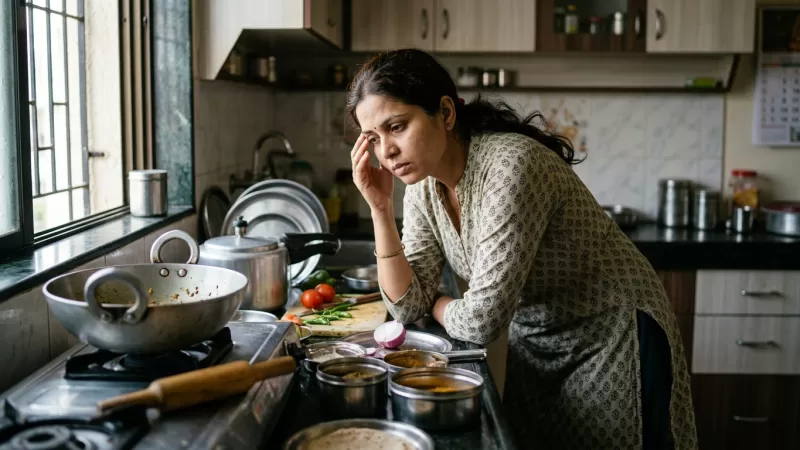
Most Indian families have some kind of rhythm to their days—whether it’s a busy morning with school tiffins and office rush, or a slower pace with chai and newspapers. But if your daily routine keeps changing, you might notice your appetite goes up and down too. Some weeks, you’re hungry at 11 pm; other days, you skip breakfast without meaning to. It can be confusing, and honestly, a little worrying when your energy crashes or you feel oddly irritable. Many people quietly deal with this, especially as work hours stretch, mealtimes shift, or sleep gets patchy.
Why Does an Unsteady Routine Affect Appetite?
Your body likes some predictability. In many Indian homes, the body gets used to a certain dal chawal at lunch or a light roti sabzi at night. But when meetings, kids’ schedules, or family demands change every day, your hunger signals go haywire. You might not feel hungry at the “right” time, or suddenly feel ravenous when it’s not convenient to eat.
That said, it’s not about blaming yourself. Modern life—especially in cities—makes steady routines tough. Shift work, late-night calls with overseas teams, or even seasonal festivals can throw off your eating patterns. It’s common, and you’re not alone if you feel out of sync these days.
Here’s the catch: trying to force yourself to eat at fixed times rarely works when your body isn’t ready. It can actually make things worse, leaving you uncomfortable or guilty.
Let Go of Fixed Meal Schedules
One gentle approach is to stop stressing about exact meal times. Indian tradition often values set timings (“breakfast by 9, lunch by 1”), but modern life doesn’t always cooperate. For many, insisting on a rigid schedule brings more frustration than benefit.
Instead, focus on listening to your body’s signals. If you’re genuinely hungry at 11 am, it’s okay to eat then—even if it’s not the official lunch break. If you’re not hungry at the usual dinner hour, a light snack might be enough for now.
Of course, this isn’t always easy. Hunger and fullness can feel unclear, especially when you’re tired or distracted. It takes a bit of trial and error, and some days you’ll get it wrong. That’s normal.
Smart Snacking: Nourishment Without Pressure
When your main meals get unpredictable, supportive snacks can quietly fill the gaps. But not every snack is equal. Indian homes often have mixtures, biscuits, or fried nibbles on hand, but those don’t always keep you satisfied for long.
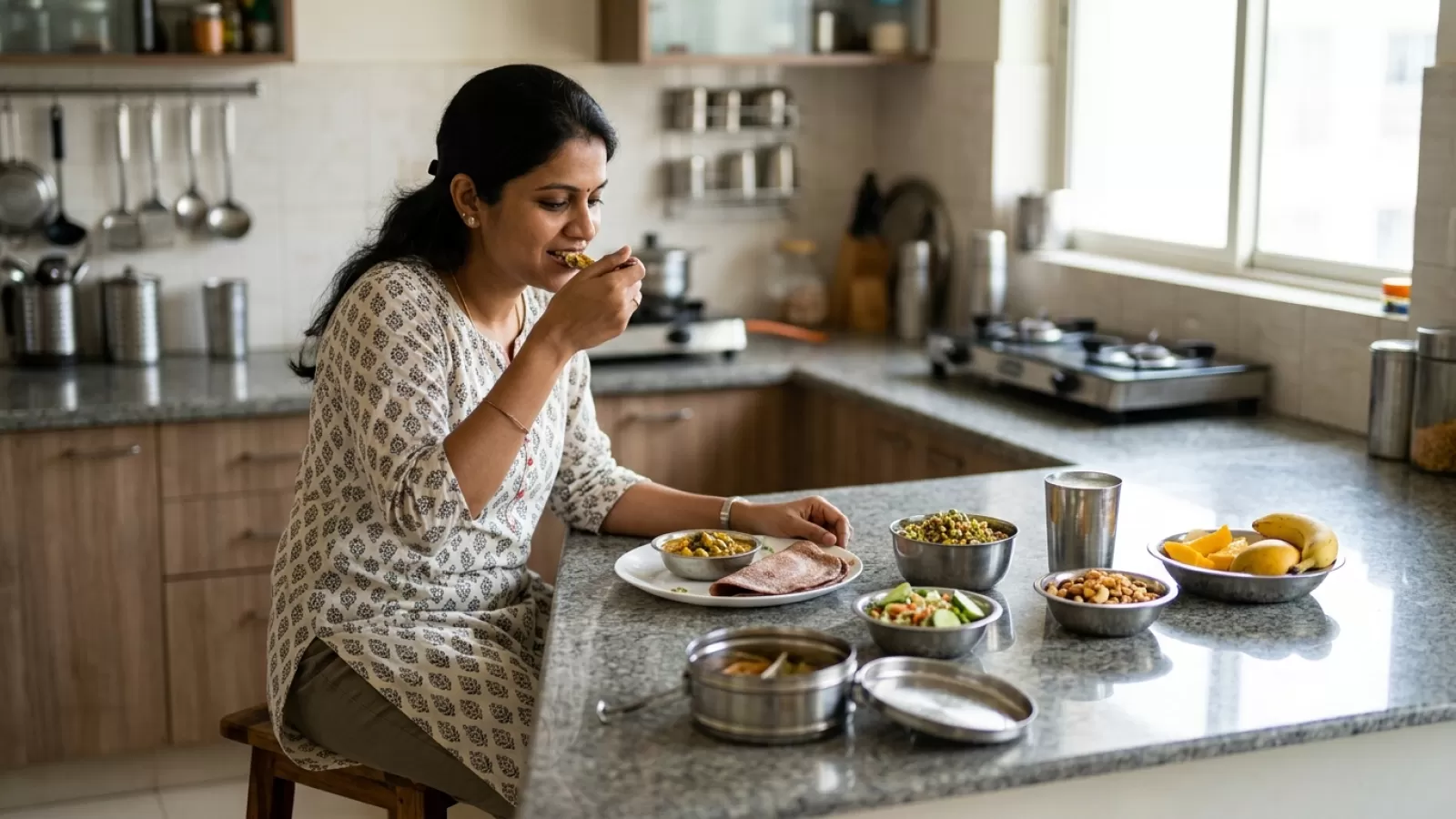
Here are some gentle, nourishing snack ideas many families rely on:
- Handful of roasted chana or peanuts (protein and crunch, not too heavy)
- Fresh fruit with a sprinkle of chaat masala (simple, refreshing)
- Homemade dahi with a spoon of jaggery or a few cut fruits
- A small bowl of poha or upma if you need something more filling
- Boiled moong or kala chana with onion, lemon, and a pinch of salt
These aren’t fancy, but they’re trustworthy. They don’t weigh you down or spike your sugar, and you can adjust the quantity based on your hunger. Some days, you might need two small snacks instead of a full lunch, and that’s alright.
Simple Meal Building: Flexible Yet Filling
When you do have time for a proper meal, the goal is to make it count—without making it complicated. You don’t need six dishes on the table. In fact, on irregular days, simple plates tend to work best.
Try to include something from each group most of the time:
- Some protein: dal, chana, curd, paneer, or eggs (if you eat them)
- Some grain: roti, rice, poha, millets, or leftover idli
- Some vegetable: even a quick sabzi, salad, or cucumber slices
This isn’t a rulebook. If you only have time for curd rice or a bowl of dal with toast, that’s still fine. On days when you’re just too tired to cook, a fruit and a glass of milk can quietly tide you over until the next real meal.
It’s good to remember—homemade food, even if basic, usually supports you better than outside snacks or takeout, especially during irregular phases.
Hydration: The Overlooked Helper
When days are chaotic, it’s very common to forget water. Oddly enough, mild thirst can sometimes be mistaken for hunger, especially during summer or after long work hours. You might reach for a snack when your body just needs a drink.
It helps to keep a bottle or steel glass nearby and sip steadily through the day. Not all hydration has to be plain water—nimbu paani, chaas, or a light herbal tea can also do the job. Just try not to overdo sweet drinks, which can leave you sluggish.
One small tip: check in with yourself now and then—are you actually hungry, or just a little parched?
When Appetite Vanishes: Gentle Ways to Eat
Some days, especially after poor sleep or high stress, your appetite might disappear altogether. Many families see this after festivals, during travel, or when someone’s unwell. The tricky part is, you still need some nourishment to keep up your strength.
During these times, smaller, more frequent nibbles often work better than full meals. You might find it easier to eat:
- A cup of curd, lassi, or buttermilk
- Half a banana or a few soaked almonds
- A slice of toast with ghee or a bit of pickle
- Light khichdi or daliya
It’s better to eat a little, slowly, than to skip entirely. Don’t force yourself to finish a big plate if it feels overwhelming. Appetite usually returns once your routine settles down again.
Honouring Hunger and Fullness: A Quiet Practice
For many, recognizing true hunger or fullness is tricky, especially if you’re used to eating by the clock or finishing everything on your plate. It’s a gentle skill, not something you master overnight.
A few things may help:
- Pause before serving extra; ask yourself if you’re still hungry
- If you’re full but there’s food left, it’s okay to save it for later
- On very busy days, a little hunger is normal—don’t panic if you occasionally miss a meal
You’ve probably noticed: children are often good at this. They eat when hungry, stop when full, and don’t worry about the clock. Adults can try to learn from that, even in small ways.
Real-Life Flexibility: What Actually Works in Indian Homes
Every household is different. Some have help in the kitchen, others manage alone. Some days, there’s a full family around the table; other days, everyone eats at different times. The most supportive habits are the ones that fit your real routine, not an ideal one.
What tends to help most people with irregular rhythms?
- Keeping a few basic, nourishing ingredients ready—dahi, dal, fruit, some cooked rice or roti
- Accepting that meal times may shift, and that’s okay for now
- Being gentle with yourself—there’s no “perfect” routine, especially during busy or stressful times
- Prioritizing home-cooked food when possible, but not feeling guilty about simple or repetitive meals
It’s not about forcing your body into someone else’s timetable. Instead, support it quietly—one meal, one snack, one glass of water at a time. Over weeks, this kind approach usually brings back a sense of steadiness, even if your schedule still keeps changing.
Some days will be smooth, others will be messy. That’s all right. What matters is that you’ve found small, practical ways to keep yourself nourished—without pressure or guilt.