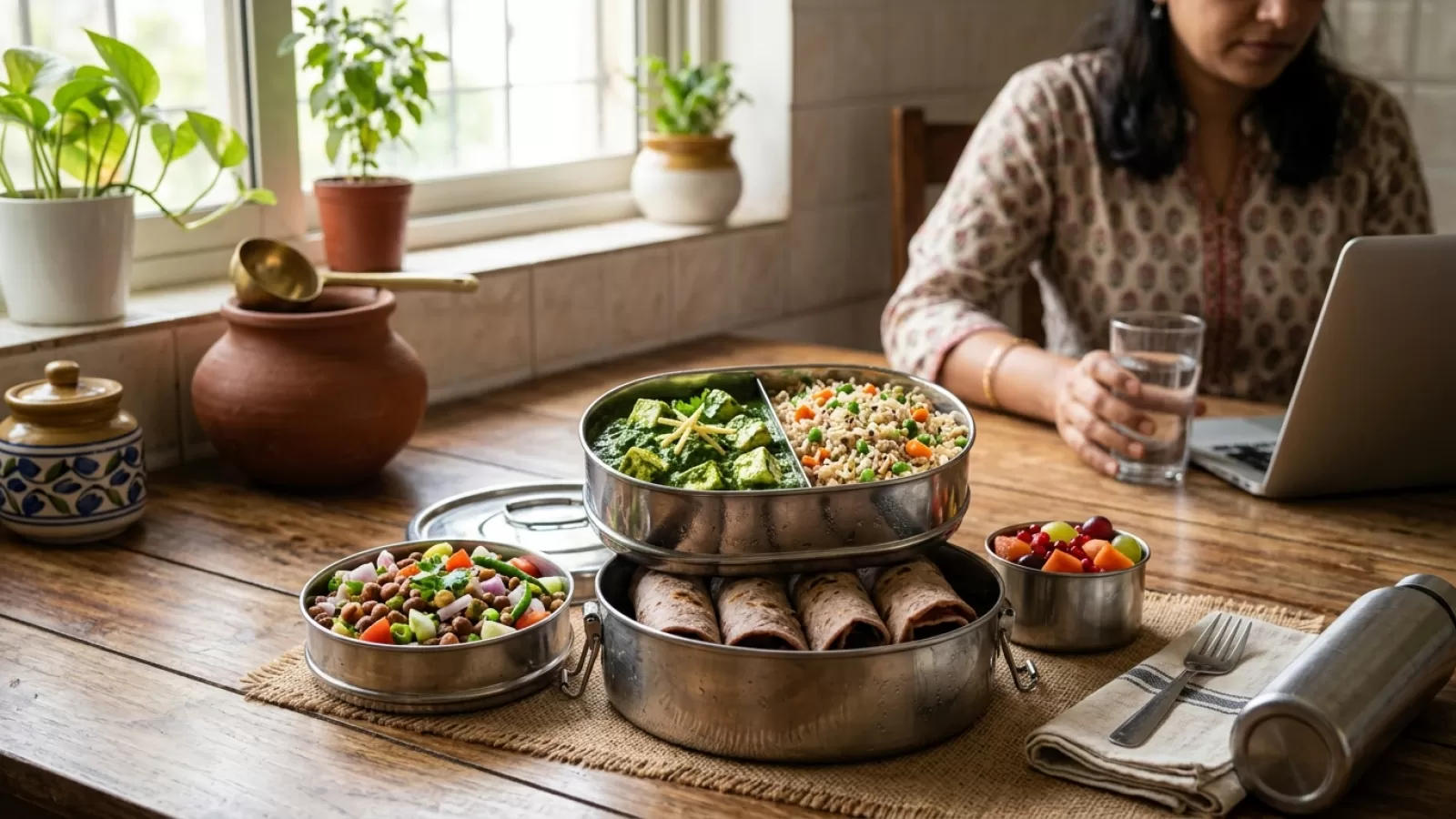
A steel dabba with two tiers sits quietly on a desk in a busy office. Steam from the morning’s sambar has settled. The roti is still soft, wrapped in a cloth that smells faintly of home. This is the quiet power of a good Indian lunch box. These days, with working professionals rushing through mornings and often reaching for canteen food or skipping meals, simple Indian lunch box ideas for working professionals can make the difference between a draining afternoon and a steady one.
In many Indian households, the lunch box is packed either hurriedly at sunrise or with whatever is left from last night’s dinner. Sometimes, a quick poha is assembled while the coffee brews; on other days, it’s just leftover dal and rice in a two-tier dabba. The rhythm is familiar—sometimes comforting, sometimes just survival.
The Reality of Packing Lunch in Indian Homes
For most Indian working professionals, packing a healthy Indian office tiffin is less about Instagram-worthy meals and more about getting through a long workday with energy left for the evening. In countless homes, mornings are a scramble—pressure cookers whistling, children getting ready for school, and someone in the family negotiating a Teams call from the sofa. Among all this, the lunch box is often an afterthought, yet it quietly decides how the rest of the day will feel.
Many families quietly deal with this daily rush. A packed lunch means fewer worries about what’s in the oily canteen curry or whether the food delivery app will actually bring the right order. It’s also a way to carry a little piece of home to work, even if it’s just last night’s sabzi tucked between two rotis.
The tricky part is that lunch boxes are not always exciting. Many people reach for the same easy dal-rice, dry aloo, or curd rice every day until they’re bored enough to give up. But, with a few gentle shifts, the humble Indian lunch meal prep weekday can start feeling a bit less like a chore—and a bit more like self-care.
Why Lunch Boxes Become Repetitive (and Sometimes Forgotten)
Nutritionists who work with urban families often find that most Indian working professionals rely on leftovers or quick fixes for their office tiffin, simply because mornings are stretched for time. The routine usually wins over variety, and convenience wins over nutrition.
In many homes, late-night dinners and early alarms mean there’s little energy left for fresh morning cooking. The fridge becomes a friend, holding leftover sabzi, cooked rice, or some boiled chana that can be quickly turned into a filling dabba. The expectation to manage everything—children’s needs, elders’ preferences, your own work calls—leaves little room for experimenting with lunch box ideas for working professionals.
There’s also the small matter of food safety, especially during humid summers or long commutes. Some foods just don’t travel well, so people tend to stick with what has worked for years: dry sabzis, chapatis, curd rice, or poha—meals that are less likely to spoil and don’t demand reheating at the office. It’s often practicality, not lack of imagination, that shapes the Indian lunch box.
Signs Your Lunch Box Routine Needs a Refresh
- You eat the same two or three dishes every week, just rotating the order.
- You start skipping lunch or rely on canteen food more than twice a week.
- The sight of your dabba doesn’t spark any appetite by noon.
- Your energy dips sharply after lunch—either too much rice or not enough protein.
- You feel bored or even embarrassed opening your lunch box at work.
It’s more common than you’d think. Many people are quietly tired of their own rotis and sabzi, but don’t say it out loud. The daily routine just keeps rolling on, meal after meal, without much fuss.
One sign shows up in a Bengaluru office around 1pm: everyone sits down in the pantry, but one person quietly puts their dabba back in their bag, heading out for a quick canteen dosa instead. The reason’s simple—they just couldn’t face another day of dry aloo and chapati. It happens in so many offices, but most people just think it’s their own secret.
Simple Steps for Better Indian Lunch Box Ideas for Working Professionals
- Prep the night before: Pack leftovers or even just chop veggies for the morning. A little goes a long way.
- Use simple combinations: Pair dal rice, roti sabzi, or poha with dahi or a small box of makhana. No need for fancy recipes.
- Keep a dabba of roasted chana, peanuts, or murmura handy: These travel well and fill gaps when you’re short on time.
- Switch up one item each week: If you always pack the same dal, try moong one day and masoor the next.
- Pack foods that don’t need reheating: Think lemon rice, coconut rice, or dry aloo-methi sabzi with roti.
Prepping the night before changes everything about the morning. Most people think it means cooking an entire meal at 10pm, but it’s often just about portioning leftovers into a lunch box, chopping onions for poha, or even keeping your rice and dal separate to avoid sogginess. The trick is to finish this before you settle in for your evening chai or TV time, not after.
In a Surat home, the fridge light flickers on at 10:15pm as someone quietly spoons leftover dal and rice into a steel dabba. They add a wedge of lime and a pinch of pickle from the side container, shut the lid, and place it near the front of the fridge. The next morning, while everyone is getting ready, the lunch box just needs to be picked up and placed in the bag. No fuss, no rush.
People often start off strong, then slip back into old habits after a few days. If this feels like too much today, it’s okay. Even prepping just one part of your lunch box, like boiling potatoes or soaking chana the night before, can lighten the load in the morning. Some days, it’s just about making things a little easier on yourself.
Try This First
- Tonight, pack any leftover dal and rice into your lunch dabba before dinner ends—takes 2 minutes.
- While waiting for the pressure cooker whistle, peel and cube one potato for next day’s poha or sabzi.
- Set a reminder at 8pm to move dahi from the main fridge shelf to your lunch bag compartment.
- If you’re boiling water for chai, drop in a handful of peanuts to roast beside the flame for tomorrow’s snack box.
A Real Moment in a Busy Indian Kitchen
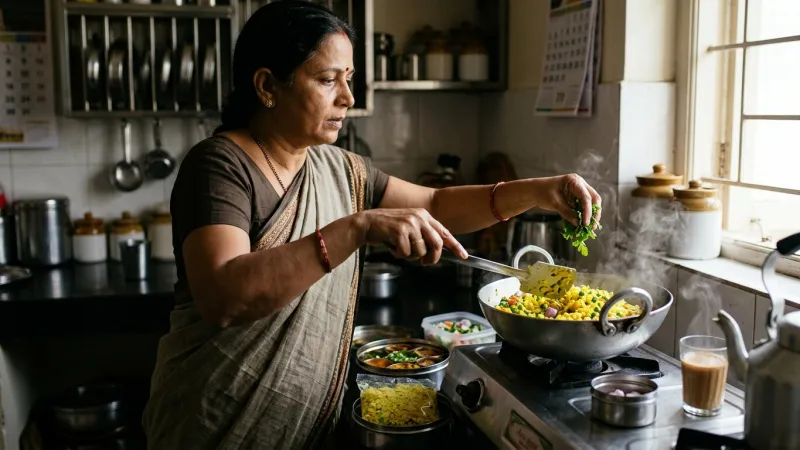
A kitchen in Nagpur at 6am smells of tadka and fresh coriander. The pressure cooker whistles in the background, and someone is quickly rolling out rotis while keeping an eye on the clock. The dabba for the office is open on the counter: one tier gets last night’s rajma, the other holds steamed rice with a little ghee. A small katori of dahi is tucked beside a folded napkin. There’s a sense of calm in the routine—even if the rest of the morning is chaos.
In that moment, there’s no grand meal plan. It’s just about making sure lunch will be filling and won’t spoil on the bus ride to work. The kitchen is still a bit cool before the heat of the day kicks in. The lunch box isn’t perfect, but it feels like a little victory—one thing sorted before the day begins.
This is how Indian lunch meal prep weekday usually happens. Not with fancy containers, but in the quiet, everyday work of making do with what’s on hand, and giving yourself a small comfort for the long hours ahead.
When to Ask for Support
If you find that your lunch box routine is making you feel unwell, or you’re skipping meals because nothing seems appealing or filling, it may be time to ask for some support. A trusted dietitian or a family member with experience can help you find new healthy Indian office tiffin ideas or tweak your routine so you don’t feel stuck.
Any sudden changes in your appetite, energy, or digestion are worth mentioning to your doctor—especially if you’ve started a new routine or are managing other health conditions.
Common Questions
Lunch box routines can feel overwhelming, especially when you’re juggling work, family, and your own needs. Here are some of the most common questions working professionals ask about Indian lunch box ideas. You might find your own kitchen moments reflected in these answers.
Which Indian dishes travel best in a lunch box without spoiling?
In most Indian homes, dry sabzis like aloo-methi, bhindi fry, or beans poriyal hold up well in a dabba. Lemon rice, coconut rice, and poha are also favourites—they don’t turn soggy and can be eaten at room temperature. Pair with a small container of dahi or roasted peanuts for variety. Dal-chawal works if packed thick and kept separate, but avoid thin gravies during peak summer or long commutes. Many families rely on these trusted dishes, especially during hot months or when the fridge space is limited.
How do I pack a lunch that does not need reheating at the office?
No-reheat Indian lunch ideas often mean using foods that taste good at room temperature. Poha, lemon rice, or dry upma are great choices. Roti rolls with paneer or dry sabzi stay soft if wrapped in a clean cloth. Curd rice is another classic, but pack the dahi separately and mix at lunchtime. In many offices, people just add a dash of pickle or a sprinkling of roasted chana for crunch. These meals travel well and don’t need a microwave to be enjoyed.
Can I pack the same box for three days if I prep it on Sunday?
While the idea of Indian lunch meal prep weekday is tempting, most cooked Indian dishes taste best within a day or two. Dal, sabzi, or pulao can go soggy or lose flavour if kept too long. Many families find that prepping ingredients—like boiled potatoes, chopped veggies, or cooked chana—works better than making full meals in advance. Packing fresh or assembling from prepped basics each morning keeps your lunch box safer and tastier, especially during humid or hot weeks.
What is a filling Indian office lunch that is not too heavy for the afternoon?
Try a lunch box with dal-chawal and a side of sabzi, or a couple of rotis with dry chana and a small katori of dahi. These are healthy Indian office tiffin ideas that usually give steady energy without making you sleepy. In many homes, a small box of fruit or a handful of makhana is added for a light afternoon snack. Keeping portions moderate and avoiding too much oil helps prevent that heavy, post-lunch slump.
How do I stop getting bored of the same lunch every day?
Switching up just one item makes a difference. If you always take aloo sabzi, try adding a spoon of chutney or switching to bhindi once a week. Many families use a rotation—dal one day, chana the next, a simple pulao or lemon rice mid-week. Even changing your dabba’s side items, like adding roasted peanuts or a bit of pickle, can add variety. Sometimes, just eating lunch in a different spot or with a different group at work brings back a bit of excitement.