You might have noticed, in many Indian homes, family meals are about togetherness, comfort, and sharing. But with busy routines, eating out, and endless snack temptations, it's become surprisingly easy to eat more than we need—often without realizing it. The idea of weighing every bit of food or counting calories can feel exhausting, even a little joyless. Most families quietly agree: measuring dal or chapati on a scale just doesn’t fit into real, everyday life. Thankfully, there are gentler, more natural ways to understand and control portion sizes—using the very plates and bowls you already have at home.
Why Portion Sizes Matter—Even With Homemade Food
There’s a common thought: "If it’s homemade, it must be healthy." In many ways, that’s true, especially when you cook fresh food with familiar ingredients. But even simple meals—rice, dal, sabzi, roti—can add up if we don’t notice how much we’re serving ourselves. Over time, larger portions can quietly lead to sluggishness, extra weight, or that uncomfortable heavy feeling after meals.
Here’s the catch: our eyes and stomach don’t always agree, especially when we’re tired or distracted. You might be surprised at how much the size of your plate or serving spoon nudges you to eat more—without hunger even playing a role.
Controlling portions isn’t about eating less than you need or denying yourself favorite foods. It’s about finding a comfortable middle ground, so you feel satisfied but not stuffed.
Why Weighing Food Isn’t Practical for Most Homes
The idea of weighing every chapati or measuring each scoop of rice sounds organized in theory. But in the middle of a busy evening—kids running around, WhatsApp pings, someone asking for more sabzi—it’s rarely realistic. In most families, mealtimes are about sharing, passing bowls, and enjoying food together, not standing over a weighing scale.
Weighing can also create unnecessary anxiety. Many people, after trying it for a week, end up feeling guilty or irritated, especially if they’re constantly worried about “going over” some number. Frankly, it can take the simple joy out of eating.
Instead, practical visual cues—using your own dinner plate, katori, or serving spoon—can help you serve reasonable amounts without the fuss or stress.
Using Your Own Plate as a Quiet Guide
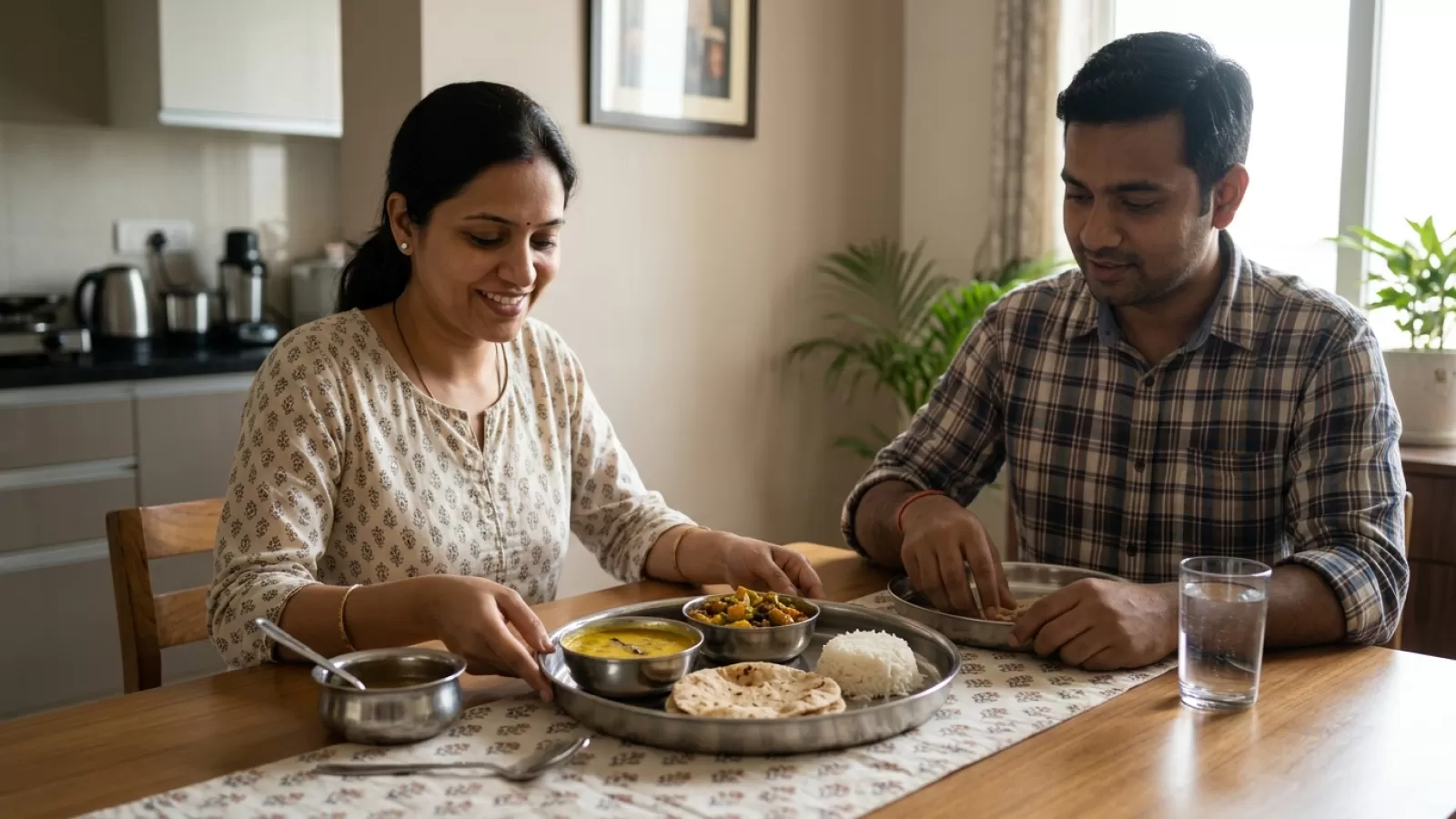
Most Indian homes use similar-sized dinner plates or thalis. You don’t need to buy anything new or fancy. Just look at the plate you use every day. For adults, this is usually about 9–10 inches across. That’s your quiet guide to portioning.
- Divide mentally: Picture your plate in sections. About half can be for sabzi or cooked vegetables, one-quarter for roti or rice, and the last quarter for dal or a protein dish.
- Start small: Begin with smaller servings. You can always take a second helping if you’re truly hungry after 10–15 minutes.
- Leave space: Don’t heap food. Leaving a little empty space around each item helps you notice what you’re eating.
This method works quietly, letting you enjoy the meal without overthinking every bite.
The Katori and Serving Spoon Trick
Katoris (the small round bowls in every Indian kitchen) are another simple tool. Most katoris hold about 100–150 ml. Instead of pouring dal or sabzi directly onto your plate, use a katori as your serving measure.
- Dal and curries: One katori is usually enough for one person at a meal. If you’re very hungry, a second katori is fine, but pause and check—are you still hungry or just eating out of habit?
- Rice: Instead of piling rice with a big serving spoon, use a small katori. A standard serving is one katori. If you want more, wait a few minutes before taking another.
- Sabzi: Sabzi can be more generous—vegetables are filling but lighter. Two katoris or a generous scoop is reasonable.
The act of using a bowl, rather than serving directly from the pot, gives you a natural pause. It breaks the habit of mindlessly piling food onto the plate.
Roti, Paratha, and Bread—How Many Is Enough?
This is where many people quietly struggle, especially with fluffy phulkas or fresh parathas straight from the tawa. It’s easy to lose count and end up eating more than intended, especially during winter or at family gatherings.
For most adults, two medium-sized rotis per meal (about the size of your palm) is a balanced starting point. If you’re eating smaller rotis or using thinner atta, sometimes three feels right, but pay attention to how you feel after two.
Try this: Serve yourself two, eat slowly with your sabzi and dal, then pause for a few minutes before reaching for a third. You might find you’re already satisfied. This simple habit can quietly help you avoid overeating, even when the family is urging you to “just have one more.”
Festivals, Special Occasions, and Buffet Meals
Let’s be honest: portion control feels toughest during festivals, family weddings, and when there’s a spread of special dishes. No one wants to spend Diwali or a cousin’s engagement worrying about how much kheer or biryani they’re taking.
On such days, the goal isn’t to restrict, but to stay mindful. Here are a few gentle cues that can help:
- Start with small portions of your favorite dishes. You can always return for more if you’re still hungry.
- Fill up half your plate with salads, raita, or fresh vegetables before the heavier items.
- Eat slowly and enjoy the flavors—this gives your body a chance to signal when it’s full.
- Don’t feel guilty about occasional indulgence. It’s the everyday habits that matter more in the long run.
Sometimes, just being a little more aware is enough. Festivals are meant for joy, not worry.
Snacking and Second Helpings—The Quiet Traps
These days, with work-from-home and long evenings, it’s easy to slip into the habit of extra snacking—biscuits with chai, namkeen while watching TV, or even that late-night leftover poha.
These small extras can quietly add up, especially if you’re not hungry but just bored or tired. Here’s something many families notice: snacks are often served straight from the packet or container, making it hard to track how much you’ve eaten.
- Pour snacks into a small bowl or katori instead of eating from the packet. This makes it easier to see and limit your portion.
- Keep snacks in the kitchen, not on the sofa or work desk. This small distance gives you a chance to ask yourself if you really want more.
- Try to enjoy snacks without distractions—no phone, no TV. You’ll naturally eat slower and less.
No need to cut out snacks entirely. Just being a bit more mindful can quietly make a difference over time.
Dealing With Family Habits and Social Pressure
In many Indian homes, food is a sign of love. Elders insist you take “just one more,” and leaving food on your plate can feel disrespectful. It’s tricky to say no, especially when everyone else is eating heartily.
One gentle strategy: serve yourself smaller portions at first. That way, if someone insists you take more, you still stay within a reasonable amount. You can also say something like, “I’ll take some more later if I’m still hungry,” which usually satisfies most hosts or family members.
It’s also perfectly normal to find this part awkward at first. Over time, as you quietly stick to your habits, most families adjust. After all, everyone wants you to be comfortable and healthy in the long run.
When You Slip Up—And Why That’s Okay
No one gets portion control right every single day. There are days you’ll eat a little too much, or have a second helping of biryani just because it smells so good. That’s part of life, and it doesn’t mean you’ve failed.
What matters more is your usual pattern, not the occasional extra meal. If you notice you’re regularly overeating, try to gently bring your attention back to your plate, bowl, and the simple cues you’ve set for yourself.
Above all, remember: eating is about comfort and nourishment, not strict rules or punishment. With a little awareness and the tools you already have at home, you’ll find your own rhythm—one that fits your family, your traditions, and your everyday life.