After a long, demanding day at work, it’s natural to reach home feeling completely drained. Many people step through the door with a heavy head, achy feet, and a mind that just won’t switch off. In Indian homes, this evening tiredness is almost like a daily guest—especially for those juggling careers, family, and household chores. The pressure to “relax quickly” can itself feel stressful. But gentle, real relaxation is possible, even if you’re not someone who meditates or does yoga every day. Here are a few thoughtful, simple ways to unwind at home—nothing fancy, just practical habits that fit into ordinary Indian routines.
Step Inside and Slow Down
The first few minutes after reaching home tend to set the tone for your entire evening. Many people rush straight into chores or check their phones, but you don’t have to. If you can, try giving yourself a few quiet moments before jumping into anything else.
This might mean sitting on the edge of your bed, slipping off your shoes, or just standing silently in your balcony. Sometimes, simply washing your face and hands with cool water feels like a soft reset after battling heat, dust, or crowded public transport.
Some people keep a small bowl of water with rose petals or a favorite attar nearby, dipping their hands in for a minute. It’s a tiny gesture, but you might be surprised at how grounding it feels.
Changing Clothes Makes a Difference
It sounds almost too simple, but changing out of your work clothes as soon as you get home can signal your mind to let go of the day’s stress. Many Indian homes have this habit—switching to a loose kurta, night dress, or worn-in t-shirt and pyjamas.
You’ve probably noticed how much lighter your body feels when you step out of formal wear, tight shoes, or even a saree blouse. That’s your nervous system getting a small, reassuring message: ‘You’re home now’.
In summer, even rinsing your feet and slipping into open slippers brings a gentle sense of release. During winter, pulling on a cozy shawl or soft socks can help you settle in more comfortably.
The First Sip: Comfort Drinks for Tired Evenings
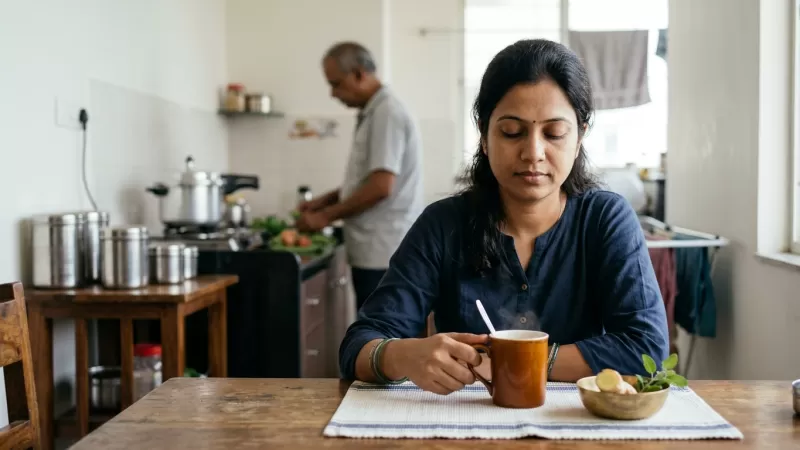
In many Indian households, evening tea is more than a habit—it’s a daily ritual that helps mark the shift from work to home life. There’s something about that first sip of adrak chai or a warm cup of milk with haldi that feels deeply comforting.
But if caffeine keeps you awake at night, you could try gentle options like:
- Warm water with a slice of lemon
- Light jeera or ajwain water (many grandmothers quietly swear by this for calming the stomach too)
- Lukewarm milk with a pinch of nutmeg (jaiphal) or cardamom (elaichi)
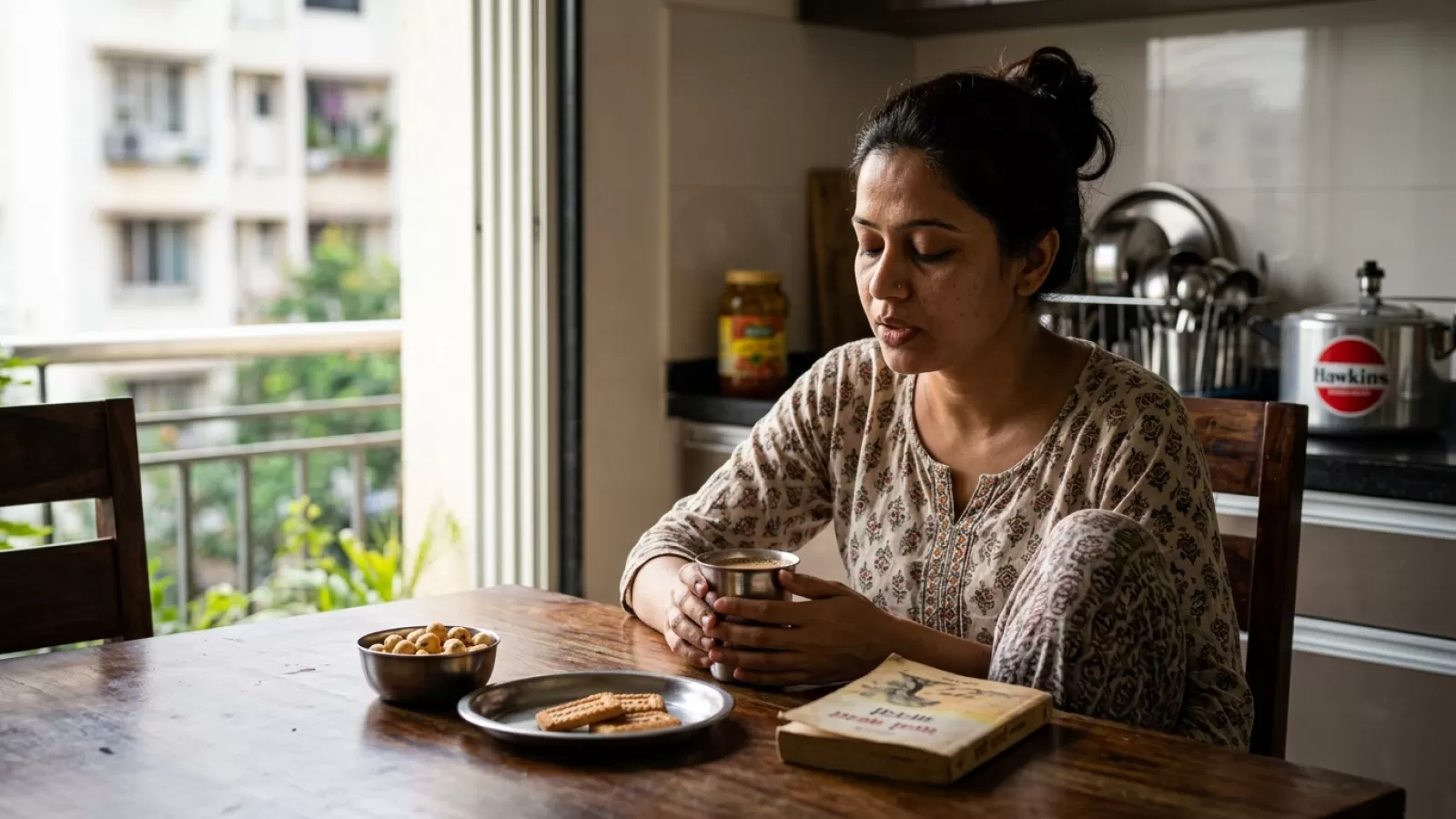
It’s less about the drink itself and more about that short pause—sitting quietly and sipping slowly, without checking your phone or rushing to the kitchen.
Gentle Movement, Not Exercise
There’s a lot of talk these days about evening workouts, but after a truly exhausting shift, your body may just want rest. That’s completely okay. You don’t have to force yourself to do a full routine or power walk around the colony if you’re too tired.
Instead, gentle movements can help your body shift from “work mode” to “rest mode” without much effort. Think of it as moving just enough to shake off the day’s stiffness:
- Simple stretches while standing at the kitchen counter or in your bedroom
- Slowly rotating your shoulders, wrists, and ankles
- Leaning against a wall and gently rolling your back
Even walking barefoot around the house for a few minutes feels soothing for many. If your back or legs are aching, lying down on the floor with your feet up on a pillow for five minutes can bring noticeable relief.
Unplug, Even Briefly
The tricky part is, our phones and TVs are always tempting after work. Scrolling or watching serials can seem relaxing, but sometimes it just adds to the mental noise. You don’t have to go completely offline—but try this: keep your phone away for just 15–20 minutes after reaching home.
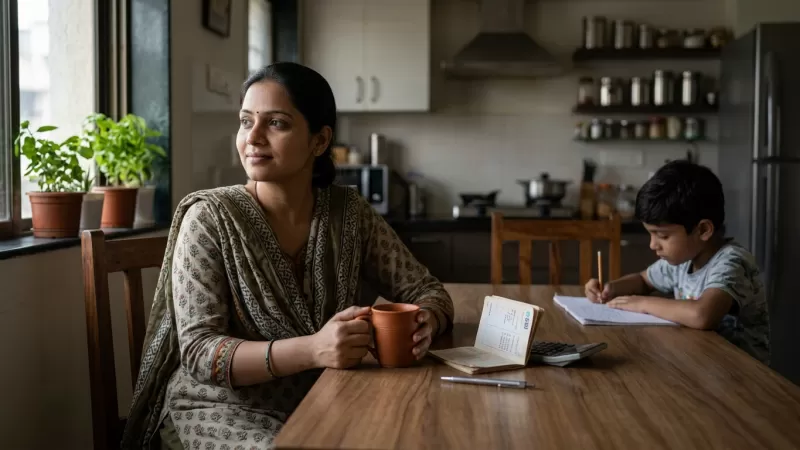
Use this time to check in with yourself, notice your breath, or just look out the window. Some people like to step into their balcony, water a plant, or pet their dog or cat. In joint families, sitting quietly with elders—without any agenda—can offer a kind of peace you don’t get from screens.
Truth is, you’re not missing anything important in those few minutes. It’s a small pocket of silence that helps your mind actually start to relax.
Light, Familiar Dinners
Eating late and eating heavy is fairly common these days, especially in homes where everyone returns late from work. But most people find that a lighter, simpler dinner helps them sleep better and wake up less groggy.
This doesn’t mean you have to eat only salads or cut out your favorite dal-chawal. Instead, you could try:
- A bowl of khichdi or lightly seasoned dal with rice
- Roti with one sabzi and plain curd
- Porridge (dalia) with a little ghee and jeera
Try to eat slowly and sit down at the table, even if you’re alone. Eating while standing in the kitchen or in front of the TV can leave you feeling unsatisfied. Many families quietly deal with this: rushing through dinner, then feeling restless later on.
Simple Wind-Down Routines Before Bed
After dinner, evenings tend to slip away quickly. You might have chores, family calls, or just want to zone out. But a simple, predictable wind-down routine—even if it’s just 10 minutes—can help calm your mind for restful sleep.
Some calming habits that work for many people:
- Washing your face and feet with lukewarm water
- Sitting quietly with eyes closed, listening to a favorite old song
- Gently massaging your temples or feet with a drop of coconut oil
- Reading a few pages of a light book (not the news or work emails)
Lights dimmed, curtains drawn, and keeping your phone away from your pillow—these small changes add up. Over time, they become habits your body and mind start to expect each night.
It’s Okay Not to Be “Productive” Every Evening
There’s a quiet pressure these days to use evenings for self-improvement—learning new skills, tackling home projects, or even advanced meal prep. But after an exhausting workday, just resting is enough. Really, it is.
You’re allowed to have evenings where nothing much gets done. You might simply sit with your family, listen to their stories, or watch the ceiling fan go round. These moments, though they seem ordinary, actually help your mind recover.
Rest is not wasted time. In most Indian homes, the best memories are made not during grand activities, but in these peaceful, slow hours after a hectic day.