On most evenings in Indian homes, there’s a quiet moment just before dinner — the pressure cooker hissing, the news playing softly, school bags dumped in a corner. For many who work at desks all day, this is when the body’s stiffness becomes loudest. That heaviness in the lower back, the tightness around the neck, or the hips that almost ache. Evening stretches at home India are not just a trend now; they’re becoming a small act of kindness for tired bodies that have sat in the same chair for hours.
A few minutes spent gently moving — sometimes in the middle of the living room, other times in a kitchen doorway — can do more for that familiar stiffness than an entire night of tossing in bed. These days, with families spending longer hours at work or school and screen time quietly growing, those five minutes of stretches for desk workers India can bring back a surprising sense of ease by dinner time.
Why Sitting All Day Feels So Heavy in Indian Homes
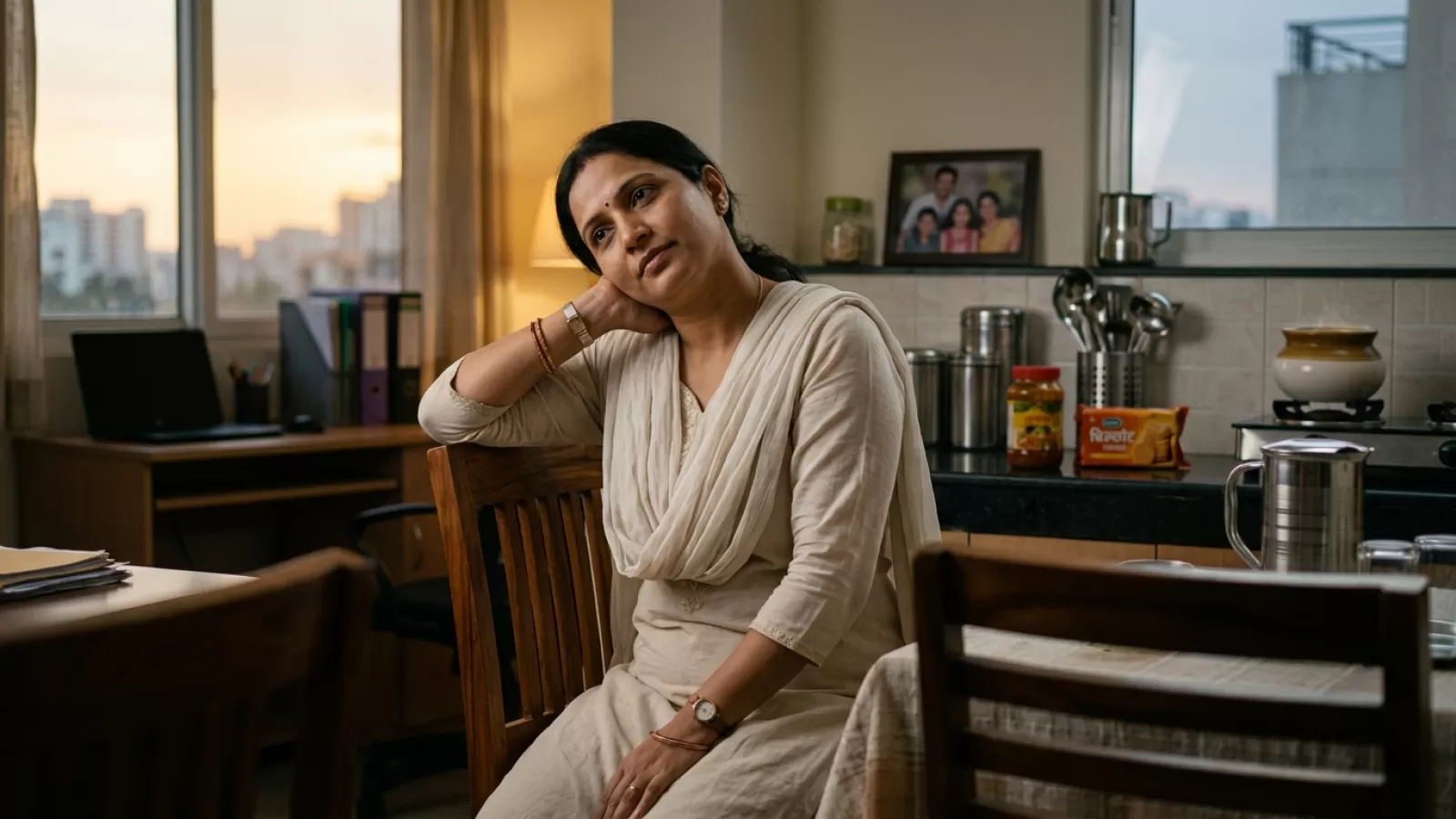
In many families, there’s a pattern that’s easy to miss: long hours at the computer, interrupted only by chai breaks or quick WhatsApp checks, followed by a commute in traffic and then a tumble into the sofa or bed. This is how the body collects stiffness — in the neck that feels knotted, the shoulders hunched, and a lower back that complains when you finally stand up. Many families quietly deal with this, sometimes brushing it off as just being tired from the day.
It’s not just adults working desk jobs. Even students these days, especially during exam season, sit for hours at the dining table or on the bed, hunched over books or laptops. Add to this the humid Indian summer, bouts of power cuts, and crowded living spaces, and it’s no wonder so many people end up with aches that don’t go away after sleep.
What many don’t notice is how household rhythms — from evening TV watching to late-night WhatsApp calls — keep bodies in one posture for far too long. The result? That all-over tightness, especially in the hips, neck, and back, that seems to settle in every evening.
Why the Stiffness Gets Worse — and Why It’s So Common
Physiotherapists who work with urban families often find that most movement in Indian homes comes from household chores, not dedicated exercise. After a long day of desk work, the body has spent hours in the same position — hunched over, shoulders rounded, hips barely moving. This repetition makes muscles shorten and stiffen, especially when daily life rarely calls for big, stretching movements.
It’s not just about the workday. In many Indian homes, furniture is not always ergonomically designed. Dining chairs double as office chairs, sofas become workstations, and sometimes “desk” means the edge of a bed. Over time, these setups quietly contribute to neck back stretches sitting all day India becoming a real necessity, not a luxury.
There’s also a cultural habit of “pushing through” — ignoring discomfort because there’s dinner to make, kids’ homework to check, or elderly parents to look after. The tricky part is, this kind of pain doesn’t usually announce itself with a big warning. It creeps in, one evening at a time.
What Stiffness Looks and Feels Like: Everyday Signs
- You twist your neck side-to-side and hear a faint crackle or pop.
- Your lower back feels tight when you try to bend down to pick up a dropped spoon.
- You avoid sitting on the floor for family TV time because it’s hard to get up again.
- The hips feel “locked” when you try to cross your legs or squat to reach the bottom shelf.
- Shoulders feel heavy, especially while stirring a big pot or carrying grocery bags in from the car.
More people live with this daily stiffness than admit it. It’s often dismissed as “just tiredness” or shrugged off with a joke about getting old, even among people still in their 30s or 40s. The body adapts quietly, but the discomfort lingers.
On a typical evening in a Delhi flat, you might see someone shifting uncomfortably in a plastic chair while trying to help with homework, rubbing their neck or rolling their shoulders, almost without thinking. It’s these small, familiar movements that reveal how widespread this kind of stiffness actually is.
Simple Steps: Evening Stretches at Home India Style
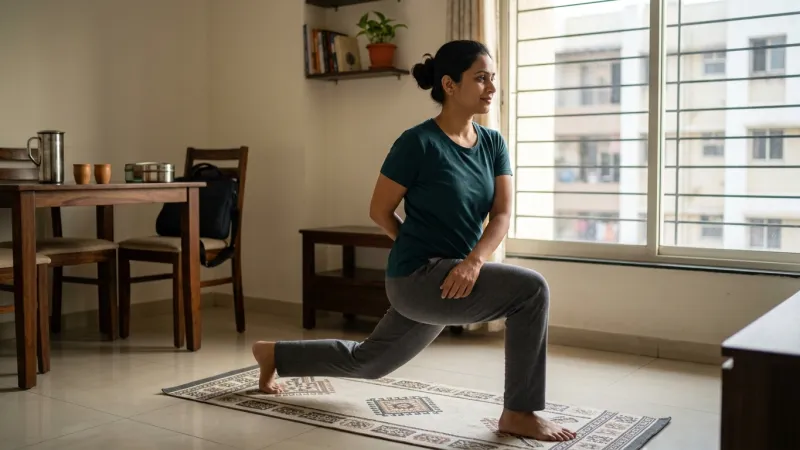
- Stand in a kitchen doorway and do a gentle backward bend for your back and front body, holding the frame for support.
- Sit cross-legged on the living room floor and lean gently forward, feeling the hips open up.
- While watching TV, roll your shoulders in slow circles, then let your head drop side-to-side for a neck stretch.
- Before dinner, do 10 slow knee-to-chest movements lying on your back, right on a thin cotton bedsheet.
- At the end of a phone call, stand up and reach both arms overhead, then sway gently from side to side.
Standing in a kitchen doorway for a gentle back bend is the one habit that changes how your back feels most. The common mistake? Trying to bend too far, too fast. It’s better to move slowly, using the frame for balance, and focus on opening up through the front of the hips and chest. Many people rush this, but a slow, steady movement does more good — and it’s easy to squeeze in while waiting for the cooker’s third whistle or the milk to boil.
In a home in Pune, you might spot someone standing in the passageway just before dinner, stretching back as the aroma of jeera rice fills the air. Sometimes, other family members join in, making it a quiet, shared ritual before everyone sits down to eat.
Some nights, you just can’t manage all the steps. Maybe you’re tired, or there are guests over, or the inverter is running and you’re trying to save power. Even one or two small movements — a shoulder roll, or a gentle twist while sitting on the floor — can make a difference. If this feels like too much today, remember: even a minute or two is better than nothing.
Try This First
- While the chai boils at 7pm, do 10 slow shoulder shrugs in the kitchen.
- As the pressure cooker whistles, stand in the doorway and bend gently backward for 30 seconds.
- During the evening news, sit on the floor and bring one knee at a time to your chest, holding for a few breaths.
- Just after switching off your laptop, stand up and reach both arms overhead, swaying gently side-to-side for a minute.
A Real Moment: Stretching in the Middle of It All
In a Chennai flat at 7:30pm, the kitchen is bright with tube light, coriander crackling in hot oil. Someone stands in the doorway, hands braced on the frame, leaning gently back. Outside, the corridor hums with neighbours’ voices and the lift bell rings. The stretch is subtle, just enough to feel the front of the hips open and chest lift.
Inside, the air is thick with the smells of rasam and frying papad. The TV is loud, a child calls for help with homework, and the pressure cooker hisses. But for a few seconds, all that noise fades. The body feels longer, breath comes easier, the ache in the lower back softens. It’s a small moment of relief, tucked right into the rhythm of family life.
This is what evening stretches at home India really look like for many — not a perfect, silent practice, but a few honest movements in the middle of real life.
When to Ask for Support
If you notice that evening stretches at home India aren’t easing your stiffness — or if you feel sharp pain, numbness, or weakness — that’s a sign to check in with a doctor or a physiotherapist. Sometimes, what seems like ordinary tightness can be something more.
It’s always okay to ask for help, whether it’s about your back, neck, or anything else. Trusted support can make a big difference, especially when the discomfort doesn’t fade with simple home stretching routine after work India.
Common Questions
When it comes to evening stretches at home India, there’s no single right way. Many people have similar doubts, especially about what actually works in a busy Indian home. Let’s walk through some of the most common questions, with familiar scenarios you might recognise from your own evenings.
Which stretches help the most after sitting at a desk all day in India?
The most helpful stretches for desk workers India are ones that target the neck, shoulders, hips, and lower back. Try standing in a kitchen doorway for a gentle back bend, sitting cross-legged on the floor and folding forward to open the hips, and rolling your shoulders while watching TV. Even a simple side stretch with both arms overhead does wonders. Most people find these movements easy to fit in, whether you’re waiting for dal to boil or chatting with family in the living room.
How long do I need to stretch for it to actually relieve the stiffness?
Often, just five minutes of evening stretches at home India can make a noticeable difference. Aim for at least one minute per main area (neck, back, hips, shoulders). It's less about the exact time and more about moving slowly and gently, paying attention to how your body feels. Many families find that a few minutes before dinner is enough to shake off the tightness from a long day sitting at a desk.
Can I stretch in Indian home clothes without any special equipment?
Yes, you can absolutely do all these stretches in your usual home clothes — cotton pyjamas, salwar kameez, or even a basic t-shirt and shorts. No special equipment is needed for a home stretching routine after work India. In fact, most people prefer the comfort of their regular clothes. Just make sure you have a little space and that your clothing isn’t too tight around the waist or shoulders, so you can move freely.
Is it better to stretch before or after eating dinner?
It’s usually best to do your evening stretches at home India before dinner, when your body isn’t weighed down by a full stomach. Many families stretch while waiting for the cooker or as a break before the meal. If you forget and only remember after eating, wait at least 30–45 minutes before any bending or twisting movements. Light stretching before dinner tends to feel more comfortable and effective for most people.
My back cracks when I stretch — is that something to worry about?
In many Indian homes, hearing a little “pop” or “crack” when you stretch is common, especially after sitting all day. It’s usually just gas moving between joints and isn’t a problem if there’s no pain. That said, if the cracking comes with pain, numbness, or weakness, or if you’re worried, it’s always a good idea to check with a doctor or physiotherapist. Most families have someone who experiences this, and usually, it’s just the body adjusting after hours at a desk.